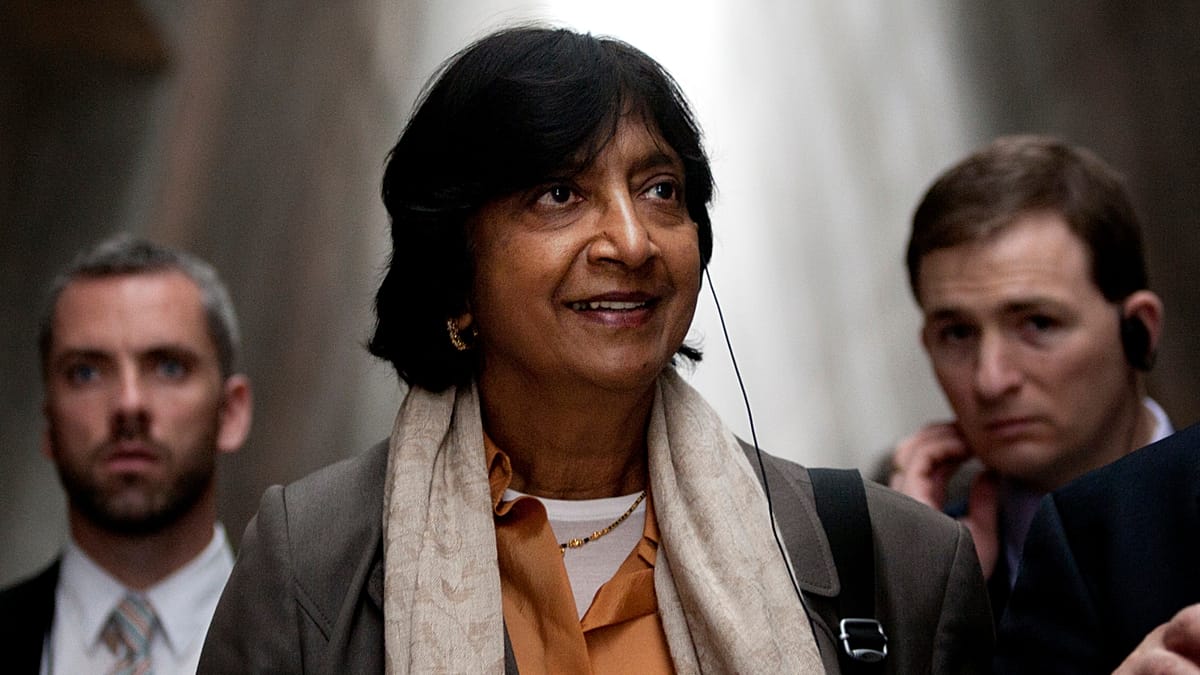
The Norwegian Nobel Committee has named Navanethem “Navi” Pillay as the recipient of the 2026 Nobel Peace Prize, recognising her decades of work in international law and human rights. The 85-year-old South African, who served as UN High Commissioner for Human Rights from 2008 to 2014, said her first reaction was to assume the news was a joke.
“Being a lawyer and a judge, I still want to verify this,” she told reporters, reflecting the meticulous mindset that has defined her career. Born in Durban, Pillay rose from apartheid-era South Africa to become a leading voice for justice on the global stage.
A life devoted to international justice
Pillay’s legal career began in her home country, where she defended anti-apartheid activists and challenged discriminatory laws. She later took her expertise to the international arena, presiding over the International Criminal Tribunal for Rwanda in the late 1990s and early 2000s. In that role, she helped prosecute those responsible for the 1994 genocide, setting precedents that continue to shape international criminal law.
More recently, Pillay served on the Independent International Commission of Inquiry on the Occupied Palestinian Territory, established by the UN Human Rights Council in 2021. Her work there has drawn both praise and criticism, but it underscores her willingness to tackle politically sensitive cases.
The Nobel Committee’s choice highlights the enduring relevance of Pillay’s mission. In a statement, the committee praised her “efforts to promote peace and international law,” noting that her work has had a profound impact on victims of atrocities worldwide.
Pillay’s award comes during a Nobel season that has also honoured breakthroughs in science and literature. Earlier this week, French and Japanese chemists won the Nobel for their work on mirror-image molecules, while Anne Carson won the Nobel Prize in Literature. The peace prize, however, carries a unique symbolic weight, often serving as a moral compass for global affairs.
For Europeans, Pillay’s recognition resonates beyond the courtroom. Her career embodies the principles of the European Convention on Human Rights and the continent’s commitment to multilateralism. From the Bundestag to the Élysée, leaders have long cited her work as a benchmark for accountability.
Yet her path has not been without controversy. Her involvement in the Palestinian inquiry drew sharp reactions from Israel and its allies, while human rights groups applauded her willingness to examine alleged abuses. Pillay has consistently defended her approach, insisting that justice must apply equally to all.
As she prepares to receive the prize in Oslo later this year, Pillay remains characteristically grounded. “I still want to verify this,” she repeated, a reminder that even the most celebrated achievements require scrutiny. Her reaction, both humble and precise, mirrors the qualities that have made her a towering figure in international law.
The Nobel Peace Prize adds another chapter to a life already marked by historic firsts. Pillay was the first non-white woman to serve as a judge on the South African High Court, and her leadership at the UN Human Rights Council broke new ground. Her legacy, now cemented by the Nobel, offers a powerful example for a new generation of jurists and activists across Europe and beyond.