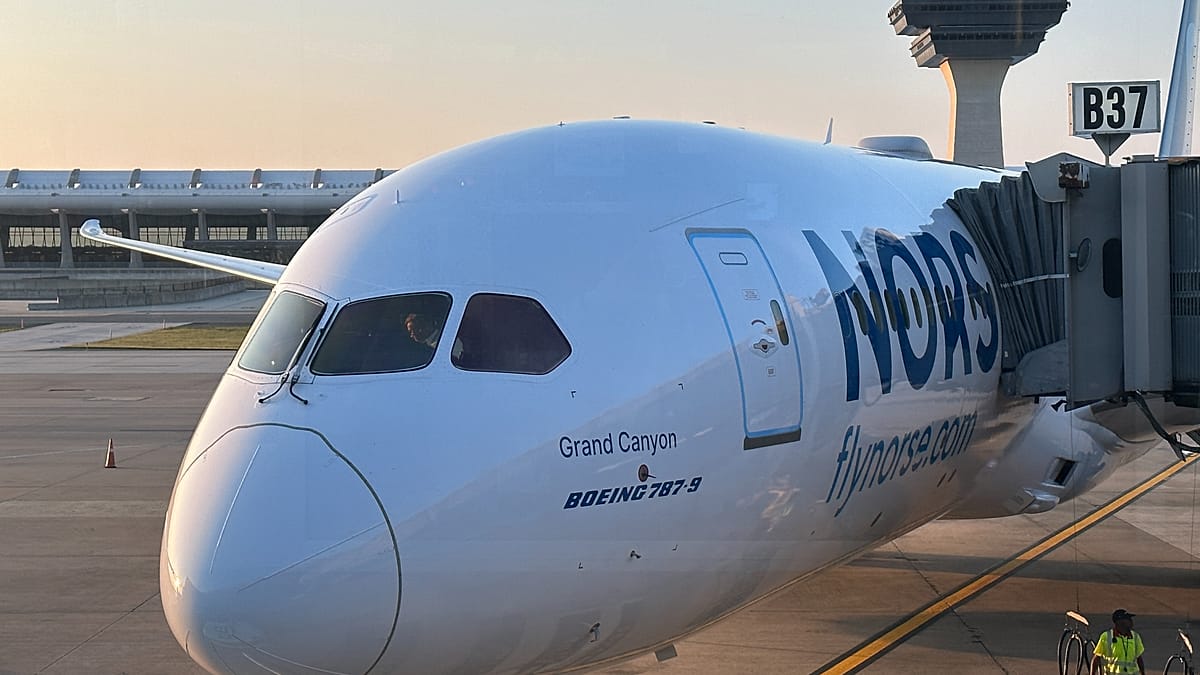
Norse Atlantic Airways, the Norwegian low-cost carrier specialising in long-haul routes, has cancelled all flights for the day and warned that it is on the brink of bankruptcy. The company, founded in 2021, said in a filing to the Oslo stock exchange that unless a short-term financing solution is secured urgently, its board intends to file for insolvency.
“There can be no assurance that a viable solution will be found,” the airline added, as it confirmed that all Thursday departures had been grounded pending clarity on its financial future. Norse said it was in talks with potential investors about a takeover that would include a financing package, though it declined to identify them.
A sharp reversal for a young airline
The collapse in confidence was swift. On Wednesday, Norse warned that its financial position was “critical,” sending shares down 85%. They continued to slide in early trading on Thursday before recovering slightly, but at 0.04 Norwegian kroner per share, the company’s market value now stands at just $9.7 million.
The airline’s troubles are not new, but they have been exacerbated by the sharp rise in jet fuel prices linked to the ongoing conflict in the Middle East. Norse, which operates a fleet of Boeing 787 Dreamliners on routes between Europe and North America, had already struggled to fill seats and manage debt in a highly competitive market.
Norse’s predicament is part of a broader pattern of distress among European carriers. Earlier this week, Spanish airline Plus Ultra announced it was ceasing operations, and in September, Latvia’s Air Baltic filed for Chapter 11 bankruptcy protection in the United States. The aviation sector across the continent remains vulnerable to fuel price volatility, labour costs, and shifting consumer demand.
For passengers, the immediate impact is clear: those booked on Norse Atlantic flights are left stranded or scrambling for alternatives. The airline has advised customers to check its website for updates, but with no guarantee of a rescue, many face uncertainty.
Industry analysts note that Norse’s business model—offering low-cost transatlantic travel—was always ambitious. The carrier launched during the pandemic recovery, betting on pent-up demand for affordable long-haul flights. But with fuel costs soaring and competition from legacy carriers and other budget airlines intensifying, the margin for error was thin.
“This is a stark reminder of how fragile the economics of low-cost long-haul can be,” said a Brussels-based aviation consultant. “Even with a strong route network, a sudden spike in input costs can tip a carrier into crisis.”
Norse’s future now hinges on whether a last-minute investor can be found. The company’s statement left little room for optimism, but it did not rule out a deal. For now, the airline’s fleet remains grounded, and its employees—many of whom are based in Oslo and other European hubs—face an anxious wait.
The Norwegian government has not indicated any willingness to intervene, and there is no precedent for a state bailout of a private carrier in the country. As the day wore on, Norse’s shares stabilised somewhat, but the underlying reality remains stark: a company that once promised to revolutionise transatlantic travel is now fighting for survival.
For the wider European aviation market, the episode underscores the challenges facing smaller carriers in a sector dominated by a few large groups. While major airlines like Lufthansa and Air France-KLM have the scale to absorb shocks, smaller players like Norse are far more exposed to external shocks.
As Europe’s travel industry continues to recover from the pandemic, the fate of Norse Atlantic will be watched closely—not just by its passengers and staff, but by anyone with a stake in the continent’s aviation landscape.