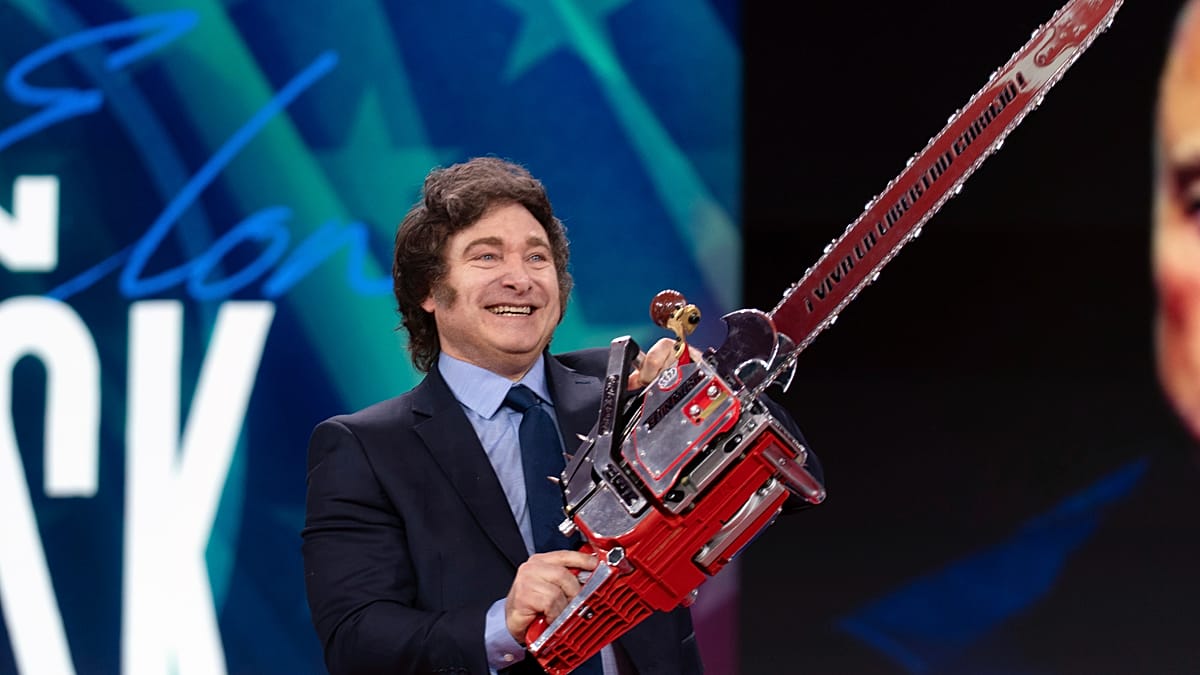
Argentina has entered a technical recession after two consecutive quarters of economic contraction, a setback for President Javier Milei's reform agenda even as his government points to progress on inflation and public finances.
Data from the National Institute of Statistics and Census (Indec) show the monthly economic activity index (EMAE) fell 1.8% in the third quarter, following a 1% decline in the previous three months. Although activity rebounded 1.1% in September compared with August, it remained 1.2% below the level of the same month a year earlier. Official GDP figures, due on 16 December, are expected to confirm the trend.
Milei's administration has urged caution before declaring a recession, but economists say the EMAE data are unambiguous. "Two consecutive quarters of contraction is the standard definition," noted a Buenos Aires-based analyst. "The government's own numbers point to a recession."
Domestic demand falters while resource extraction booms
The downturn is driven by weak domestic demand, which contrasts sharply with the performance of natural-resource sectors. In September, hydrocarbons and mining grew 11.1% year on year, but that dynamism was not enough to offset declines elsewhere.
Fishing was the hardest hit, collapsing 48.6% year on year. Agriculture fell 2%, and manufacturing dropped 1.8%. These sectors carry significant weight in Argentina's economy, so their poor results outweighed the gains from energy and mining exports.
Consumption is also under pressure. Installment purchases, which had propped up demand in recent years, have lost momentum. Interest rates on personal loans hover around 64% annually, and roughly six million people have fallen into default, according to official figures.
The labour market is deteriorating. Unemployment reached 7.9% in the second quarter of 2026, the highest since Milei took office at the Casa Rosada. The economy has shed more than 300,000 private-sector jobs and about 70,000 public-sector positions, while some 30,000 companies have closed.
Purchasing power erodes despite lower inflation
Inflation has fallen sharply from the 211% annual rate recorded in 2023, but the outlook for 2026 has worsened. Forecasts now point to an average price rise of 31%, up from the 22.4% expected at the start of the year. Monthly inflation ticked up to 2.2% in October from 1.9% in September.
Wages have recovered only modestly. According to consultancy LCG, registered pay improved by 2.5% in real terms up to September compared with December last year. However, wages remain below November 2023 levels, especially in the public sector, where they have accumulated a 15.4% drop.
The combination of weak consumption, lagging wages, and difficulties in key sectors poses one of the main challenges for Milei's economic policy and his re-election ambitions. The recession does not erase some achievements, such as the first fiscal surplus in 14 years, achieved in 2024, and the sharp reduction in inflation.
Yet market confidence is fraying. Argentina's country risk recently climbed above 1,100 points, its highest level since 2025, while the official dollar rate moved past 1,630 pesos. Growth prospects have weakened: LCG expects GDP to increase by at most 0.7% in 2026, far short of the government's 3% target. For 2027, the executive projects 4% growth, but LCG estimates around 1.5%.
The recession in Argentina echoes broader economic strains across the Americas, but it also carries implications for European investors and trade partners. Argentina remains a major supplier of agricultural commodities and energy to Europe, and its fiscal and monetary policies are closely watched in Brussels and Berlin. As Spain's growth-outpaces-wages dilemma shows, the tension between macroeconomic stability and household purchasing power is a familiar one in Europe too.
For Milei, the road to 2027 will require balancing his reform agenda with the immediate pain felt by Argentine households. Whether he can restore confidence without derailing his fiscal gains remains an open question.