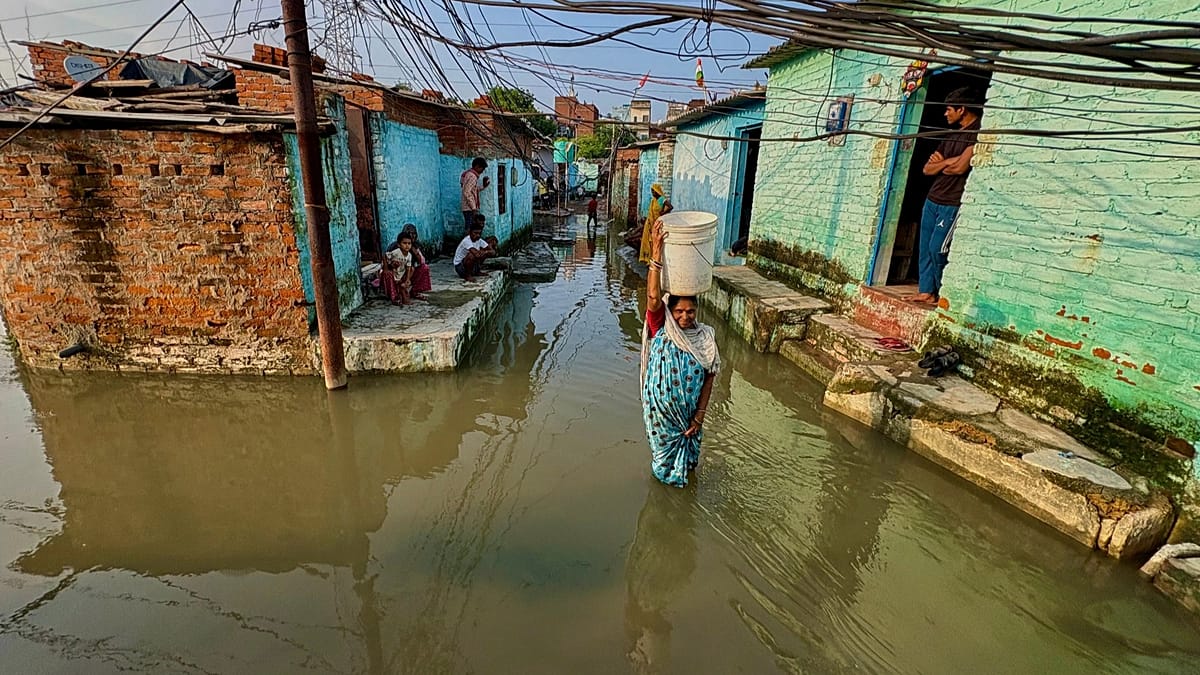
At least 62 people have died in severe flooding across the northern Indian state of Uttar Pradesh, following three days of relentless rainfall, according to state officials on Monday. The disaster has also left 46 people injured and damaged more than 1,000 homes, with several districts submerged under water.
Schools shut and rescue operations under way
Authorities closed schools in parts of the state on Monday, including the capital Lucknow, as a precautionary measure. Rescue teams have been working to move residents from inundated areas to safer locations, while officials advised people to avoid unnecessary travel through waterlogged zones and to stay away from fast-flowing rivers, streams, and drains.
The India Meteorological Department expects rainfall to ease from Monday as a weather system over the Bay of Bengal weakens, said Atul Kumar Singh, a senior scientist at the Regional Meteorological Centre in Lucknow. Light rain may continue in eastern and western parts of the state through Tuesday.
In the eastern state of Odisha, flooding has forced the evacuation of more than 75,000 people, with officials reporting widespread damage to infrastructure and crops.
Regional impact extends to Nepal
The heavy monsoon rains have also affected neighbouring Nepal, where the country's disaster management agency reported 21 deaths between Thursday and Sunday. Five people remain missing and five others are injured, while floods and landslides have damaged 194 houses across the Himalayan nation.
The scale of the disaster underscores the vulnerability of South Asia to extreme weather events, a pattern that has drawn attention from climate researchers across Europe. European institutions, including the Copernicus Climate Change Service, have highlighted the increasing frequency of intense rainfall in the region, linking it to broader shifts in global weather patterns.
While the immediate focus remains on rescue and relief, the flooding raises questions about long-term preparedness and infrastructure resilience in densely populated areas. Similar challenges have prompted European cities like Rotterdam and Venice to invest in adaptive flood defences, offering potential lessons for disaster-prone regions worldwide.
As the waters recede, authorities in Uttar Pradesh and Odisha will need to assess the full extent of the damage and begin the slow process of recovery. For now, the priority is ensuring the safety of thousands of displaced residents and preventing further casualties.