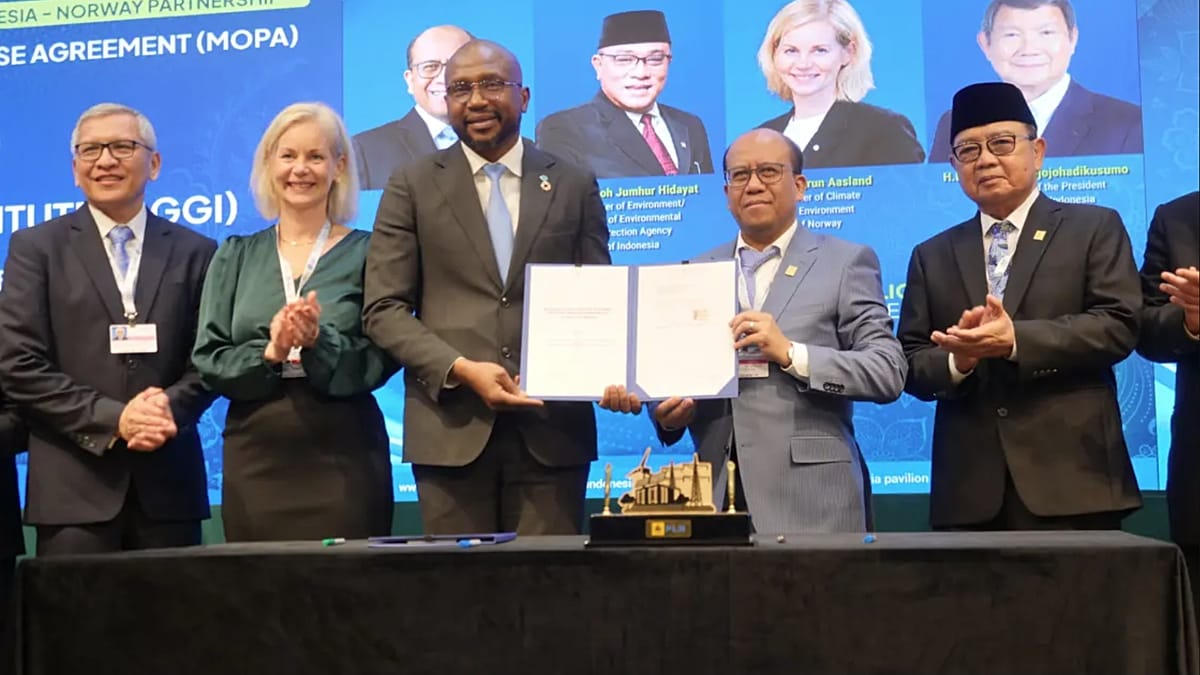
At the COP31 climate summit in Antalya, Türkiye, Norway signed agreements to buy carbon credits from Indonesia and Morocco, a move designed to channel finance into renewable energy projects in both countries. The deals, announced by Norway's climate ministry on Monday, cover up to 12 million tonnes of emissions reductions from Indonesia and 8.78 million tonnes from Morocco over a ten-year period for each programme.
The Indonesian agreement was signed on 11 November, followed by Morocco's the next day. Under the arrangements, Norway will pay for emissions avoided by generating electricity from renewable sources, with the income from selling carbon credits intended to help fund projects that would not otherwise be built. Payments will only be made once the emissions cuts have been achieved, independently verified, and the credits transferred, ensuring that reductions go beyond what would have happened without the programmes.
Indonesia: floating solar and battery storage
The Indonesian agreement was signed by PLN, the state-owned electricity company, and the Global Green Growth Institute (GGGI), acting on Norway's behalf. Indonesia, which relies heavily on coal for electricity, is seeking to expand its renewable generation capacity. The programme will initially focus on floating solar farms, where panels are installed on water, and will prioritise projects paired with batteries so that electricity can be stored and supplied during the evening and periods of high demand, GGGI said.
Payments for carbon credits would supplement income from electricity sales, helping projects cover their costs. GGGI described the agreement as Indonesia's first carbon credit purchase contract under Article 6.2 of the Paris Agreement. Indonesia's environment ministry said on Monday that technical arrangements were still being completed, including rules for approving and recording the transfer of credits.
Morocco: new solar and wind capacity
Morocco's programme will support new solar and wind farms, including projects with battery storage, aiming to help develop around two gigawatts of additional renewable power capacity, according to GGGI. The agreement covers emissions reductions generated between 2027 and 2036, although the first cuts are expected from 2028. The partners are still finalising operating rules and monitoring arrangements before launching a pilot phase.
Both agreements fall under Article 6.2 of the Paris Agreement, which allows countries to trade emissions reductions. Norway could use the credits towards its own climate targets, but the same cuts cannot also be counted towards the selling country's targets. This mechanism is part of a broader trend of international cooperation on climate finance, as seen in the evolving business case for decarbonization.
Norway's move comes amid wider European efforts to accelerate the energy transition. The country has been active in climate diplomacy, and these deals represent a practical application of carbon markets. As the EU debates carbon market reform, Norway's bilateral approach offers an alternative pathway for financing emissions reductions abroad.
The agreements also highlight the growing role of carbon credits in funding renewable energy in developing nations. For Indonesia and Morocco, the influx of finance could help overcome the high upfront costs of solar and wind projects, particularly when paired with storage. For Norway, the credits contribute to its climate commitments while supporting global emissions cuts.
Observers note that the success of such deals depends on robust verification and transparency. The independent verification requirement is a key safeguard, ensuring that the emissions reductions are real and additional. As the programmes move from signing to implementation, the focus will be on delivering tangible results.
Norway's engagement with Indonesia and Morocco is part of a broader Nordic approach to climate finance, which also includes joint funding for security and energy projects. The deals were signed at COP31, where progress on climate action was noted despite tensions, as 23 signs of progress were identified.