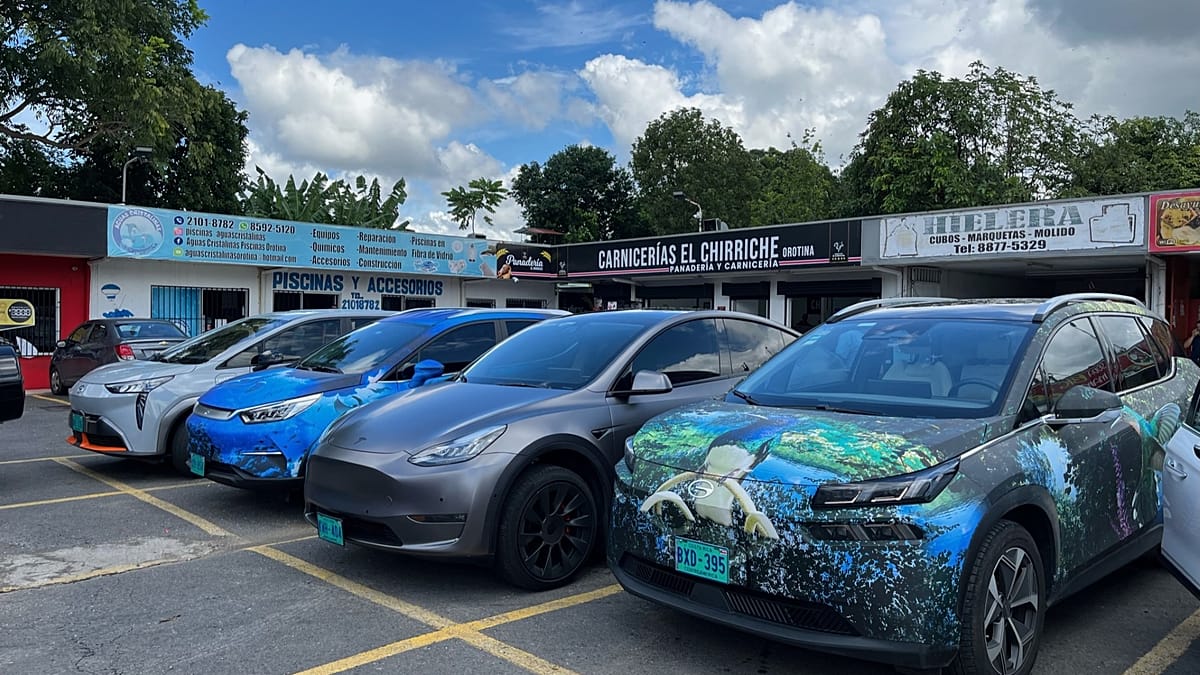
Norway remains the world's most enthusiastic adopter of electric vehicles, with battery-powered cars making up 97.8% of new registrations in the first eight months of the year. But beneath that green veneer lies a paradox: even as Chinese-owned brands gain a growing share of the market, Norwegian drivers are increasingly wary of them for political and security reasons.
According to a survey by the Norwegian Electric Vehicle Association, conducted between 31 March and 3 May among nearly 15,000 EV owners, 31% said they would avoid buying a Chinese brand for political reasons – up from 23% a year earlier. The shift reflects broader concerns about data security and privacy, as well as geopolitical tensions.
“New cars are, in practice, computers on wheels,” said Christina Bu, the association's secretary general. “As data security and privacy receive more attention, it is only natural that more consumers become concerned about where the cars come from and how the data is handled.”
Those worries are not purely hypothetical. A few years ago, Norwegian security researchers discovered that a car made by the Chinese manufacturer NIO was transmitting data to China. Tests on a bus from China's Yutong revealed that the manufacturer had access to the vehicle's control system and could, in theory, stop it or render it unusable remotely.
Despite these red flags, sales of Chinese-owned brands – including BYD, NIO, Dongfeng, and Chinese-owned Volvo and Polestar – have surged. In the first half of the year, they accounted for about 25% of new EV registrations in Norway, up from virtually nothing in 2019. That makes them the second-largest group by origin, behind only European brands, and ahead of Tesla and other US makers.
“This suggests that consumers weigh several factors against one another when they are buying a car,” Bu said. “For some, factors such as price and technology are decisive, while others are influenced by moral dilemmas and uncertainty about data sharing and security issues.”
The trend is not confined to Norway. Across the European Union, registrations of cars from Chinese-owned groups rose by about 71% in August compared with the same month last year, lifting their combined market share from 6.6% to 10.8%. That means roughly one in nine new cars sold in the EU now comes from a group with Chinese ownership, including Volvo Cars, which is owned by China's Geely Group. Among the fastest-growing manufacturers were Leapmotor (up 211%), Chery (201%), and BYD (129%).
Norway's leadership in EV adoption makes it a bellwether for the rest of Europe. The country's near-total shift to electric vehicles – far ahead of the EU's 21.7% share – is often cited as a model for the continent. But the growing presence of Chinese brands raises questions about how European markets will balance consumer choice with security concerns. As the EU debates deadlines for Chinese components in energy projects, similar scrutiny is likely to extend to the automotive sector.
Meanwhile, political resistance to Tesla has eased in Norway. The survey found that the share of respondents who would avoid Tesla for political reasons dropped to 24% from 43% last year. Elon Musk's high-profile political involvement and support for far-right leaders had sparked a backlash in 2024, but that attention has faded. “Last year, Elon Musk's political involvement was highly visible and, unsurprisingly, provoked strong reactions,” Bu said. “This year, there has been less attention on this, and that may have led to fewer people saying they would not have chosen Tesla.”
The Norwegian experience suggests that consumer decisions are rarely driven by a single factor. Price, technology, brand loyalty, and political sentiment all compete for attention. As Chinese brands continue to expand their footprint, the question is whether security concerns will eventually outweigh the appeal of lower costs and cutting-edge features – or whether pragmatism will continue to win the day.