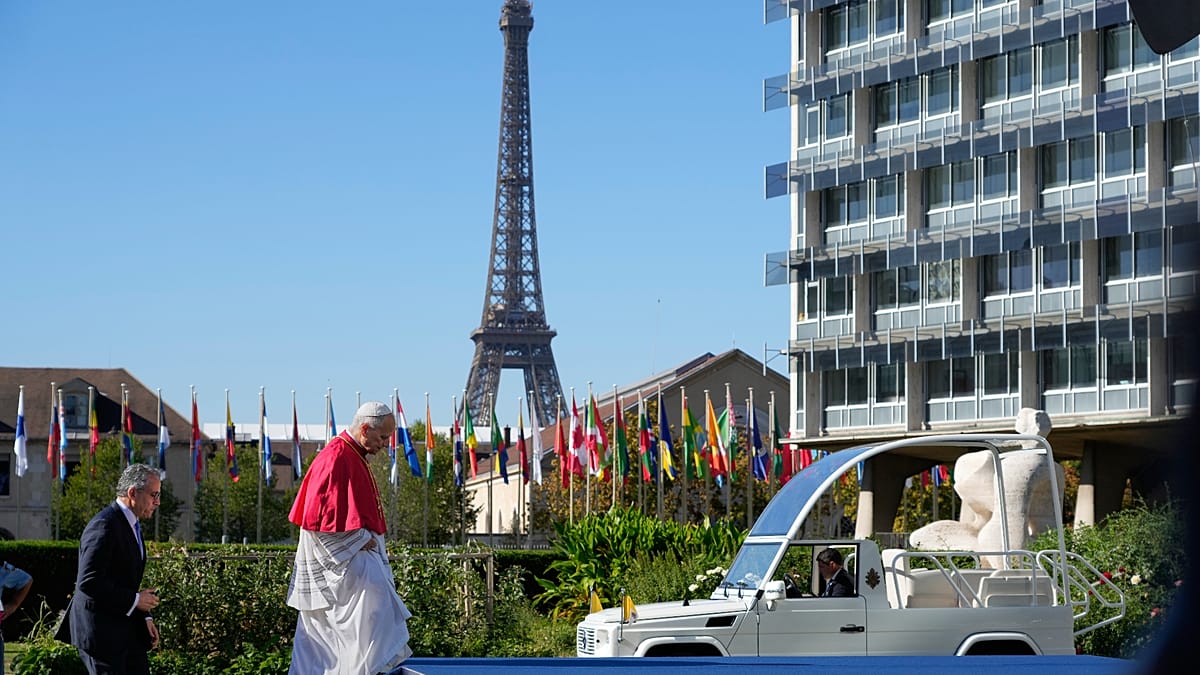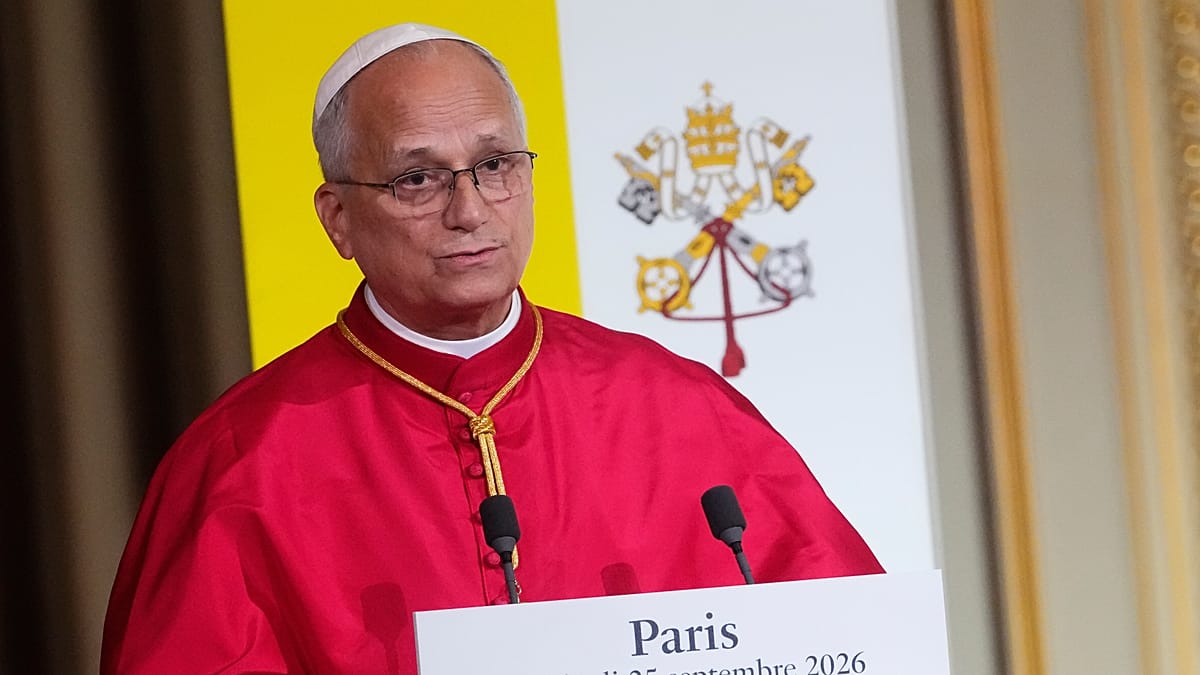
Pope Leo XIV used his first papal trip to France to deliver a stark warning about artificial intelligence, saying the technology risks trapping humanity in a “paradise of machines” if ethical safeguards are not put in place. Speaking at the Élysée Palace in Paris on Friday, the pontiff said AI had become a central theme of his first encyclical, a major teaching document addressed to the global Church.
“We must ensure that the human person remains at the heart of every discussion about artificial intelligence,” Leo XIV told his audience, which included French President Emmanuel Macron and members of the government. The pope stressed that as AI systems increasingly shape daily life—from healthcare and education to public administration and security—the moral dimension of these tools cannot be an afterthought.
Ethical discernment in the age of algorithms
The pope called for the development of what he termed “ethical discernment,” the ability to distinguish between morally good and harmful uses of technology. He warned that without such discernment, societies risk drifting into a dehumanized future where efficiency and convenience override human dignity.
“We are witnessing the rise of a paradise of machines, but it could become a hell of indifference if we forget what makes us human,” Leo XIV said, drawing on imagery that has become a hallmark of his papacy. His remarks echo concerns raised by other European leaders and institutions about the need for robust AI regulation.
The Vatican has been increasingly vocal on technology ethics, and Leo XIV’s encyclical is expected to set out a comprehensive framework for how Catholics—and by extension all people of goodwill—should engage with AI. The document is likely to address issues such as algorithmic bias, surveillance, and the impact of automation on employment, topics that resonate strongly across the European Union, where lawmakers are finalising the bloc’s landmark AI Act.
France, as a leading voice in EU tech policy, has pushed for strict rules on high-risk AI applications. The pope’s choice of Paris for his first foreign trip underscores the importance of engaging with political power centres where these decisions are being made.
Leo XIV’s warning comes amid growing concerns about the spread of AI-generated disinformation, including fake protest videos that have circulated across Europe, and the potential for AI to exacerbate social divisions. The pope’s call for ethical discernment is seen as a direct response to these challenges.
Observers note that the pope’s message is not anti-technology but rather a plea for responsible innovation. “The Church is not against progress,” said a Vatican official who accompanied the pope. “But progress without ethics is a danger to humanity.”
As AI continues to transform economies and societies, the pope’s intervention adds a moral voice to the debate, urging Europeans and the wider world to reflect on the kind of future they want to build. His encyclical is expected to be published later this year, and its impact on Catholic communities and beyond will be closely watched.