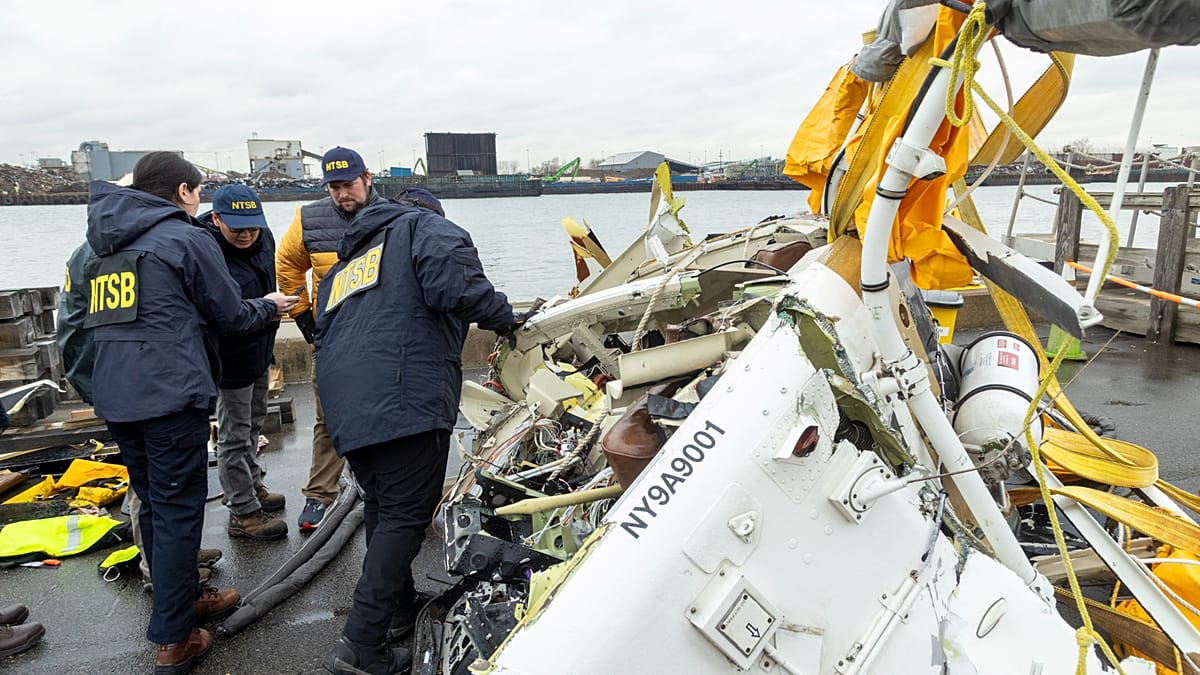
More than a year after a helicopter crash in New York claimed the lives of six people, including the head of Siemens' Spanish division and his family, investigators have confirmed the cause: a collision with a flock of geese. The US National Transportation Safety Board (NTSB) released its final report on Friday, revealing that goose remains were found embedded in the rotor blades of the downed aircraft.
The victims were Agustín Escobar, CEO of Siemens Spain, his wife, and their three children — aged eleven, seven, and four — along with the helicopter pilot. The family, residents of Barcelona, had been on a sightseeing tour over Manhattan on 10 April 2024 when the helicopter lost control and crashed into the Hudson River. Four people died at the scene; two others succumbed to their injuries in hospital.
Bird Strike Over the Hudson
According to the NTSB report, the helicopter was climbing after takeoff from a heliport in Lower Manhattan when it struck a flock of Canada geese. The impact damaged the main rotor blades, causing a catastrophic loss of lift. The aircraft then spiraled into the river, where rescue crews arrived within minutes but were unable to save the occupants.
“The evidence clearly points to a bird strike as the initiating event,” said an NTSB spokesperson. “The geese were ingested into the rotor system, leading to an immediate loss of control.”
The tragedy has reignited discussions about wildlife management near airports and heliports in major cities. New York's Hudson River corridor is a known migratory route for geese, and bird strikes have been a recurring hazard for aviation. In 2009, US Airways Flight 1549 famously landed on the Hudson after a bird strike, but that incident ended without fatalities.
A Family Cut Short
Agustín Escobar, a native of Barcelona, had led Siemens Spain since 2021 and was widely respected in the European industrial sector. He had overseen the company's digital transformation and renewable energy projects across the Iberian Peninsula. His wife, also from Catalonia, worked as a physician. The couple's three children were described by relatives as “full of life and curiosity.”
Joan Camprubí Montal, a relative of the family, laid a memorial wreath at the crash site on the anniversary of the tragedy. “They were a beautiful family, taken too soon,” he told reporters in New York. “We hope this report brings some closure, but the pain remains.”
The crash also claimed the life of the pilot, a veteran with over 20 years of experience. He was identified as a US citizen who had flown thousands of sightseeing tours without incident.
Broader Implications for Aviation Safety
The NTSB's findings are likely to prompt renewed calls for improved bird-detection systems and habitat management around urban heliports. While bird strikes are relatively rare in helicopter operations, they can be more dangerous than for fixed-wing aircraft because of the exposed rotor system.
European aviation authorities have also taken note. The European Union Aviation Safety Agency (EASA) has long recommended radar-based bird detection at major airports, but smaller heliports often lack such technology. The tragedy underscores the need for consistent safety standards across the continent, particularly as helicopter tourism grows in cities like Paris, London, and Barcelona.
For the Escobar family's hometown of Barcelona, the crash was a deeply personal loss. The city's mayor expressed condolences at the time, and a memorial service was held at the Sagrada Família. The tragedy also resonated across Spain's business community, where Escobar was seen as a rising star in the country's industrial landscape.
As the NTSB closes its investigation, the focus now shifts to preventing similar accidents. For the families of the victims, the report offers a definitive answer — but little comfort.