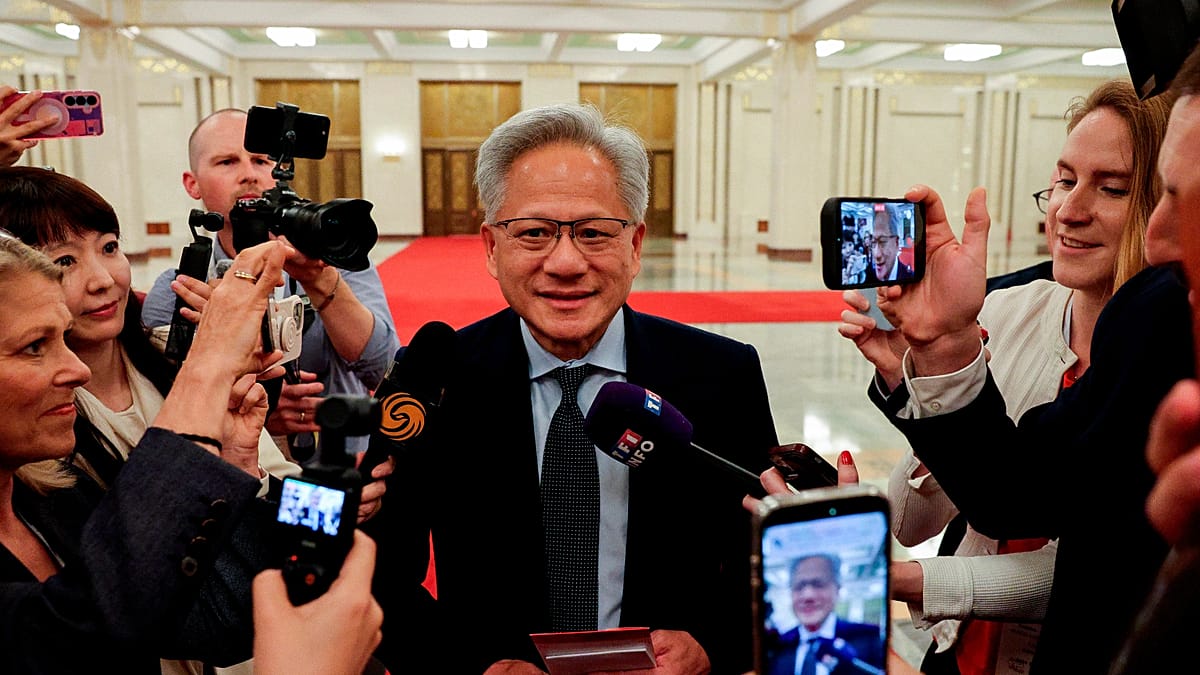
Nvidia's board of directors is reportedly weighing the future of CEO Jensen Huang after fresh allegations of a second extramarital affair surfaced in US media on Wednesday. The development comes just days after Huang acknowledged a relationship with Alice Huang, a senior executive at Singapore-based data centre company Megaspeed, who has been accused of spying for China.
The Wall Street Journal, citing sources close to the matter, reported that the board is preparing to convene to decide on Huang's fate. Meanwhile, The New York Times said video evidence shows the 63-year-old executive being affectionate with Nvidia's vice president of healthcare, Kimberly Powell, marking a second affair.
Powell, 48, has been a prominent figure in Nvidia's push to expand chip technology in higher education and healthcare. At a conference in San Jose, California, bystanders reportedly saw the pair "being affectionate at the hotel," according to The Times.
Fallout from the Alice Huang affair
The report of a second affair follows Huang's admission to having a relationship with Alice Huang, who was photographed with him in Taipei in 2024 and 2025, according to the Wall Street Journal. US intelligence circulated a memo last spring alleging that Alice Huang was an operative for China's Ministry of State Security.
In a note to Nvidia employees on Sunday, Huang acknowledged the relationship, writing, "I was unfaithful to my wife." That same day, Nvidia's board announced it had initiated "an independent investigation in light of recent reporting that founder and CEO Jensen Huang has been the target of a foreign intelligence effort."
"I support the investigation and will cooperate fully. I love our country and our company," Huang wrote. Members of Congress have reportedly called on him to deliver a closed-door briefing about his interactions with Alice Huang, according to The Times.
The scandal has cast a shadow over Huang's public image, which has been closely tied to the AI boom that has propelled Nvidia's stock to unprecedented heights. He has appeared alongside US President Donald Trump at White House events and received the National Medal of Science last month. Trump has defended Huang amid the spy allegations, dismissing concerns about the CEO's loyalty.
Huang's position as one of the world's most influential technology executives, alongside Elon Musk, Jeff Bezos and Mark Zuckerberg, has made the board's decision particularly consequential. The board's investigation is expected to focus on whether Huang's personal conduct has compromised Nvidia's security or reputation, especially given the company's critical role in supplying AI chips globally.
European investors and tech policymakers are watching the situation closely, as Nvidia's chips are central to AI development across the continent, from research labs in Berlin to data centres in Frankfurt. The company's future leadership could affect the pace of AI adoption in Europe, where regulators are already grappling with the implications of the technology.
Nvidia's board has not yet announced a timeline for its decision, but the meeting is expected to take place in the coming days. Analysts say the outcome could hinge on whether the board views Huang's actions as a personal lapse or a threat to the company's integrity.
For now, Huang remains at the helm, but his tenure is increasingly uncertain as the board weighs the future of the company he co-founded in 1993. The investigation, combined with the affair allegations, has raised questions about whether Nvidia can maintain its leadership in the AI sector while navigating a leadership crisis.