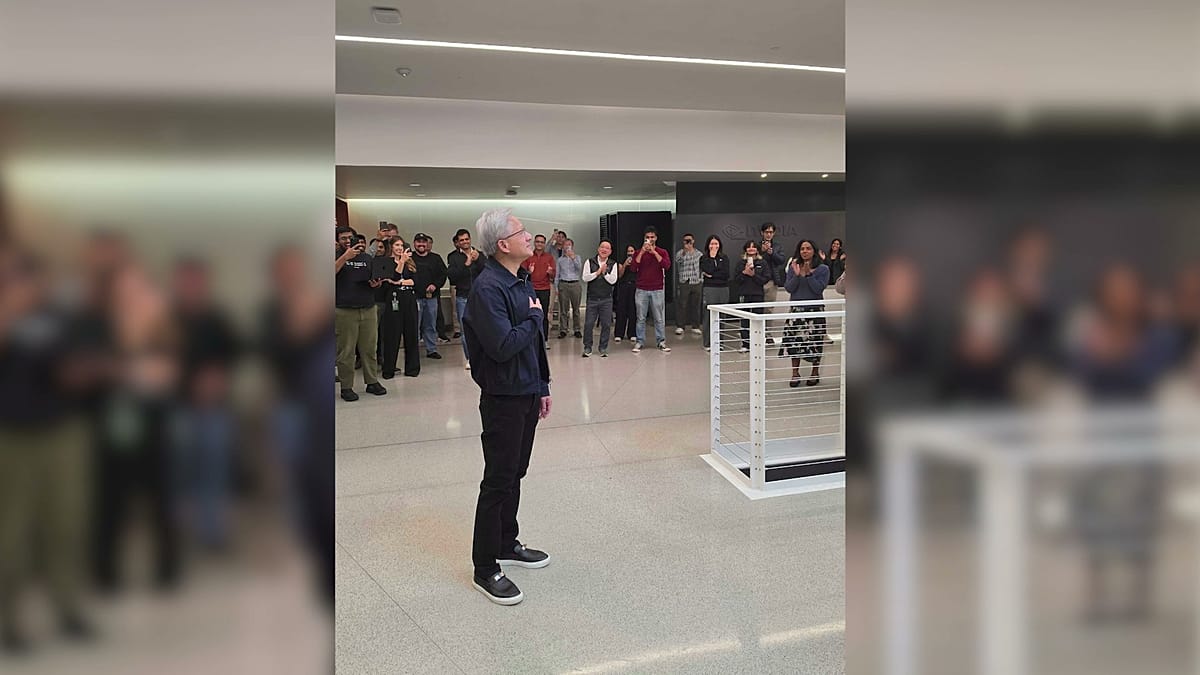
Employees at Nvidia's headquarters in Santa Clara, California, erupted in applause and cheers as co-founder and CEO Jensen Huang walked back into the office on Monday. Footage shared on X shows staff gathered in the company's corridors, chanting Huang's name as he made his way through the building.
The warm reception marks the end of a turbulent fortnight for the chipmaker. Huang had announced his resignation just 11 days earlier, following media reports of extramarital affairs, including an alleged relationship with a Chinese businesswoman suspected of having connections to Beijing's intelligence services. The board of directors reportedly rejected his initial offer to return, but he was reinstated six days later.
A swift comeback with market consequences
Huang's reinstatement has already had a significant impact on financial markets. According to reports, the announcement of his return triggered a record surge in Nvidia's market value, adding roughly $950 billion in a single day. The rally underscores how closely investors tie the company's fortunes to its charismatic founder, who has led Nvidia since its founding in 1993.
The episode has also sparked a global online frenzy, with social media users debating the speed of Huang's return and the circumstances surrounding it. Some commentators have drawn parallels to other tech leaders who have faced similar controversies, while others have focused on the potential national security implications of the alleged ties to Chinese intelligence.
For Europe, the saga carries broader lessons. Nvidia's dominance in AI chips has made it a critical player in the global technology race, and European policymakers have been watching closely as they seek to build their own AI capabilities. The company's recent struggles—including its worst stock run since 2008—have been a reminder of the volatility inherent in the sector.
European tech leaders have often pointed to the need for homegrown champions to reduce dependence on American and Asian firms. As Israel's tech boom demonstrates, targeted investment and a supportive regulatory environment can foster innovation. Whether Europe can replicate that success remains an open question.
The Nvidia drama also intersects with European politics. Former US President Donald Trump has publicly backed Huang's reinstatement, a move that could influence transatlantic tech relations. Meanwhile, the EU has been grappling with its own tech sovereignty agenda, including efforts to regulate AI and semiconductor supply chains.
Huang's return is not just a corporate story; it is a test case for how quickly reputational crises can be resolved in the tech world. For employees, the ovation was a clear signal of loyalty. For investors, it was a vote of confidence. For Europe, it is a reminder that the global tech landscape is shaped by personalities as much as by policy.
As Nvidia moves forward, the company will need to address the underlying questions about governance and oversight that the controversy raised. The board's initial rejection of Huang's offer suggests some internal resistance, but the final decision to reinstate him indicates that his leadership remains indispensable in the eyes of many.
For now, the standing ovation at Santa Clara serves as a powerful image of a workforce rallying behind its leader. Whether that enthusiasm translates into sustained business success remains to be seen, but for the moment, Jensen Huang is back at the helm.