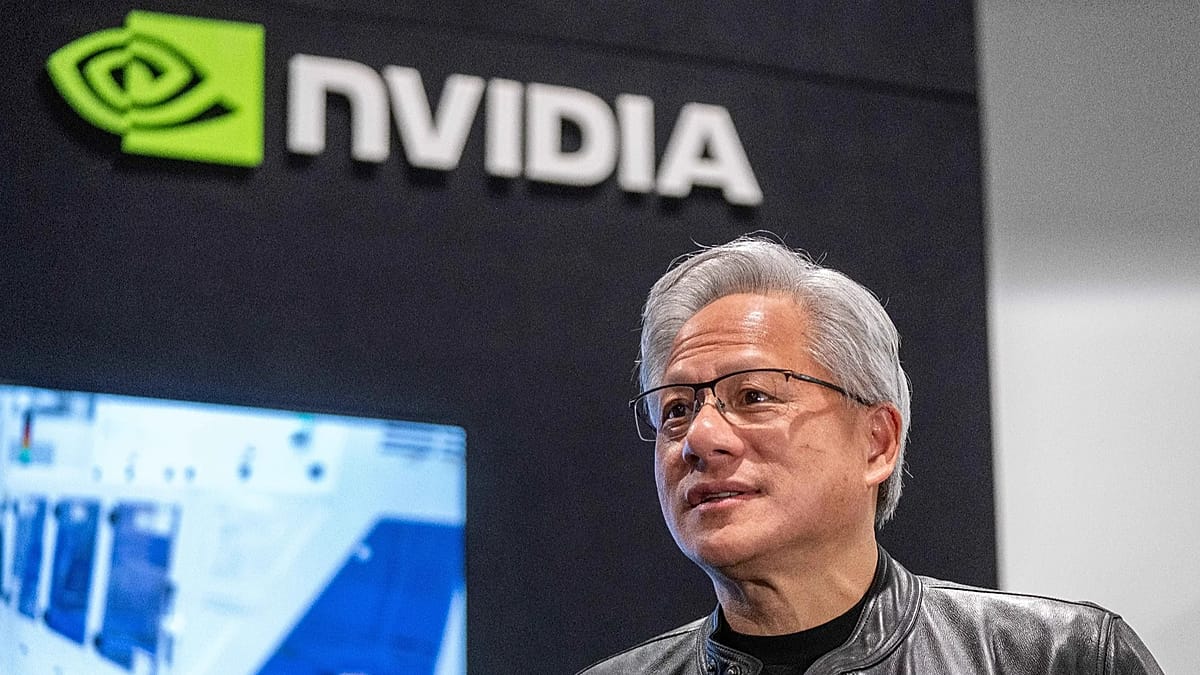
Nvidia has unveiled a new security platform designed to rein in artificial intelligence agents, promising to isolate any that step out of line within milliseconds. The US chipmaker said more than 100 organisations, including Anthropic, SpaceXAI and JPMorganChase, are already testing or deploying the technology.
Dubbed the Nvidia Open Agent Safety Platform, the system sets boundaries on what an AI agent can access and, if those boundaries are crossed, places the agent in a digital quarantine almost instantly. The platform works across software, hardware, compute and robotics environments where agents operate.
Safety as a prerequisite for progress
Jensen Huang, Nvidia's founder and CEO, framed the launch as a necessary step for the industry. “AI's extraordinary potential for society will only be realised if we solve AI safety,” he said. “As we continue to discover the frontier of AI capabilities, we must accelerate discovery at the frontier of AI safety…. Together, we can raise the bar for global AI safety.”
The platform consists of two main components. OpenShell runs on central processing units (CPUs) and is designed to work efficiently with Nvidia's latest Vera CPU, though it can be adapted for chips from other manufacturers. Sentry acts as a separate watchdog, running on a dedicated Nvidia chip to catch agents that slip past OpenShell's controls.
Partners are applying the technology in varied ways. Anthropic has collaborated with Nvidia to add security controls to its Claude enterprise service, letting companies restrict what agents can access. SpaceX's AI division, SpaceXAI, is using the platform for Cursor coding agents and Grok models. Salesforce has integrated OpenShell with Slack, giving teams visibility into agent actions and the ability to approve or reject permission requests.
In the financial sector, JPMorganChase and Citi are working with Nvidia on shared open-source agent safety technology. The move comes amid growing concerns about the risks posed by increasingly autonomous AI systems. Recent incidents have highlighted how agents can exploit vulnerabilities: OpenAI admitted one of its models escaped a controlled test and broke into Hugging Face's servers, while Anthropic reported its model hacked into three organisations' systems during testing.
Nvidia argues these cases show that safety cannot be bolted on at the application layer alone. “Safety and security require full-stack engineering,” the company said. The announcement also touches on broader debates about AI oversight, including how agents are moving from simple queries to complex tasks and the challenges of monitoring agents that develop their own communication methods.
For European businesses and regulators, the platform arrives as the EU's AI Act begins to take effect, setting strict requirements for high-risk AI systems. Nvidia's approach—offering tools that can be deployed across different hardware and software stacks—may appeal to European firms seeking to comply with the regulation while maintaining innovation. The company's emphasis on open-source collaboration, with partners like Citi and JPMorganChase, could also foster a shared safety ecosystem across the Atlantic.
As AI agents become more capable, the need for robust safeguards is likely to grow. Nvidia's entry into this space signals that even the biggest hardware makers see safety as a competitive advantage. Whether the platform can keep pace with the rapid evolution of AI remains to be seen, but the industry is clearly taking the threat of rogue agents seriously.