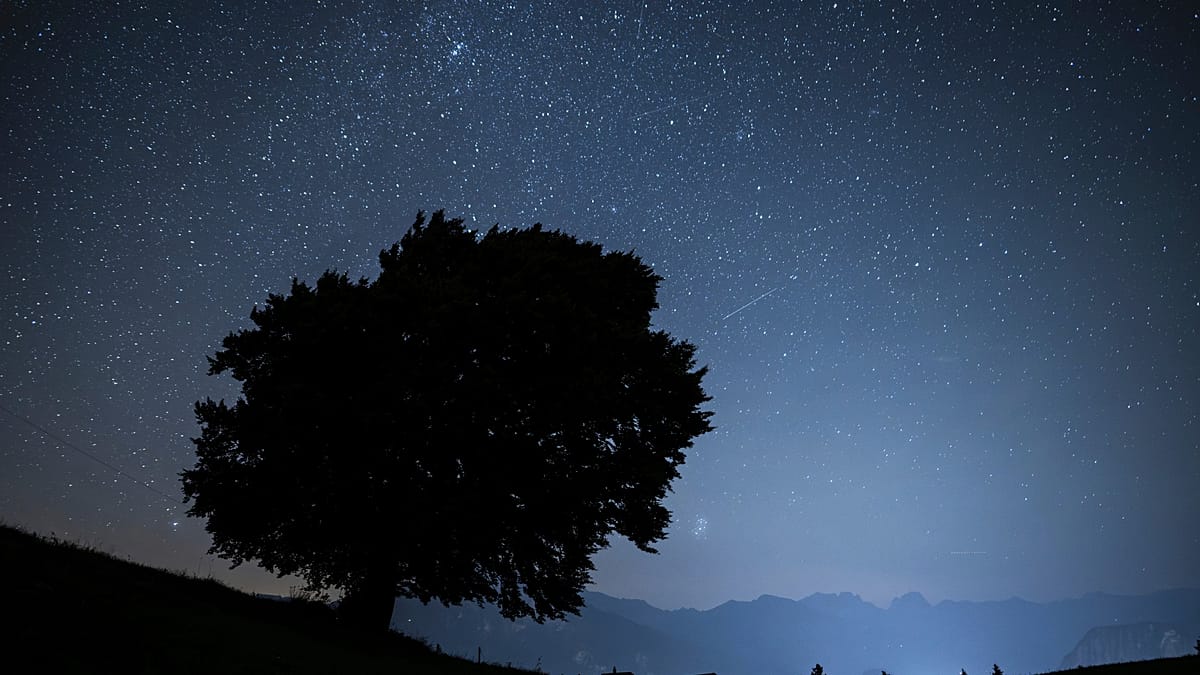
October nights across Europe promise a celestial show as three meteor showers peak, offering stargazers from Lisbon to Warsaw a reason to look up. The first, the Draconids, is unusual because it is best seen in the early evening, making it ideal for casual observers who prefer not to stay up until dawn.
According to Royal Museums Greenwich (RMG), the Draconids' radiant point—located in the constellation Draco—sits highest in the sky just after nightfall. This year, the thin waning crescent moon will not rise until just before sunrise, leaving the skies dark and favourable for viewing. The shower is active from 6 to 10 October, with the peak expected on the nights of 8 and 9 October.
How to watch the Draconids
To get the best view, find a spot with an unobstructed horizon and minimal light pollution—perhaps a rural hilltop in the Scottish Highlands or a quiet beach on the Algarve. No telescope or binoculars are needed; the meteors are visible to the naked eye. The display occurs as Earth passes through debris left by comet 21P/Giacobini-Zinner, with particles as small as a grain of sand creating the streaks.
The Draconids are relatively slow-moving, which makes them less conspicuous than faster showers. Under ideal conditions, observers might see around 10 meteors per hour. Patience is key, but the early-evening timing means you can enjoy the show without sacrificing sleep.
More meteor showers in October
If you miss the Draconids, the Southern Taurids offer another chance. Active from 20 September to 20 November, they reach a first peak around 14 October, best viewed between midnight and 3 am. A second peak on 4-5 November is known for producing slow, bright meteors—sometimes called 'Halloween fireballs'—which can be particularly striking.
The Orionid meteor shower, active from 2 October to 7 November, peaks on the night of 21 October. Named after its radiant near the constellation Orion, it originates from debris shed by Halley's Comet. According to NASA, observers in suburban areas might see three to six meteors per hour, with more in darker locations. The best viewing is in the early hours of 22 October, after the waxing gibbous moon sets.
For those planning a meteor-watching outing, consider combining it with a visit to one of Europe's dark-sky reserves, such as the Westhavelland in Germany or the Pic du Midi in France. These locations offer some of the continent's clearest views of the night sky.
As October progresses, the unseasonably warm weather across parts of Europe might make outdoor viewing more comfortable, though it also raises questions about the coming winter.
Finally, on 26 October, the Hunter's Moon—the full moon following the Harvest Moon—will rise, providing a bright finale to the month's celestial events. While it may wash out some fainter meteors, it offers its own spectacle, especially when it appears low on the horizon.
Whether you are a seasoned astronomer or a curious newcomer, October's night skies have something to offer. For more ideas on how to enjoy the season, check out our guide to spooky European getaways for Halloween.