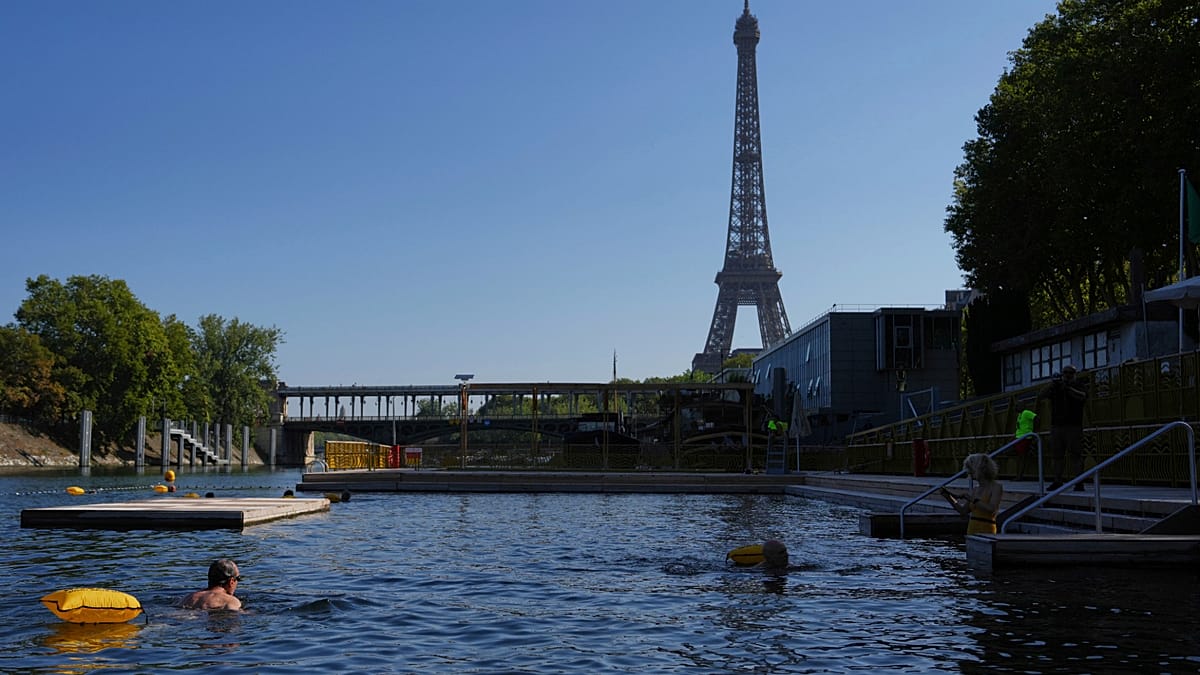
Parisians have found a new way to experience the Seine: electric hydrofoil boards that lift riders above the water, creating a sensation of flight. The e-foil, as it is known, combines an electric motor, a submerged hydrofoil, and a rechargeable battery, allowing the board to rise above the river's surface once it reaches speed.
Nicolas Pernodet, co-founder of Foil in Paris, explains the mechanics: "It's got a board to climb on, and it's got a mast that's fitted with a motor at the back. It's got a wing, like an aircraft wing, and that's the surface we're going to use to 'fly'. Then you put the battery inside, and this battery will give you two hours of autonomy. So you'll be able to cover 30 to 40 kilometres with it. And as you can see, everything is set up in 10 seconds."
The activity offers a novel way to see the French capital, and Pernodet insists it is easier to learn than many people assume. Participants describe the experience as unlike any other water sport. "The feeling you're after is that of rising up above the water. It's pretty rare. Personally, I've never come across a sport that lets you come out of the water while staying balanced. So it's quite unique — and what's more, it's in Paris," says Lilian, who works in finance.
A silent ride over the river
Unlike jet skis or motorboats, the e-foil produces no noise and no direct emissions, making it an environmentally friendly option for urban waterways. The board's electric motor is powered by a lithium battery, which can be recharged from a standard outlet. This aligns with broader European efforts to reduce pollution in cities, as seen in record solar power generation across the EU and initiatives to promote cleaner transport.
The Seine has long been a hub for leisure activities, from river cruises to kayaking, but the e-foil adds a futuristic twist. Riders can glide past iconic landmarks such as the Eiffel Tower and Notre-Dame, gaining a perspective that is both serene and exhilarating. The board's hydrofoil design reduces drag, allowing for a smooth, almost silent journey.
Foil in Paris offers lessons and rentals, with instructors guiding beginners through the basics. The learning curve is shorter than for traditional surfing, as the board is stable once it lifts off. "The first time you feel the board rise, it's a thrill," says Pernodet. "After a few tries, most people can ride for several minutes without falling."
The service has quickly gained popularity among locals and tourists alike. "It's a unique way to see the city," says Marie, a Parisian who tried the e-foil last weekend. "You're not just on the water; you're above it. It's like flying, but you're still connected to the river."
While the activity is still niche, it reflects a growing trend in Europe of using electric propulsion for personal watercraft. From Amsterdam's canals to Lake Geneva, similar boards are appearing, offering a quiet and clean alternative to traditional motorized sports. The technology is also being explored for other uses, such as solar-powered solutions in agriculture, showing how innovation can intersect with sustainability.
For now, the e-foil remains a premium experience, with rental prices starting at around €60 for a 30-minute session. But as battery costs fall and the technology matures, it could become more accessible. Pernodet hopes to expand the service to other French cities, including Lyon and Marseille, where rivers and coastlines offer ample opportunities.
The e-foil is not just a novelty; it is a testament to how European cities are embracing clean technology. As Paris prepares for the 2024 Olympics, the Seine is set to play a central role, and the e-foil could become a symbol of the city's forward-looking spirit. Whether for leisure or sport, it offers a new way to connect with the river that has defined the capital for centuries.