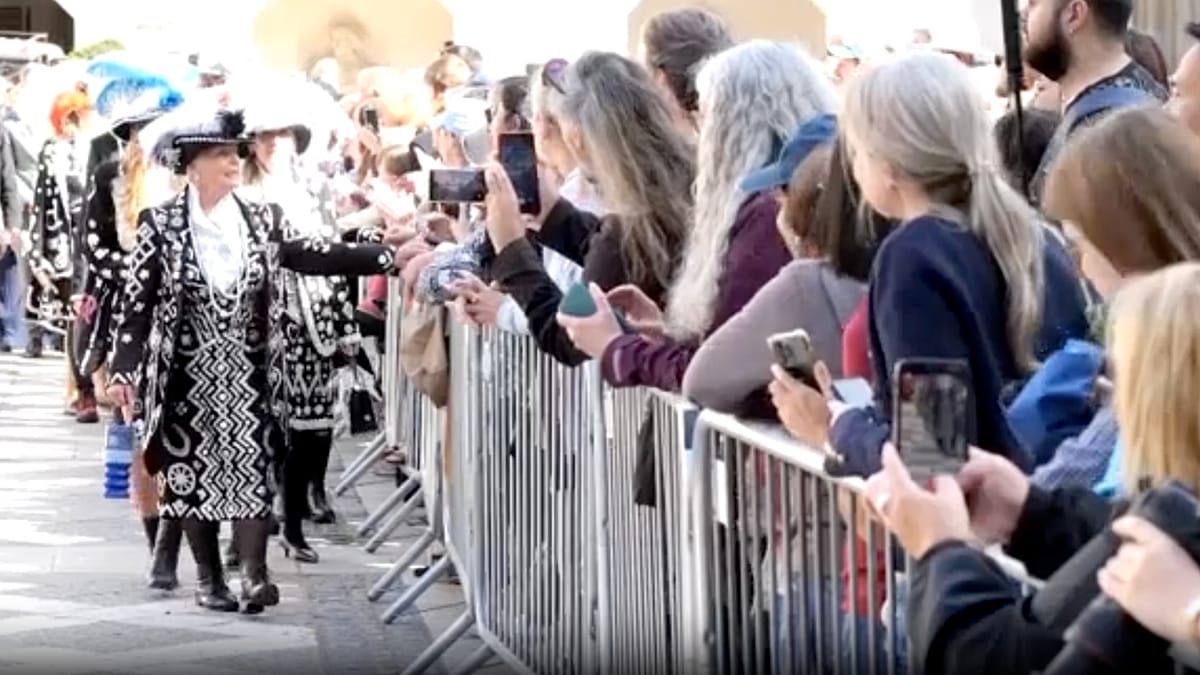
In an age when London's older working-class neighbourhoods have been reshaped by gentrification and soaring property prices, one tradition stubbornly refuses to fade. The Pearly Kings and Queens — men and women who parade through the capital in dark suits and dresses encrusted with thousands of mother-of-pearl buttons — remain a living link to the city's Cockney past.
The custom traces its origins to Henry Croft, a road sweeper born in 1861 in Somers Town, near St Pancras. Crott, who grew up in the workhouse, was inspired by the costermongers of the street markets, whose trousers were decorated with a row of pearl buttons. He began sewing buttons across an entire suit and used his striking appearance to draw attention to charitable collections. By the late 19th century, each London borough had its own Pearly King or Queen, and the role became a fixture of civic life.
A tradition rooted in charity and community
Today the Pearly organisations remain primarily fundraising bodies. They appear at festivals, hospital wards, and community events, collecting money for causes ranging from cancer research to local youth clubs. The costumes themselves are works of folk art: a single suit can carry more than 30,000 buttons, arranged in patterns that often spell out the wearer's name, borough, or a motto. Each outfit is unique, hand-stitched over months or even years.
The Pearly Kings and Queens have become a recognisable symbol of London's East End and beyond, appearing at the annual Lord Mayor's Show and the New Year's Day parade. Yet their numbers have dwindled. Where once dozens of families held the title, only a handful of active Pearly monarchs remain, concentrated in boroughs such as Hackney, Islington, and Camden.
"It's not about the buttons," one Pearly Queen told a local historian. "It's about what you do for other people. That's what Henry Croft started, and that's what we carry on."
The tradition has also found new audiences. Photographers and documentary makers have turned their lenses on the Pearlies, and fashion designers have referenced their buttoned aesthetic. For many younger Londoners, the Pearlies represent a form of heritage that is neither nostalgic nor exclusive but simply part of the city's fabric.
Still, the future is uncertain. The cost of maintaining a full Pearly outfit can run into thousands of pounds, and the time commitment is considerable. Some families have passed the role down through generations; others have struggled to find successors. Community groups have called for greater recognition and support, arguing that the Pearlies are as much a part of London's identity as its museums or its football clubs.
In a capital that often seems to prize the new over the old, the Pearly Kings and Queens offer a reminder that tradition can be both stubborn and generous. Their buttons may be small, but they carry the weight of a century and a half of London life.