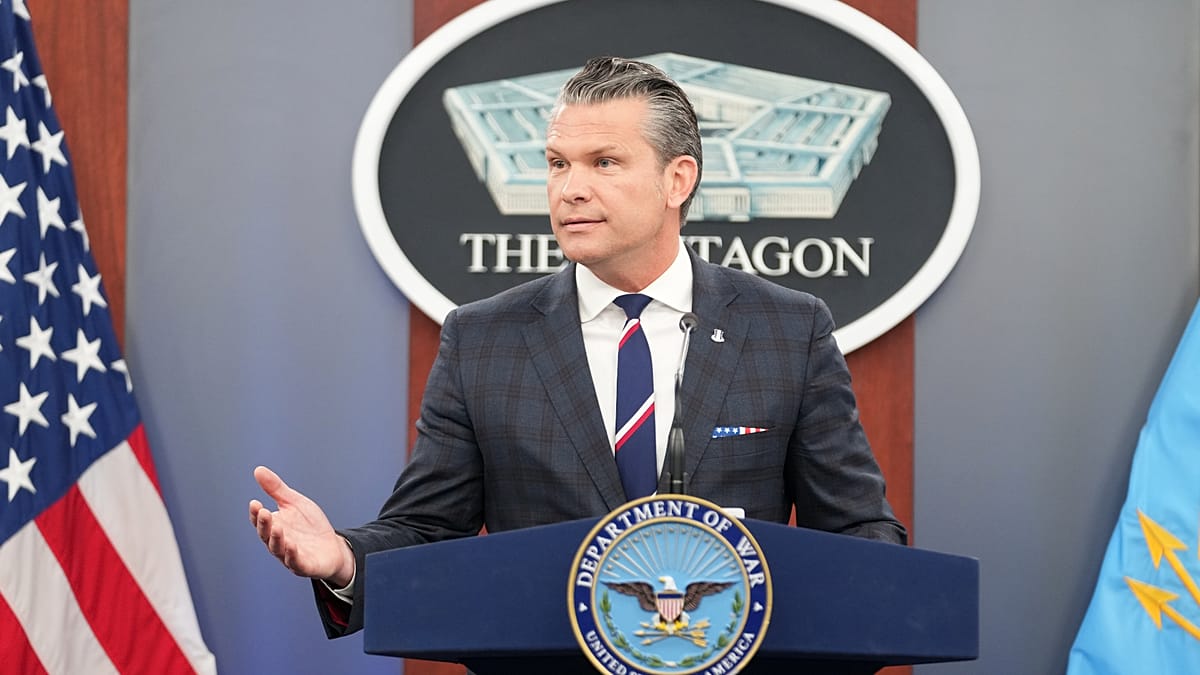
The Pentagon has issued a sharply worded rebuke of Canada's military posture, accusing Ottawa of failing as a credible partner in North American defence. In a fact sheet released on Monday, the US Department of Defense under Secretary Pete Hegseth said Canada has avoided the difficult choices needed to modernise its forces and meet NATO obligations.
"Canada's defense shortfalls speak for themselves," the document states. "Canada must get serious and focused." Hegseth is described as "laser focused" on modernising Canada's military after decades of American taxpayers funding its defence.
The criticism comes as Prime Minister Mark Carney diversifies defence spending and weighs alternatives to US-made equipment amid strained relations with the Trump administration. Carney has ordered a review of the plan to buy 88 American F-35 fighter jets, with Swedish Gripen jets under consideration as a potential alternative that could bring manufacturing jobs to Canada.
Readiness and spending under fire
The Pentagon fact sheet highlights significant readiness gaps: only 41.9% of Canada's air force fleet and 53.9% of its naval fleet were serviceable in 2025-26, with army readiness at 48%. It also notes that Ottawa has no credible, fully costed route to NATO's 5% of GDP defence spending target, deferring its largest increases until after the 2029 federal election. Canada's parliamentary budget watchdog has questioned how the government will achieve that goal.
The rebuke follows a classified Hegseth directive that, according to Republican Senator Mike Rounds, largely curbs US military officials from participating in a Canadian think tank and social events. Ties between the two countries are already strained by President Donald Trump's trade war and his repeated threats to make Canada the 51st state.
The fact sheet also warns that a mixed fighter fleet could aggravate personnel shortages, and accuses Canadian leaders of prioritising domestic economic interests over military effectiveness, leaving the jointly run North American Aerospace Defense Command (NORAD) in uncertainty.
Carney has acknowledged readiness problems, noting that only one of Canada's four submarines is seaworthy. His government plans to buy up to 12 replacements. "We should no longer send three-quarters of our defense capital spending to America," he said in June.
While other NATO members also lag on the 5% goal, the Pentagon has praised Germany's military buildup as a "tectonic shift" and called Poland a "true model ally." The contrast underscores the depth of Washington's frustration with Ottawa.
Pentagon officials were already barred from the Halifax International Security Forum in Canada under 2025 restrictions imposed by the Trump administration. Forum president Peter Van Praagh, a former adviser to a previous Canadian conservative government, warned before the 3 November midterms that Trump might undermine the results after heavy Republican losses, saying that if he succeeded, it would mean "the end of the United States as we know it."
Neither Canada's Department of National Defence nor Carney's office commented on the fact sheet, and the defence minister's office did not reply to a request for comment.
The dispute comes as Canada seeks to deepen ties with Europe, including new agreements on minerals, defence, and education. Ottawa is also exploring new partnerships beyond North America, though Taiwan has cautioned Canada on China trade as Carney looks for new allies. The broader context includes warnings from the EU's military chief about hybrid threats and the need for faster defence buildup across the continent.