Peter Gill, the Welsh playwright and director whose intimate dramas and innovative productions left an indelible mark on British and European theatre, died on Monday at the age of 86. His agent, Mel Kenyon, confirmed the news, prompting tributes from across the theatrical world.
Born in Cardiff in 1939, Gill rose from a working-class Catholic upbringing to become one of the most respected figures in modern theatre. He began his career as an actor at London's Royal Court in 1958, aged just 18, later appearing with the Royal Shakespeare Company in Michael Elliott's celebrated production of As You Like It.
Encouraged by Royal Court artistic director George Devine, Gill turned to directing. His 1965 production of D.H. Lawrence's A Collier's Friday Night launched his directorial career and began a lifelong engagement with Lawrence's work. He revived plays such as The Daughter-in-Law and The Widowing of Mrs Holroyd, introducing new audiences to the novelist's overlooked dramas.
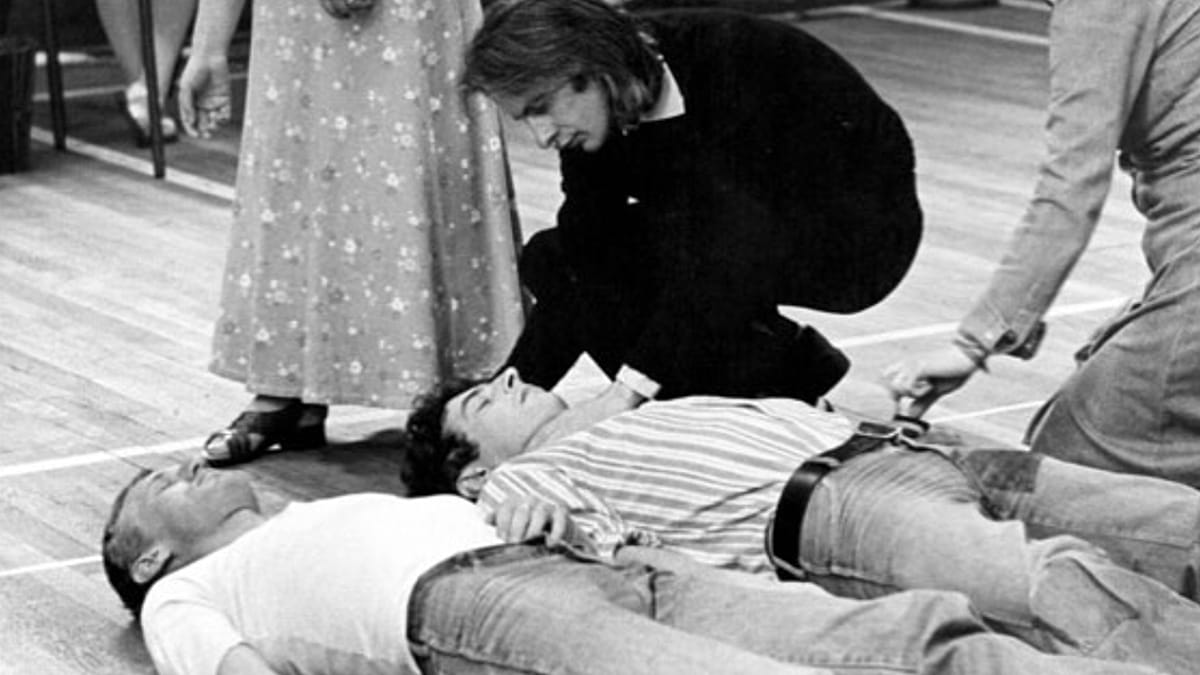
Over a career spanning more than five decades, Gill directed nearly 100 productions, from the Royal Court to the National Theatre. His influence extended beyond the stage: in 1976 he became the first artistic director of Riverside Studios in west London, where he staged his own work, presented international companies, and established actor workshops. In 1980 he joined the National Theatre as associate director, and in 1984 he founded the National Theatre Studio, a space for experimentation away from public performance.
A playwright of quiet power
Gill was equally celebrated as a writer. Drawing on his Cardiff upbringing, his plays explored family, class, and sexuality, often finding profound drama in ordinary lives. Among his best-known works are The Sleepers Den, Small Change, and Kick for Touch, but it is The York Realist (2002) – a tender story of a Yorkshire farmer and a London theatre director – that remains his most acclaimed.
His agent, Mel Kenyon, said Gill's work possessed a "rare emotional delicacy" and was "beautifully observed and finely tuned." Kenyon described him as "a gentle man with a fierce intelligence," adding: "Whenever we talked, I walked away a wiser person. He taught me so much just by being him. He was a singular man, a kind, generous and curious man. I will miss him greatly."
Theatre director Michael Grandage called Gill's contribution "quietly seismic," noting that "future generations discovering Peter's work will happen upon some of the finest plays written in the last 70 years with unquestionably some of the most beautiful prose in the English language."
Gill was appointed OBE in 1980 for services to theatre. He reflected on his career in the memoir Apprenticeship, published in 2008. His legacy extends across Europe, where his productions and plays have been staged in translation, influencing directors and writers from Dublin to Berlin. As the continent's theatre community mourns his loss, his work remains a touchstone for those who believe in the power of quiet, precise storytelling.