Warsaw's skyline is a testament to three decades of transformation. Once a symbol of post-communist austerity, the Polish capital now bristles with glass towers and cranes, mirroring a country that has climbed from the periphery to the core of Europe's economic map. Yet beneath the gleaming facade, a more sober question is taking shape: can this rise endure?
Poland's growth story is remarkable by any measure. Since joining the European Union in 2004, it has consistently outpaced its peers, weathering the 2008 financial crisis and the pandemic with relative ease. Its GDP per capita has converged toward the EU average, and its manufacturing base, particularly in automotive and electronics, has made it a key hub for European supply chains. But the very factors that fueled this ascent are now under strain.
The fiscal tightrope
The country's public finances are showing cracks. A budget deficit that has ballooned to over 5% of GDP, driven by generous social spending and a costly defence modernisation programme, is raising eyebrows in Brussels and among investors. Poland's decision to ramp up military expenditure to nearly 4% of GDP, the highest in NATO as a share of output, reflects its geopolitical anxieties, particularly regarding Russia's war in neighbouring Ukraine. But it also leaves less room for the investments needed to upgrade infrastructure, energy grids, and digital services.
Economists warn that Poland's growth model, heavily reliant on EU structural funds and low-cost labour, is reaching its limits. With unemployment at historic lows and wages rising, the competitive edge is fading. The country must now move up the value chain, investing in innovation, research, and higher-skilled industries. That transition is neither automatic nor easy.
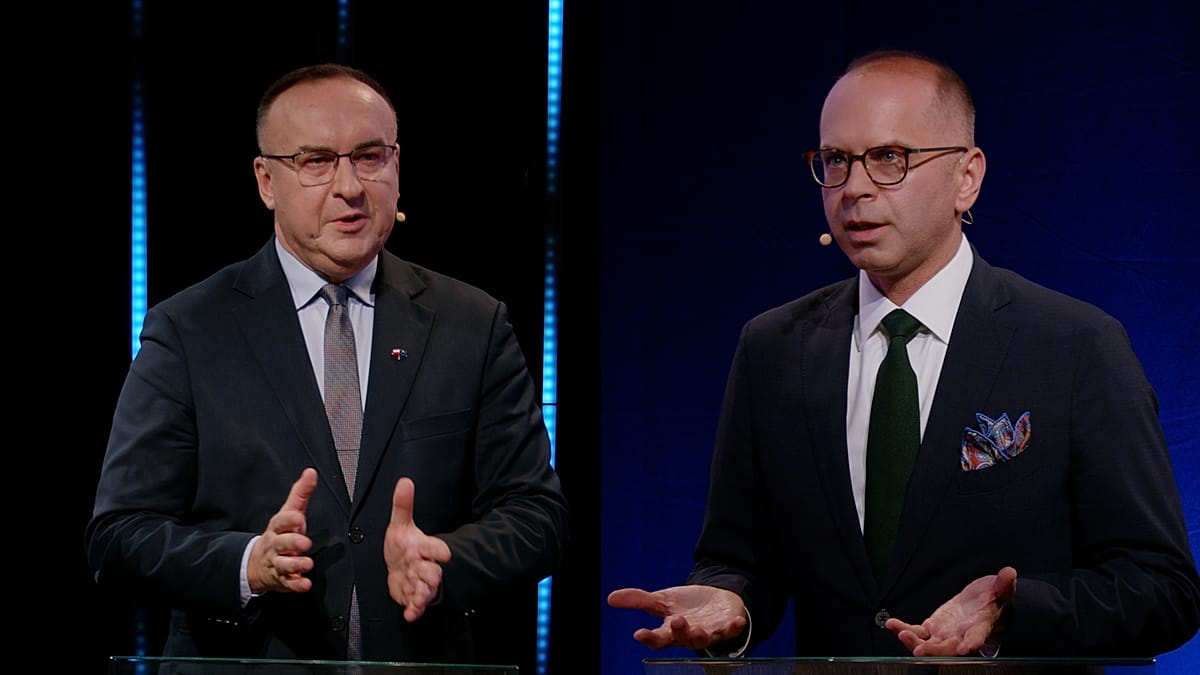
These pressures were the focus of a special edition of The Ring, broadcast from Warsaw, which brought together two Members of the European Parliament: Michał Szczerba of the centre-right European People's Party and Michał Kobosko of the liberal Renew Europe group. Their discussion touched on the sustainability of Poland's economic model, the role of EU funds, and the political choices ahead.
Szczerba emphasised the need for fiscal prudence while maintaining social cohesion. Kobosko argued that Poland must embrace structural reforms to unlock private investment and reduce its dependence on public spending. Both acknowledged that the coming years will be decisive.
The debate also highlighted the broader European context. Poland's trajectory is not just a national story; it has implications for the entire continent. As the EU debates enlargement and internal reform, Poland's experience offers lessons on how a former eastern bloc country can integrate and thrive. Yet it also underscores the challenges of convergence in a bloc where economic disparities remain significant.
Security is another layer. Poland has become a frontline state in NATO's eastern flank, hosting allied troops and serving as a logistics hub for military aid to Ukraine. Sweden's recent deployment of Patriot systems to Poland to guard a key aid hub underscores the country's strategic importance. But defence spending, while necessary, competes with other priorities, and the fiscal burden is real.
The political landscape adds further complexity. Poland's government, a coalition led by Prime Minister Donald Tusk, has promised to restore rule-of-law standards and unlock EU recovery funds that were frozen under the previous administration. Those funds, worth billions of euros, are now flowing, but they come with conditions that require painful reforms in areas like judicial independence and energy policy.
For ordinary Poles, the stakes are tangible. Inflation has eroded purchasing power, and housing costs in cities like Warsaw have soared. The country's young, well-educated workforce is increasingly mobile, and some are looking west for opportunities. The challenge is to create an environment where they see a future at home.
As the debate in Warsaw made clear, Poland's economic rise is not a finished story. It is a work in progress, with the next chapter dependent on fiscal discipline, structural reform, and the ability to navigate a volatile geopolitical landscape. The country has defied expectations before; whether it can do so again is the question of the decade.