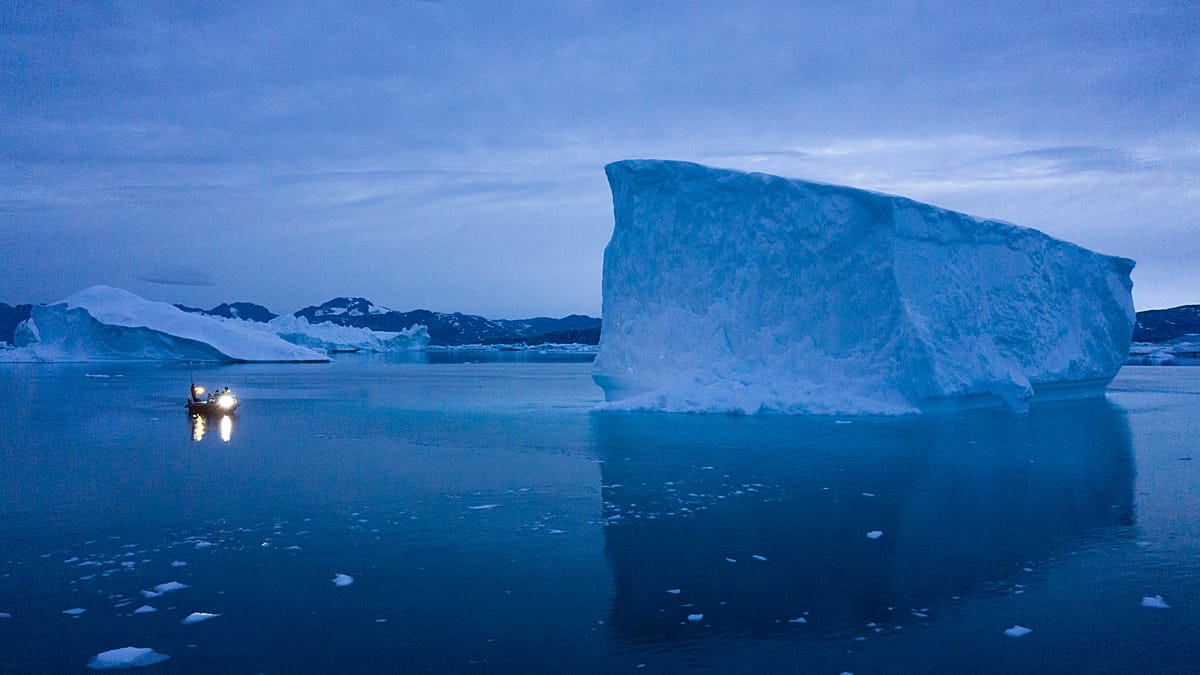
For more than four decades, the vast ice sheets of Greenland and Antarctica have been shrinking at an accelerating pace. A comprehensive new study, combining satellite data from 1979 onward for Antarctica and from 1972 for Greenland, reveals a total loss of 12.5 trillion tonnes of ice. That melt has already added roughly 3.2 centimetres to global sea levels.
The research, led by scientists at Northumbria University in the UK, shows that the ice sheets remained relatively stable through the 1970s, 1980s, and into the early 1990s. But from the mid-1990s onward, the rate of loss began to climb, with the most dramatic acceleration recorded during the 2010s.
Warmer oceans drive most of the melt
According to the study, about 84 per cent of the ice loss is linked to increased discharge of glaciers into the sea. Warmer ocean waters erode ice from below and at the edges of glaciers, causing them to flow faster toward the coast. The remaining 16 per cent is attributed to surface melting and other processes.
Inès Otosaka, an ice scientist at Northumbria University and lead author of the study, said the trend is unmistakable. “There is a clear trend that the ice sheets are losing more mass and it has been increasing from decade to decade,” she told reporters. She added that the changes are directly tied to rising air and ocean temperatures.
One striking example is Greenland’s Jakobshavn glacier, which is now retreating by up to 50 metres per day. This glacier, located near the town of Ilulissat, has become a symbol of the rapid changes affecting the Arctic.
Sea level rise and coastal impacts
The 3.2 centimetres of sea level rise attributed to polar ice loss may sound modest, but scientists stress that even small increases have significant consequences. For every centimetre of rise, an estimated two to three million more people are exposed to annual coastal flooding.
Between 2020 and 2023, the rate of ice loss slowed slightly. However, the researchers attribute this to short-term weather patterns, not a reversal of the long-term trend. They also warn that ice sheets respond to climate change over decades, meaning that even if global warming were halted, the ice would continue to melt for years to come.
The findings come as the European Union steps up its engagement with Greenland. In a recent visit, European Commission President Ursula von der Leyen announced €200 million in EU funding for Greenland, a move seen as countering US ambitions in the region. The EU’s interest in the Arctic is not only geopolitical but also environmental, as the region’s ice loss has global implications.
Meanwhile, Greenland is also confronting its colonial past. The island has launched a truth commission on forced contraception of Inuit women, a painful chapter that Denmark is now addressing with compensation plans.
As the ice sheets continue to lose mass, the study underscores the urgency of reducing greenhouse gas emissions. The data, published in the journal Nature, provides the longest continuous record of polar ice loss to date, offering a stark baseline for future climate action.