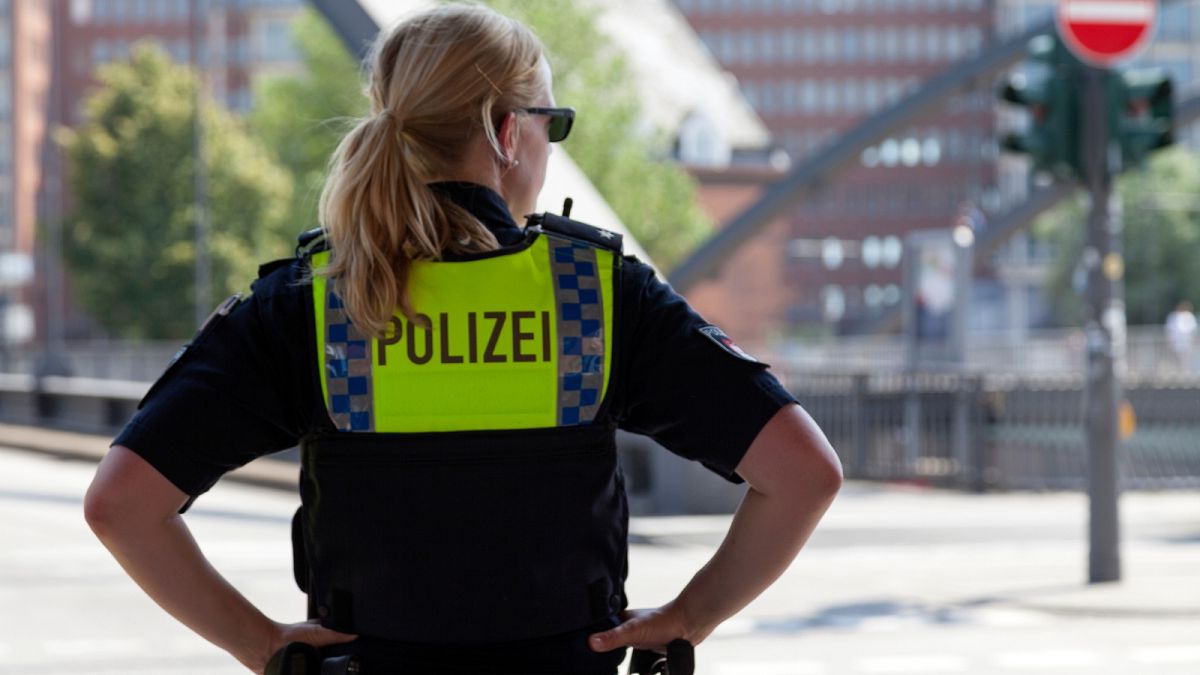
European governments allocate significant resources to public order and safety—1.7% of EU GDP in 2022—but the compensation for police officers varies dramatically across the continent. Drawing on Eurostat's Salary Calculator, a detailed comparison of police salaries reveals a clear north-south and east-west divide, with Northern and Western European countries consistently offering the highest pay.
For a 35-year-old male police officer with over ten years of experience, lower tertiary education, and a standard 36-hour work week, monthly gross salaries in 2023 ranged from €699 in Bulgaria to €5,761 in Denmark. Denmark leads by a wide margin, followed by Germany, Luxembourg, and Belgium, each paying around €4,200. The Netherlands (€3,881) and Ireland (€3,576) also rank high, while France (€3,395) and Italy (€2,537) fall behind. Among the EU's four largest economies, Spanish police officers earn the least at €2,271.
At the lower end, five EU countries pay officers less than €1,250 per month: Hungary, Poland, Romania, and Croatia hover just above €1,050, while Bulgaria's €699 is the lowest in the bloc. These figures underscore persistent economic disparities that affect not only living standards but also the attractiveness of policing as a career in these regions.
Gender Pay Gap and Inspector Salaries
The gender pay gap remains a significant issue across European police forces. In most EU countries, male officers earn over 10% more than their female colleagues. Luxembourg is the sole exception, where women police officers earn slightly more than men. In 2022, women made up just one in five police officers across the EU.
For police inspectors and detectives—typically older, more experienced personnel—salaries are substantially higher. A 40-year-old male with over 15 years of experience and a 36-hour week earns between €1,316 in Bulgaria and €6,351 in Denmark. Ireland (€5,451), Germany (€5,300), and Luxembourg (€5,243) also offer over €5,000, while Austria (€4,860), the Netherlands (€4,563), and Belgium (€4,144) exceed €4,000. Among the Big Four, Germany stands out with salaries above €5,000, compared to €3,763 in France, €2,878 in Italy, and €2,456 in Spain. Inspector salaries fall below €2,000 in Bulgaria, Latvia, Croatia, Lithuania, Romania, Poland, and Hungary.
When adjusted for purchasing power (PPS), the gaps narrow but remain substantial. Denmark still tops the list for police officers at 4,397 PPS, while Bulgaria remains at the bottom with 1,158 PPS. Portugal ranks fourth from the bottom at 1,632 PPS, and Spain, among the Big Four, has the lowest at 2,481 PPS. For inspectors and detectives, Denmark leads at 4,848 PPS, followed by Germany and Ireland, while Bulgaria (2,179 PPS), Hungary (2,211 PPS), and Lithuania (2,248 PPS) bring up the rear. The gender pay gap persists in PPS terms, though Ireland offers the highest PPS for women inspectors and detectives at 4,539, while Estonia and Latvia report figures even lower than Bulgaria.
These disparities are not merely statistical—they reflect broader economic realities and affect recruitment, retention, and morale in police forces across Europe. As the continent grapples with challenges ranging from organised crime to migration, ensuring fair compensation for law enforcement remains a pressing policy issue. The data, which covers capital city regions, may vary within countries, but the overall pattern is clear: Northern and Western Europe pay their police officers significantly more than their Eastern and Southern counterparts, even after accounting for cost-of-living differences.
For context, the UK, not included in Eurostat's estimates, offers annual police salaries ranging from £29,000 (€35,337) to £46,000 (€55,880), depending on experience, with a typical 37-40 hour week. In the Metropolitan Police, starting salaries are £38,269 (€46,479), rising to £56,593 (€68,734) within seven years—equivalent to roughly €5,728 per month. These figures place the UK in the upper-middle tier of European police pay, comparable to countries like Ireland and the Netherlands.
The findings come amid broader debates about public sector wages and social stability across Europe. As housing costs soar and inflation erodes purchasing power, police salaries in many countries may struggle to keep pace with the cost of living. Meanwhile, the EU's average of 341 police officers per 100,000 people masks wide variation, from 137 in Finland to 550 in Cyprus, highlighting different approaches to public safety.