For one weekend each autumn, Europe’s cultural institutions open their doors a little wider, inviting the public to explore the continent’s shared heritage. This year, the European Heritage Days (EHD) – a joint initiative of the Council of Europe and the European Commission – will see the Pompeii Archaeological Park transform its ancient streets and amphitheatres into a living tableau of 1st-century Roman life.
On Saturday 26 and Sunday 27 September 2026, the park will host a series of historical re-enactments and educational activities, all built around the EHD theme “Protecting heritage. Renew, resist, reinvent.” The programme spans several sites – Pompeii, Boscoreale, Stabia, and Oplontis – offering visitors a chance to step back in time and experience the rituals, crafts, and spectacles that defined the Roman world.
Gladiators take centre stage in Pompeii
The highlight of the weekend is “Dies in Arena”, curated by the Gruppo Storico Romano with Ars Dimicandi, and featuring the participation of Militum Schola, Gruppo Storico Lucerino, and Taberna Anticae Arelatensis. On Saturday, the event unfolds in three acts, each shedding light on different aspects of gladiatorial combat.
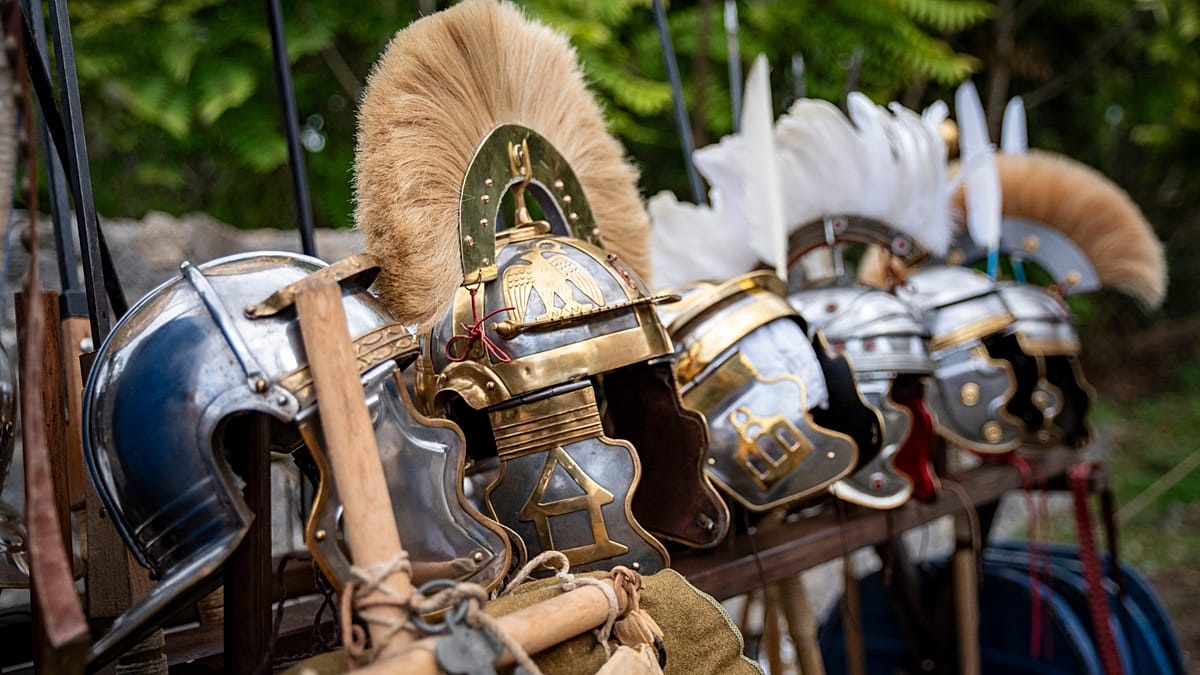
The morning begins at 11:00 in the Basilica with “People and Power”, an introduction to the munus gladiatorio – the gladiatorial games – as a cultural, political, and social phenomenon of the 1st century AD. At 12:30, the Quadriportico dei Teatri hosts “The Ludus”, a reconstruction of the gladiatorial school, where visitors can learn about the different categories of fighters, the philology of their armour, and the internal hierarchies and rituals of the school.
Throughout the morning, educational stalls in the Quadriportico will display ancient weapons, and a procession will set off along Via Stabiana and Via dell’Abbondanza towards the Amphitheatre. There, at 15:30, the final act “Munera” – the contests – will take place. The imperial procession, court figures, and magistrates will enter, followed by demonstrations by four pairs of gladiators, with explanations provided for the public. Spectators are even invited to judge the bouts, adding an interactive twist to the ancient spectacle.
Ludi Pompeiani and Roman life beyond the arena
On Sunday 27 September, the park hosts the third edition of the Ludi Pompeiani, curated by Dyron Consulting. Inside the Amphitheatre, the opening ceremony and the ovatio municipale – a military celebration – will honour Gaius Cuspius Pansa, a prominent local figure. The day will feature a sequence of historical dance, gladiatorial and legionary games, the ritual of manumissio (the freeing of a slave), and a Roman wedding ceremony. Educational stalls will be set up from 9:30 in the camp adjacent to the Amphitheatre.
Beyond the main arena, the park’s other sites offer a more intimate look at daily Roman life. In Boscoreale, the forecourt of the Antiquarium will host stalls on weaving, cosmetics, perfumery, pharmacology, surgery, games, and numismatics – where visitors can even mint a coin. Closed-number workshops (max eight participants) will run in two daily sessions, from 10:00 to 13:00 and 15:00 to 18:00, led by the association Legio XXX Ulpia Victrix.
In Stabia, at Villa San Marco, Saturday’s programme revolves around the performance “Rectina! The day the sky fell on Pompeii”, with showings throughout the day, interspersed with educational sessions and talks. The Villa of Poppaea in Oplontis will offer workshops and re-enactments on the theme “Theatre, music and masks of the ancient world”, including a performance on the double flute.
The European Heritage Days are a reminder that Europe’s past is not a distant relic but a living, breathing part of its identity. By bringing the gladiators and citizens of Pompeii back to life, the park invites visitors to reflect on how heritage can be both preserved and reimagined for future generations.