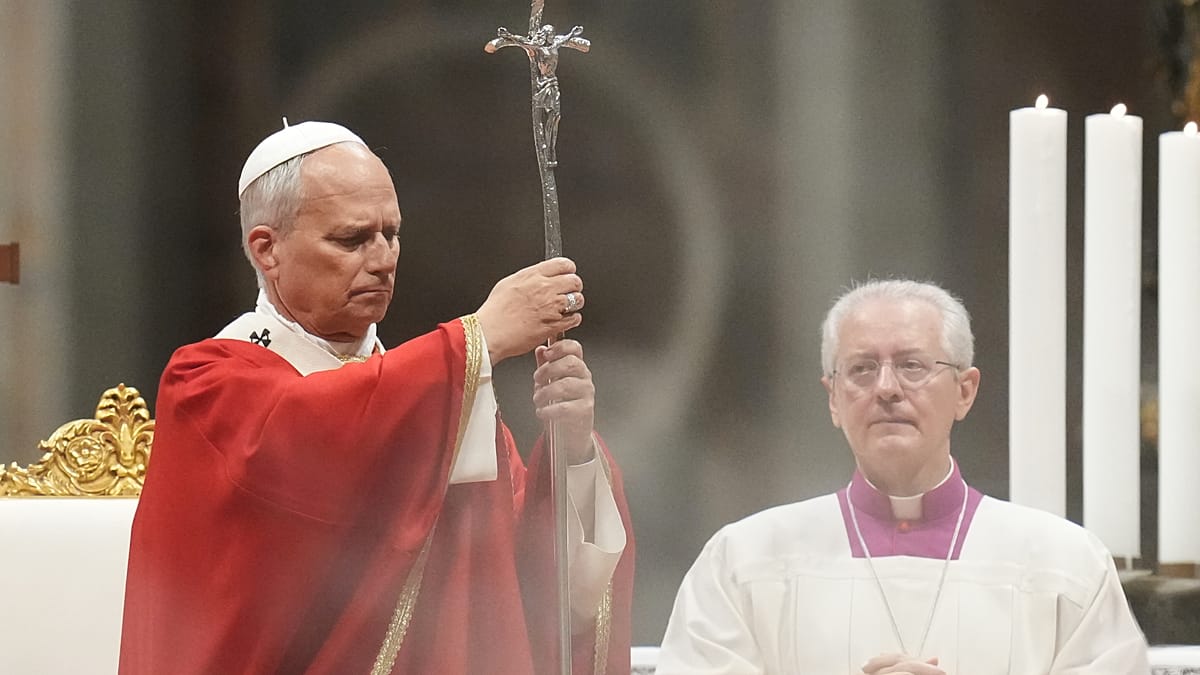
As the United States prepares for the first federal execution by firing squad in decades, Pope Leo XIV has used the World Day Against the Death Penalty to reaffirm the Catholic Church's unequivocal opposition to capital punishment. Without directly referencing the case of Nidal Hasan, the US-born pontiff posted on X that the death penalty is “inadmissible”, echoing the revised teaching introduced by his predecessor, Pope Francis.
The planned execution of Hasan, a former US Army major convicted of killing 13 people and wounding 32 others at Fort Hood in 2009, has reignited a transatlantic debate about state-sanctioned killing. The Pentagon's decision to broadcast the execution live, scheduled for 3 December, has been met with shock not only in the United States but also in European capitals, where the death penalty has been abolished in all member states of the European Union.
A moral stance from the Vatican
In his post on @Pontifex, Pope Leo wrote: “The common good can be safeguarded and the demands of justice can be met without recourse to capital punishment. Effective systems of detention have been developed that protect citizens and at the same time do not completely deprive those who are guilty of the possibility of redemption.” The message ended with the hashtag #nopenadimorte.
The Pope's intervention came just hours after Cardinal Pietro Parolin, the Vatican's secretary of state, had explicitly condemned the planned public execution as “unacceptable” and warned against turning death into a spectacle. Parolin's remarks were the strongest Vatican response to the US plans, reflecting a broader European discomfort with the resurgence of capital punishment in American political discourse.
The Catholic Church's position has evolved significantly since 2018, when Pope Francis amended the Catechism to declare the death penalty “inadmissible” in all circumstances. Previously, the Church had allowed for capital punishment if it were the only way to defend lives against an unjust aggressor. This shift has resonated across Europe, where the abolition of the death penalty is a fundamental condition for EU membership.
US bishops and vice-president respond
Archbishop Paul Coakley, head of the US bishops' conference, expressed “shock” and “great sorrow” at the Pentagon's decision. “In no way can Hasan's actions be condoned, but this decision is a barbaric promotion of a culture of death and must be reconsidered,” he said. “The public execution even of those who have done grave harm will only further undermine the moral fabric of our nation and represent a stain on the conscience of its people.”
Vice-President JD Vance, while not opposing the execution itself, has distanced himself from the spectacle. He told reporters that he would not watch the live broadcast and questioned whether the plan would actually proceed. “This is a man who carried out, in my view, the worst terrorist attack on American soil since 11 September,” Vance said. “The people he was supposed to care for, the Army soldiers he was meant to treat for mental illness and other problems, he struck at their moment of maximum vulnerability and mowed these people down right where they lived.”
Vance added: “Whatever controversy there is over the method of execution, I hope people do not forget that this is a man who brutally murdered many innocent people.” His comments highlight a tension within the US administration between a desire for retribution and concerns about the optics of a public execution.
The debate comes at a time when the death penalty is facing renewed scrutiny in the United States, particularly after a botched lethal injection in Tennessee left a prisoner conscious for a week before dying. That incident, which drew international attention, has been cited by abolitionists as evidence that capital punishment is inherently flawed. In Europe, the case has reinforced the continent's commitment to abolition, with human rights groups urging the US to follow suit.
For many Europeans, the idea of a live-streamed execution is deeply unsettling. The Vatican's intervention, coupled with the strong statements from US bishops, underscores a moral divide that separates the United States from its European allies. While the EU has consistently opposed the death penalty worldwide, the US remains one of the few Western democracies to retain it.
As the execution date approaches, the controversy is unlikely to subside. The Pentagon's decision to broadcast the event has been widely criticised, even by some who support capital punishment, as a descent into voyeurism. The Pope's message, delivered on the World Day Against the Death Penalty, serves as a reminder that for many, the issue is not about the guilt of the individual but about the principles of justice and human dignity.
In the coming weeks, the debate will likely intensify, with European observers watching closely. The outcome may have implications beyond the United States, as the EU continues to advocate for a global moratorium on executions. For now, the world waits to see whether the execution will indeed be broadcast, and whether the voices of opposition will have any effect on the final decision.



