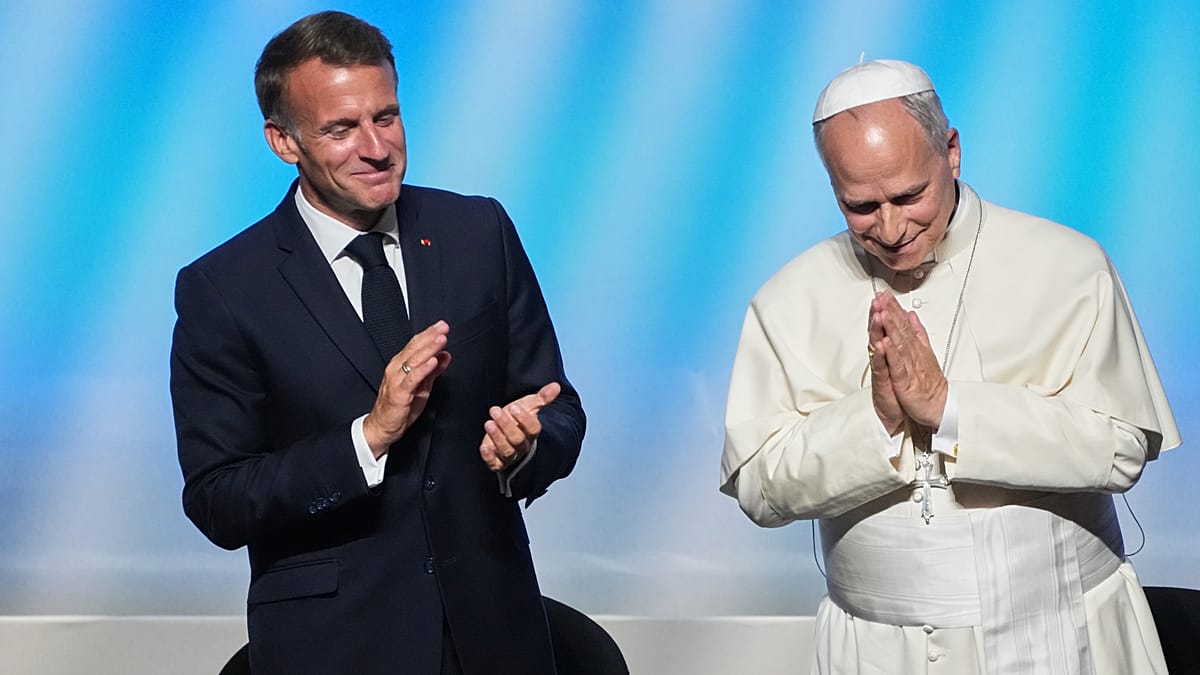
Pope Leo XIV used a visit to the French city of Metz to deliver a pointed appeal to European leaders: defend the rules-based international order before it is too late. Speaking in the birthplace of Robert Schuman, one of the architects of European integration, the pontiff described multilateralism as “the best defence against the desire for dominance” and lamented a world sliding into what he called an “increasingly uncivilised” state.
His remarks, delivered in French in the presence of President Emmanuel Macron, came at a moment when the post-war consensus on international cooperation is under strain. The Pope did not name Russia directly, but his reference to a new “pointless massacre” on European soil was unmistakable in the context of Moscow's ongoing war against Ukraine. He called for “patient dialogue”, “courage in negotiations”, and a willingness to compromise “for the greater good of peace”.
Leo's choice of Metz was laden with symbolism. The city, which changed hands between France and Germany several times and was annexed by Nazi Germany in 1940, embodies both the tragedies of European conflict and the reconciliation that followed. It is also the birthplace of Robert Schuman, whose 1950 declaration laid the groundwork for what became the European Union. The Élysée Palace said the event was designed to highlight the “European and cross-border dimension” of Lorraine, a region that has long been a crossroads of cultures and a witness to war.
The Pope's address went beyond geopolitics. He criticised the “lies and deception” that he said were poisoning trust between citizens and their governments, and warned of a broader deterioration in personal relations. “Europe can break this cycle by upholding the principle of respect for others, which it has successfully cultivated and maintained,” he said, pointing to the continent's track record over the past eight decades of resolving differences through dialogue rather than confrontation.
A cultural and historical reality
Leo also sought to anchor Europe's future in its Christian heritage. “We cannot speak of Europe, then, without mentioning Christianity,” he argued, describing the continent as more than a geographical entity but a “cultural and historical reality”. He insisted that these traditions could coexist with efforts to shape a modern, inclusive Europe, adding that the continent “has flourished and progressed when it was able to draw on the best aspects of its past and reinvent them in new and creative ways through encounter with others”.
The audience in Metz included representatives from Monaco, Andorra and Luxembourg, though EU institutional leaders were notably sparse. The Pope's message, however, was aimed at the entire continent, from the Baltic to the Mediterranean. His call for a renewed commitment to multilateralism echoes concerns voiced by other European leaders, including Macron's warnings against nationalist resurgence.
Observers noted that the Pope's emphasis on dialogue and compromise comes at a time when the EU is grappling with internal divisions over everything from migration to fiscal policy. His implicit rebuke of unilateralism may also resonate beyond Europe, as global powers increasingly bypass international institutions. The Pope's predecessor, Francis, had similarly championed multilateralism, but Leo's speech in Metz gave the message a distinctly European inflection, tying it to the continent's own history of overcoming enmity.
For Macron, hosting the Pope in Lorraine was an opportunity to reinforce France's role as a bridge between European traditions and contemporary challenges. The two men are due to attend Mass together later on Tuesday, a gesture that underscores the continued relevance of faith in public life, even in a largely secularised France.
As Europe faces an array of crises, from energy insecurity to the war on its eastern flank, Leo's words serve as a reminder that the continent's greatest achievements have come from cooperation, not confrontation. Whether European leaders heed that call remains to be seen, but the Pope's choice of venue made clear that the lessons of history are not to be forgotten.