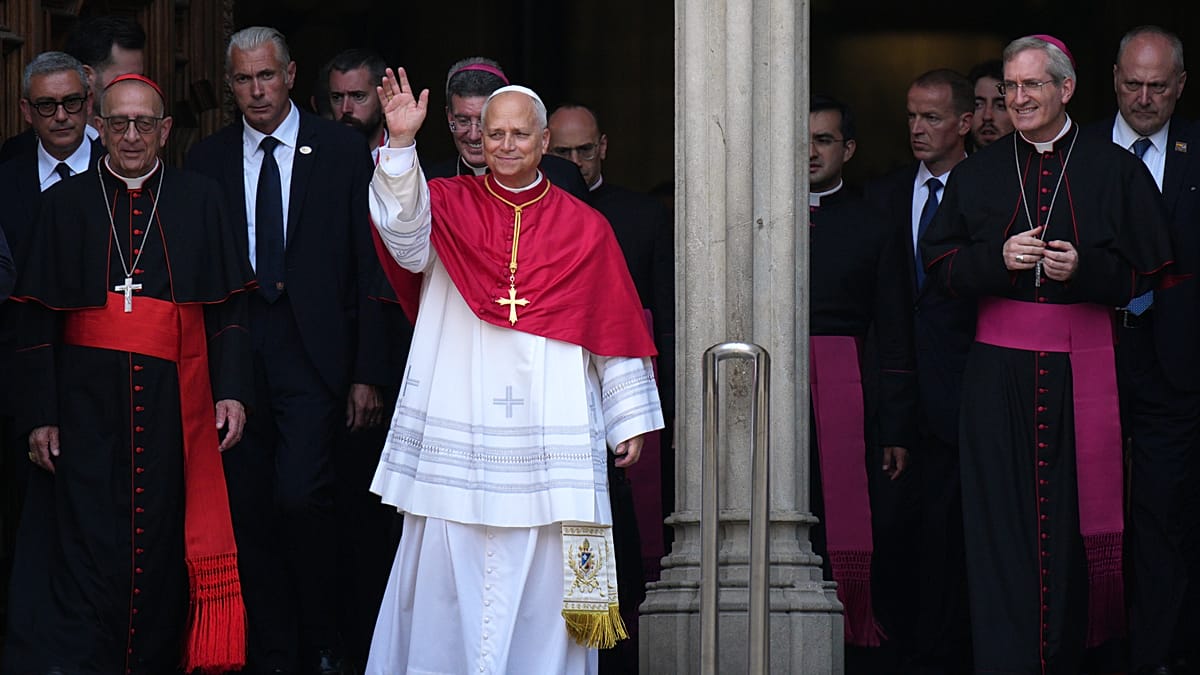
On 9 June, Barcelona saw thousands of faithful gather as Pope Leo XIV arrived for a prayer service at the city's Cathedral of the Holy Cross and Saint Eulalia. The pontiff's visit to Catalonia's capital marks a significant moment for both the Catholic Church and Spain, with a landmark ceremony scheduled at the Sagrada Familia Basilica.
A Historic Visit to Barcelona
The prayer service at the cathedral, dedicated to Barcelona's co-patron saint, drew a large crowd eager to see the new pope. Leo XIV, who succeeded Pope Francis in 2025, has made clear his intention to engage with local communities across Europe. His itinerary in Barcelona reflects a blend of religious tradition and cultural heritage, particularly through the planned ceremony at Antoni Gaudí's unfinished masterpiece.
Earlier in his Spanish visit, the pope urged Spain to reject polarisation, calling for unity in a country often marked by regional and political tensions. That message resonated strongly in Catalonia, where debates over independence have long shaped public life.
The Sagrada Familia ceremony is expected to be a highlight, drawing attention to the basilica's ongoing construction—a project that has spanned over a century. Gaudí's vision for the church remains a symbol of Barcelona's identity, and the pope's presence underscores its importance as a site of pilgrimage and architectural wonder. For more on the architect's legacy, see our piece on a century without Gaudí.
Broader Context of the Papal Visit
Leo XIV's trip to Spain comes amid broader challenges for the Catholic Church in Europe, including declining attendance and ongoing scrutiny over clerical abuse. Ahead of his journey, the pope called sexual abuse a 'scourge' and planned to meet with victims in Spain, signaling a commitment to accountability. This visit thus carries both spiritual and symbolic weight, as the pontiff navigates a continent grappling with secularisation and institutional crises.
Barcelona itself has seen a surge in tourism, driven in part by geopolitical instability elsewhere. As geopolitical turmoil drives Spain's tourism toward 100 million visitors, the city remains a key destination. The papal visit adds another layer to its appeal, though local authorities have managed crowds carefully to ensure safety and order.
The prayer service at the Cathedral of the Holy Cross and Saint Eulalia was a moment of quiet reflection before the more public events ahead. Thousands lined the streets, waving Vatican and Spanish flags, as the pope's motorcade passed through the Gothic Quarter. For many, it was a chance to see a leader who has quickly become a figure of moral authority in a divided world.
As Leo XIV continues his Spanish tour, observers will watch for further statements on European unity, migration, and social justice—themes that have defined his early papacy. Barcelona, with its mix of tradition and modernity, provides a fitting backdrop for a pope seeking to bridge old and new.