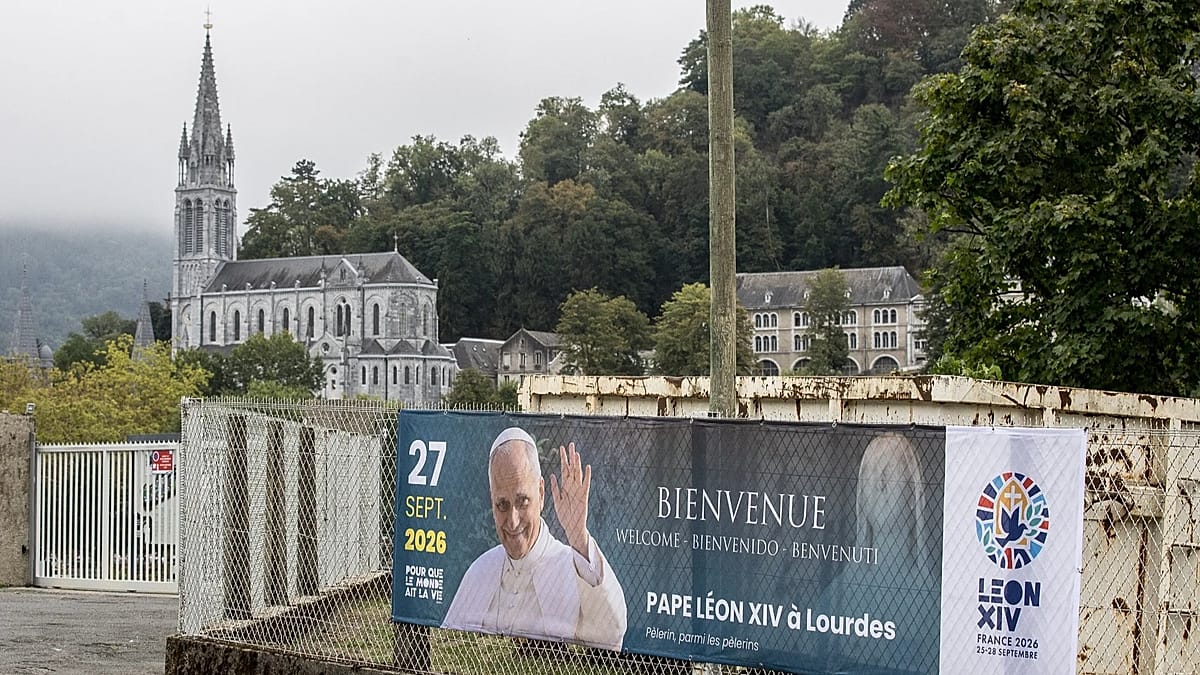
Pope Leo XIV is heading to the Pyrenean town of Lourdes on Saturday, wrapping up his first official visit to France with a two-day stop at one of Catholicism's most revered shrines. After two days of events in Paris, the pontiff will land at Tarbes Lourdes Pyrénées airport in the evening and immediately begin his programme with Mass at the Massabielle grotto, the site where a young girl named Bernadette Soubirous reported seeing the Virgin Mary in 1858.
Lourdes, a town of just 13,000 residents, transforms into a global pilgrimage hub each year, drawing around three million visitors. According to the local municipality, it ranks as the fourth most-visited Catholic pilgrimage site worldwide, trailing only the Vatican, the Basilica of Our Lady of Guadalupe in Mexico City, and the Basilica of Our Lady of Aparecida in Brazil. The town's infrastructure reflects this influx: nearly 10,000 hotel rooms and roughly 21,200 beds cater to the crowds.
For Pope Leo's visit, however, demand has outstripped supply. Authorities estimate that close to 200,000 people will converge on Lourdes over the two days, with about 150,000 registered for the shrine's celebrations. Some hotels have hiked rates above €2,000 per night, making affordable accommodation scarce. The surge echoes the massive crowds that greeted the pope in Paris earlier this week.
A shrine born from apparitions
Lourdes owes its fame to Bernadette Soubirous, a girl from a modest family who claimed to have witnessed 18 apparitions of a lady dressed in white at the Massabielle grotto between February and July 1858. During the ninth apparition, believers say Bernadette heard the words: "Go and drink at the spring and wash yourself there." The Catholic Church officially recognised the apparitions as those of the Virgin Mary in 1862, and a shrine was subsequently built on the site.
Since then, millions of pilgrims have flocked to the grotto, many seeking physical or spiritual healing. The spring that emerged from the grotto has become a focal point for visitors, who often collect its water. Pope Leo's visit marks the first papal trip to Lourdes since Benedict XVI in September 2008, when he commemorated the 150th anniversary of the apparitions.
Church in France at a sensitive moment
The pope's itinerary includes a private meeting with seven victims of sexual abuse, a gesture that carries particular weight given the Catholic Church's troubled history in France. In 2021, the Independent Commission on Sexual Abuse in the Church estimated that 216,000 minors had been sexually abused by priests or members of religious orders between 1950 and 2020. That figure rose to around 330,000 when laypeople working in Church-related institutions were included.
The visit also comes against a backdrop of shifting religious demographics. Over the past five years, the number of adults baptised in France has risen by 28%, while teenage baptisms have increased by 10%. In 2026, a total of 21,386 baptisms were recorded—more than three times the figure from a decade ago. This revival, though modest in absolute terms, has been noted by church leaders as a sign of renewed interest in the faith.
Pope Leo's French journey has been closely watched across Europe, not least because it coincides with diplomatic manoeuvring elsewhere. As Europe watches the Trump-Xi summit in Washington, the pope's presence in France underscores the continent's enduring Catholic heritage. His visit to Lourdes, a site of pilgrimage and reflection, offers a moment of spiritual focus amid the political noise.
For the thousands of pilgrims expected to gather at the grotto, the weekend will be a chance to participate in a tradition that has drawn the faithful for over 160 years. The Mass at Massabielle, the private talks with abuse survivors, and the sheer scale of the gathering will make this a historic occasion for Lourdes and for the French Church.