Pope Leo XIV will travel to the Italian island of Lampedusa on 4 July, the Vatican confirmed, in a visit designed to underscore the Catholic Church's continued emphasis on migrant rights and the humanitarian challenges facing Europe's southern borders.
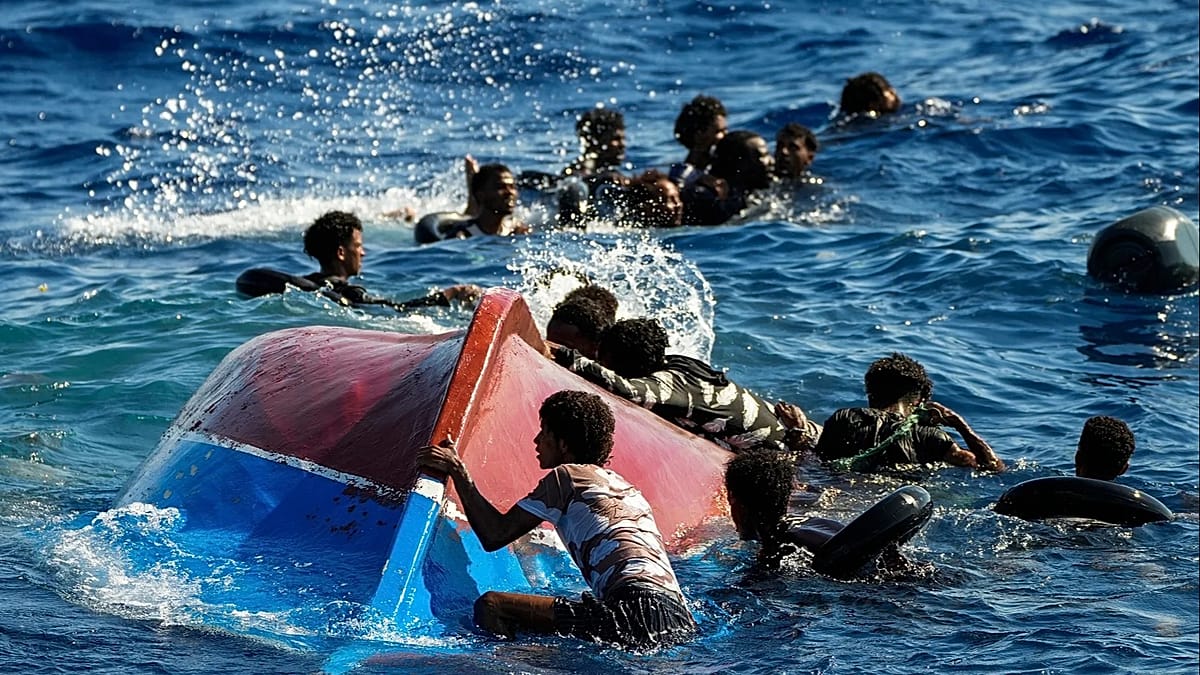
The three-and-a-half-hour trip, announced in April, places the pontiff at one of the continent's most visible migrant landing points. Lampedusa, part of Sicily, has long been a primary destination for people crossing the Mediterranean from North Africa and, at times, from as far away as Lebanon. The visit coincides with the US Independence Day, a date that carries personal resonance for the pope, who was born in Chicago.
A Pontiff's Consistent Message
Since his election, Pope Leo XIV has made migration a central theme of his papacy, building on the legacy of his predecessor, Pope Francis. Earlier in June, he visited Spain's Canary Islands, another key entry point for migrants from Africa. There, he was greeted by Prime Minister Pedro Sánchez and local authorities in Gran Canaria. "Human dignity has no passport," the pope declared during that trip. "Today, here, by the sea, every life that arrives asks us what remains of our humanity. Sooner or later, we shall know whether we were able to safeguard it or whether we let indifference speak for us."
The Canary Islands route remains perilous. According to the NGO Caminando Fronteras, more than 10,000 people died at sea attempting to reach Spain in 2024. The Right to Life Monitoring 2025 report recorded 3,090 deaths on the same route last year, including 192 women and 437 minors.
Lampedusa itself has seen surges in arrivals. In early 2024, Italian authorities reported that over 1,500 people reached the island in just 36 hours, with 333 landing in a single morning. Local officials have repeatedly warned that reception facilities are overwhelmed, despite regular transfers to mainland centres.
Continuity with Pope Francis
Pope Francis set a precedent for such visits in 2013, when Lampedusa was the destination of his first pastoral trip outside Rome. Three years later, he travelled to the Greek island of Lesbos and brought back a dozen Syrian Muslim refugees to the Vatican. Under Pope Leo XIV, the Church has maintained its call for humane treatment of migrants worldwide, including criticism of mass deportations in the United States.
Earlier this month, the pope canonised Mother Frances Cabrini as the first American saint, praising her as a model for Christians. Cabrini, the patron saint of migrants, spent her life caring for Italian immigrants in the US and establishing schools, hospitals, and orphanages globally. Speaking after a visit to her birthplace in northern Italy, Pope Leo XIV urged young people to learn from her example. "Let us ask ourselves: if Mother Francesca were alive today, what would her missionary spirit tell her?" he said. "And what would a pope like Francis — who, as the son of Italian immigrants, made service to migrants one of the key priorities of his pontificate — ask of her?"
The pope's stance has brought him into conflict with the Trump administration over its immigration enforcement policies. His visit to Lampedusa is expected to amplify calls for a coordinated European response to the ongoing crisis in the Mediterranean.