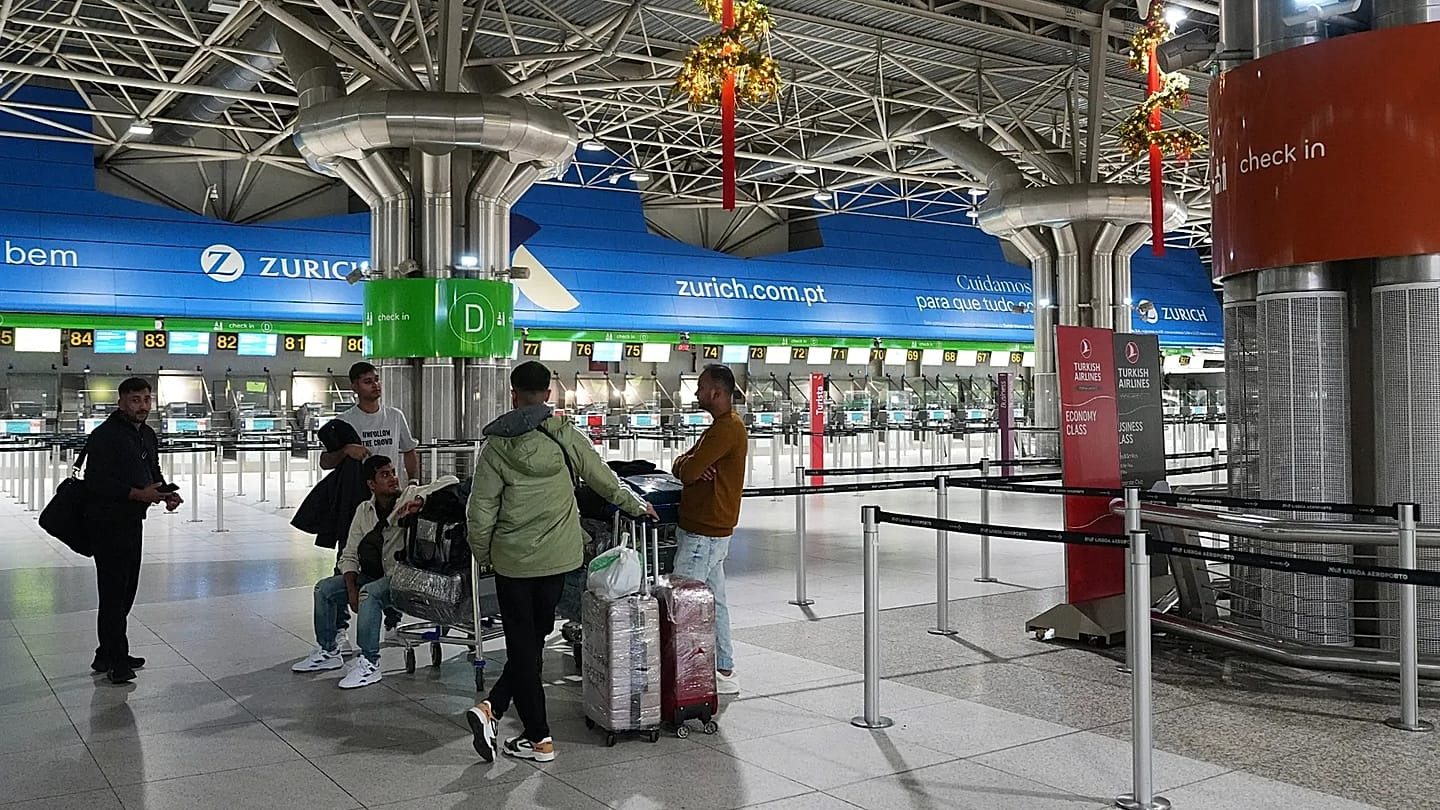
Portugal's government has announced the deployment of 48 additional police officers to Lisbon's Humberto Delgado Airport, effective this Friday, in a bid to alleviate chronic congestion at border control. The move comes as the airport, a key gateway for transatlantic and intra-European travel, struggles with long waiting times that have drawn complaints from passengers and airlines alike.
The delays are primarily linked to the phased introduction of the European Union's Entry/Exit System (EES), a biometric border management framework designed to register non-EU nationals entering the Schengen Area. While the system aims to enhance security and streamline data collection, its implementation has caused bottlenecks at major hubs, including Lisbon, where infrastructure and staffing have struggled to keep pace.
Operational Strain at a Critical Hub
Lisbon's airport, officially named Humberto Delgado Airport, handled over 33 million passengers in 2023, making it one of the busiest in southern Europe. The new officers will be assigned to passport control and border surveillance, with a focus on peak travel hours. The Portuguese border agency, Serviço de Estrangeiros e Fronteiras (SEF), has been under pressure to modernize its operations, and this deployment is part of a broader effort to reduce wait times to under 30 minutes during high season.
The EES, which replaces manual passport stamping with electronic registration, has faced criticism for its complexity and the additional time required per passenger. Similar issues have been reported at other European airports, such as Frankfurt, where a new Sky Line shuttle train was suspended weeks after launch due to technical glitches, compounding transit delays. Unlike Frankfurt's transport woes, Lisbon's problem is squarely about border processing capacity.
Portugal's tourism sector, which accounts for roughly 15% of GDP, is particularly sensitive to these disruptions. The country has seen a surge in visitors from North America and Asia, many of whom transit through Lisbon. The extra police presence is intended to reassure travelers and prevent reputational damage to a destination that relies heavily on word-of-mouth and repeat visits.
Broader Context of European Border Management
The EES is one of several EU-wide initiatives aimed at tightening external borders while facilitating legitimate travel. It is scheduled to be fully operational by the end of 2024, but member states have faced varying degrees of readiness. Portugal, like several southern European nations, has grappled with understaffing at border points, a challenge exacerbated by the pandemic-era hiring freezes and subsequent recovery in air travel.
This deployment also comes amid heightened security concerns across Europe. In a separate incident, Turkish police recently fired water cannons to block a rally in Izmir, highlighting the diverse security challenges facing the continent. While Portugal is not experiencing such unrest, the reinforcement at Lisbon airport reflects a proactive approach to maintaining order and efficiency.
The Portuguese government has not disclosed the cost of this operation, but it is expected to be funded through the national budget and possibly EU structural funds. Local media have reported that the officers will be drawn from other regions, potentially straining resources elsewhere. However, officials argue that the airport's strategic importance justifies the temporary redeployment.
For now, passengers flying into Lisbon can expect shorter queues from Friday onward, though the long-term solution will depend on the full integration of the EES and sustained investment in border infrastructure. As Europe's travel networks become more interconnected, such localized fixes may become a recurring theme.