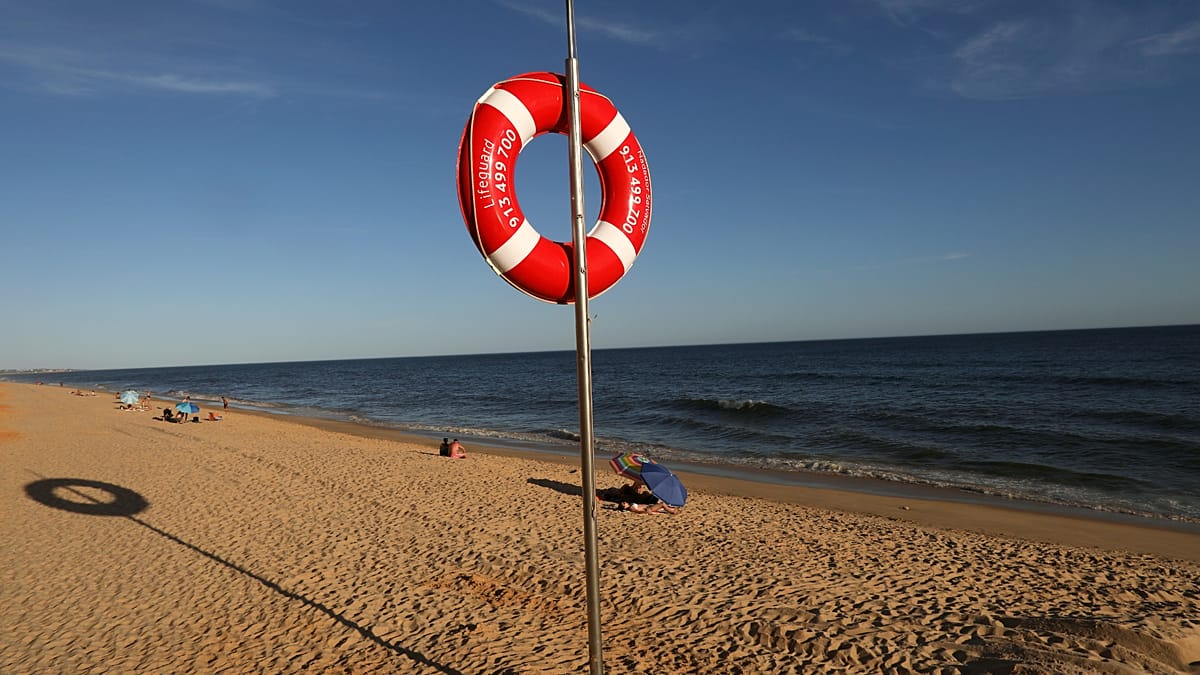
As Portugal's bathing season begins, a stark warning from the Portuguese Lifeguards Federation (FEPONS) highlights a chronic shortage of lifeguards along the country's extensive Atlantic coastline. The federation's president, Alexandre Tadeia, told Euronews that the profession is haemorrhaging staff, with nearly half of certified lifeguards choosing not to return each year.
“If every lifeguard in Portugal worked only 40 hours a week, we would need around 6,000 to 6,500 lifeguards. We have about 5,000, and of those five thousand, not all will work. I would say maybe two thirds will work,” Tadeia said. “We have only half the number of lifeguards working that we should have.”
Why Lifeguards Leave
According to FEPONS, the problem is not a lack of training. Each year, around 1,500 people complete the lifeguard course, yet the overall number of active lifeguards remains stagnant. The key issue is retention: many fail to renew their certification, which must be updated every three years. “In a year we train around 1,500 lifeguards. But if we look at how many people renewed their certification this year, it is probably not even half,” Tadeia explained. “We can safely say that, in very round figures, we lose at least a thousand lifeguards.”
The federation's 2020 study found that 49% of lifeguards do not wish to return the following season. This exodus is driven by low pay, poor job security, and the seasonal nature of the work, which is largely confined to the summer months. Many lifeguards are young students who work overtime, and a formal work contract can jeopardise their study grants, allowances, and social benefits. “There is no specific form of hiring that does not affect these people’s study grants, allowances and social benefits,” Tadeia noted.
Portugal has 700 public swimming pools, each requiring at least two lifeguards, which Tadeia argues could provide year-round employment for around 1,500 professionals. Yet the current system fails to capitalise on this. “In Portugal we have 700 public swimming pools, each of which needs at least two lifeguards,” he said. “We are talking about around 1,500 professionals who could have work all year round.”
A Commercial Approach to a Humanitarian Duty
FEPONS criticises the prevailing commercial mindset in beach safety. Public tenders often award contracts to the lowest bidder, prioritising cost over safety. “In this field of assistance to bathers, there are still public tenders where the aim is to see who can offer to guard beaches for the lowest price. It is a commercial approach to a humanitarian area, which is completely surreal,” Tadeia said. “When we go to the beach, what we want is safety. We want to have people there who are well trained, well-coordinated, properly equipped, motivated, and who do not have to work excessive overtime.”
The federation is calling for a national strategy to professionalise the role. Currently, lifeguards in the public sector are classified as operational assistants—the lowest category in the civil service—despite their demanding training and life-and-death responsibilities. “Something special has to be created. Because the point is that this profession has a direct impact on people’s lives and deaths. So, either we treat it as such, or we carry on believing this is just a commercial activity, leaving it at the mercy of beach concessionaires and the demands of the private labour market,” Tadeia said.
Portugal's bathing season officially runs from 15 April to 31 October, with the high season starting on 1 June. The Portuguese Environment Agency (APA) has identified 671 bathing waters across the mainland, the Azores, and Madeira. As the country prepares for another summer, the shortage of lifeguards raises concerns about beach safety, especially given the year-round use of many beaches by surfers, fishermen, and sports enthusiasts.
This issue is not isolated to Portugal. Across Europe, seasonal labour shortages in critical public services are a recurring challenge, often linked to labour reforms and summer staffing pressures. The lack of a dedicated career track for lifeguards in Portugal mirrors broader debates about the valuation of essential but seasonal work.