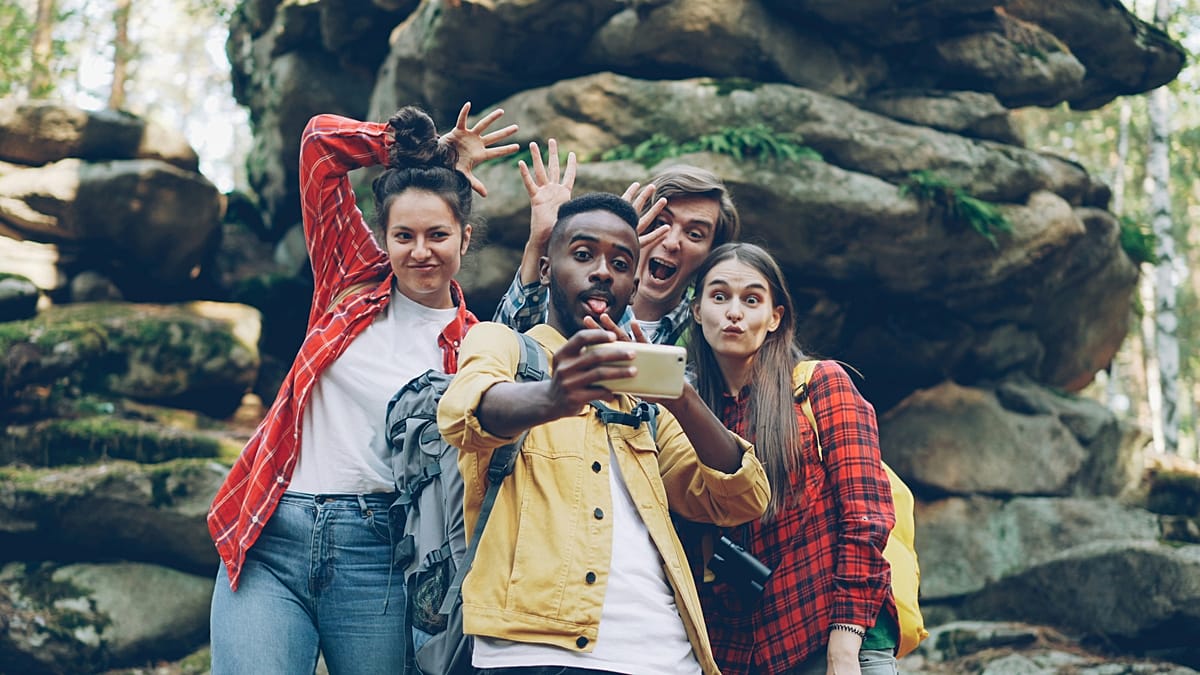
If your social feed is full of sun-drenched selfies and artfully arranged plates of bacalhau, chances are the traveller behind them is Portuguese. A new study by online travel agency Opodo suggests that travellers from Portugal are the most prolific sharers of personal holiday photos in Europe.
The research, which surveyed 9,000 travellers across the UK, US, Portugal, Spain, Italy, Germany and France, found that half of Portuguese respondents regularly upload selfies and personal snapshots from their trips. Spanish travellers follow at 40%, with Italians (35%), Germans (30%) and the French (22%) trailing behind.
Social media as a travel influencer
The survey also explored how much social media shapes holiday choices. Among travellers aged 25 to 35, 52% said that platforms like Instagram and TikTok inspire them to visit places they had never previously considered – up from 32% in a similar poll in 2024. For Gen Z respondents, that figure rises to 59%. In contrast, only 5% of those aged 65 and above draw inspiration from social media.
Across the Atlantic, American travellers are the most likely to be influenced by social media when choosing a destination (49%), followed by Spain (48%) and Italy (44%). Brits appear the least swayed, with just 25% saying it influences their travel decisions.
Pablo Caspers, Chief Travel Officer at eDreams ODIGEO, which owns Opodo, said: “Social media has become a powerful window to the world, making travel discovery more accessible, visual, and personal than ever before. Whether it's finding an off-the-beaten-track spot or capturing memories with loved ones, online platforms allow travellers to celebrate the best parts of their journeys and inspire others to explore.”
Fact versus digital fiction
The survey also looked at how honest travellers are about their experiences. Portuguese respondents were again the most likely to post a positive image of a trip that fell flat (54%), ahead of Americans (46%) and Spaniards (36%). Brits emerged as the most authentic, with 27% saying they would be “very unlikely” to post positively about a disappointing holiday. Germans were also reluctant to sugar-coat, with only 23% saying they would share a positive post.
Europe’s foodies and scenery lovers
When it comes to sharing meals, the Portuguese are also the continent’s biggest foodies: 66% post pictures of their feasts online. Spaniards follow at 57%, and Germans at 51%. Germans lead in sharing photos of their accommodation (51%), while the Portuguese are most likely to post landscapes and landmarks (88%), with Spaniards close behind (82%).
Portuguese travellers are also the most adventure-seeking, with 66% sharing their activities and experiences, ahead of Spaniards and Germans (both 57%) and Italians (53%).
Who cares most about social media while travelling?
The study found that 90% of Portuguese travellers are mindful of what is said about them on social media while on holiday, followed by Italians and Spaniards (87%) and the French and Germans (82%). Germans and Americans are the most likely to check social media regularly during a trip (both 34%), while Italians are the least concerned (20%).
Social media also plays a role in planning. Portuguese travellers are the most likely to use it to picture a holiday before booking (22%), and to discover hidden gems (42%). Spaniards (40%) and Italians (36%) also rely on it for off-the-beaten-track finds.
The findings come as a separate trend suggests some travellers are deliberately choosing to do less on holiday, a reaction against the pressure to document every moment. Meanwhile, the broader impact of social media on travel habits continues to grow, particularly among younger Europeans.