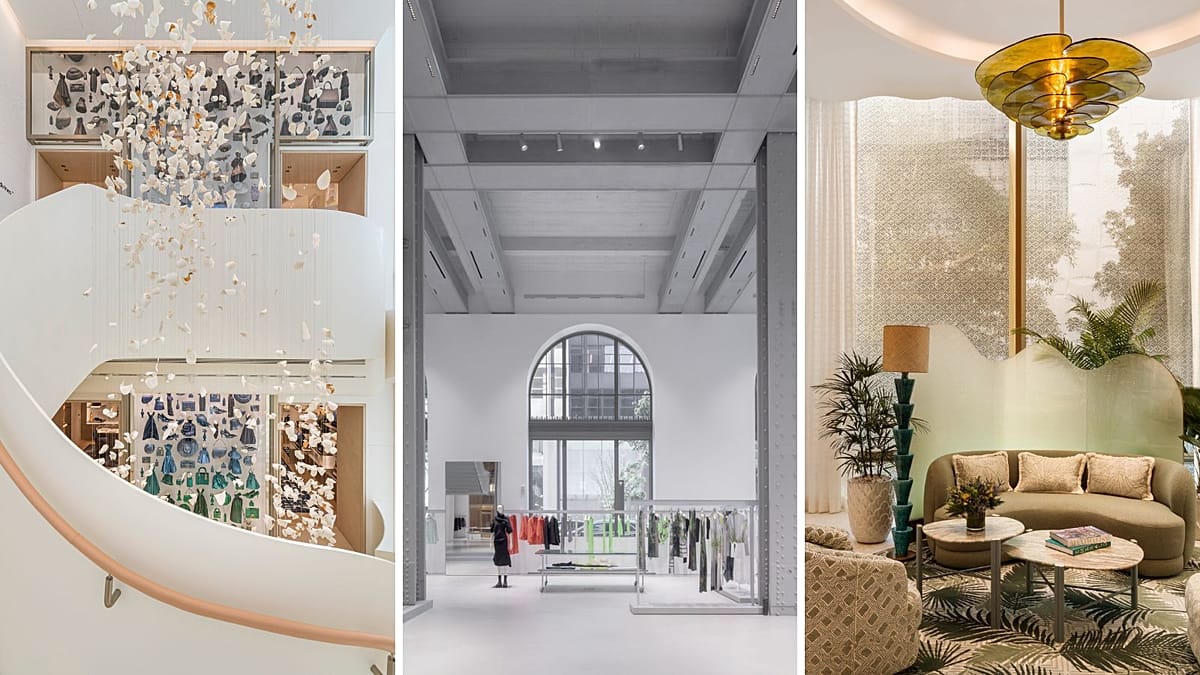
The Prix Versailles, the prestigious architecture and design awards, has announced its shortlist of the world's most beautiful emporiums for 2026, with a focus on retail spaces that blend heritage, artistry, and local context. This year, seven locations from Beijing to Beverly Hills were selected, but only two are in Europe — both in Paris.
Jérôme Gouadain, Secretary General of the Prix Versailles, noted that the chosen projects "draw from the foundations of their brand’s history and culture, and from the emotions and expertise that, in dialogue with the environment all around them, have turned these places into hot spots for creation and inspiration."
European highlights: Parisian elegance meets global design
The two European entries are located in the French capital. RH Champs-Élysées, designed by the British firm Foster + Partners, opened recently as a luxury gallery that merges British design sensibility with California home furnishings. Situated on the iconic avenue, the space features a freestanding glass and steel structure with its own façade, a testament to cross-cultural collaboration in the heart of Paris.
Saint Laurent Montaigne, on Avenue Montaigne, goes beyond a typical boutique. Each room has its own atmosphere, and the store showcases works from the Pinault Collection, including a previously unseen piece by Mark Bradford. This integration of art reinforces the house’s longstanding commitment to creativity, making the shop a destination for both fashion and culture enthusiasts.
Global contenders: from Tokyo to Miami
Outside Europe, the list includes House of Dior in Beijing, located in the Sanlitun district, which intertwines the brand's signature toile fabric with handcrafted golden glass tiles that reference Chinese culture. Artworks by Wang Xiyao, Hong Hao, Franck Evennou, and Gio Ponti are placed throughout, nodding to Christian Dior's time with artists.
In Tokyo, Tiffany & Co. Ginza, designed by Jun Aoki, grabs attention with its iconic Tiffany Blue wave-like glass façade. The interior explores the reflection of light in jewelry while incorporating the greenery of Tokyo's gardens on the staircase.
Cartier in Miami, designed by Diller Scofidio + Renfro, balances historic jewelry creations with the city's natural landscape. The façade's pattern references a 1909 brooch, while palm trees and coral motifs appear inside.
House of Dior in Beverly Hills incorporates Christian Dior's love for plants with floral motifs and a central garden. The collections are displayed among remarkable works of art, celebrating Dior's timeless legacy.
Issey Miyake in New York fuses American extravagance with Japanese minimalism, exposing the building's structure with raw, industrial materials. The space also serves as a gallery for rotating exhibitions, supporting the brand's cultural values and commitment to material reuse.
The Prix Versailles will award its most prestigious prize, the World Title, to three of these seven emporiums at the end of the year. For those interested in the intersection of retail and architecture, this list offers a glimpse into how luxury brands are redefining the shopping experience as a cultural journey.
As European cities like Paris continue to host such innovative spaces, the continent remains a key player in global retail design. For more on how European markets compare, see Eurostat Data Reveals Wide Price Disparities Across EU Member States.