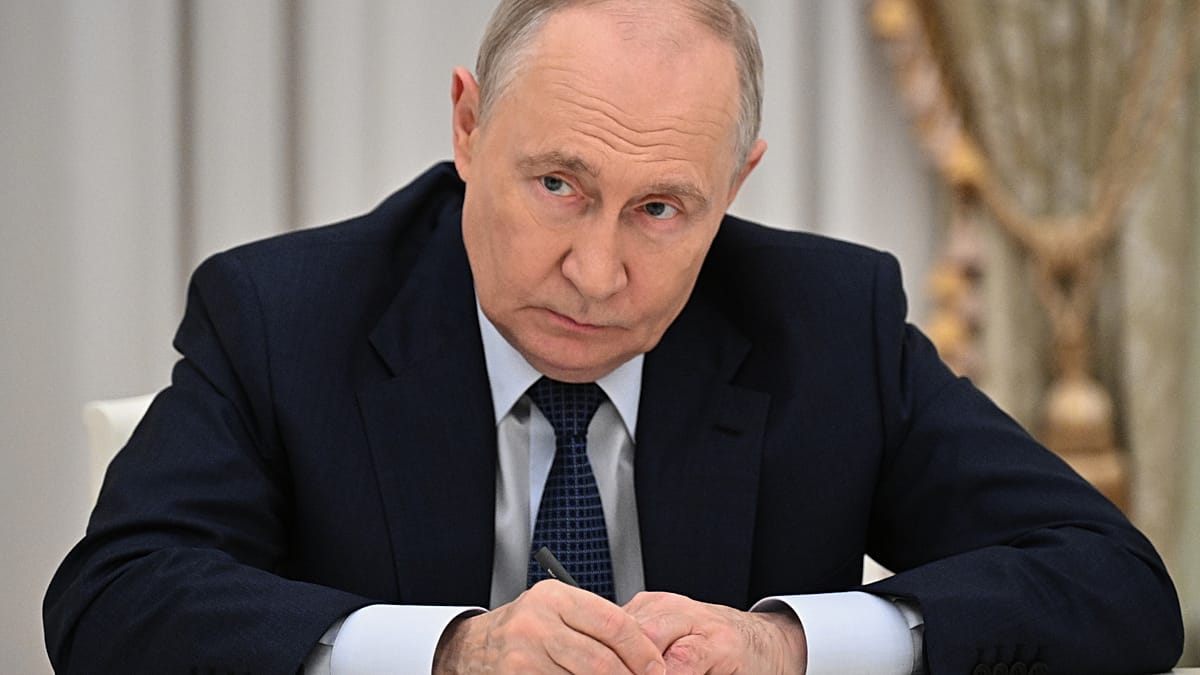
Russian President Vladimir Putin has signed a decree expanding the country's armed forces by 15,500 troops, marking the fourth such order in 2025. The decree sets the total authorized strength at 2,441,630 personnel, including 1,550,500 military servicemen and women.
This latest increase follows similar decrees in March, June, and July, bringing the cumulative rise in troop numbers since March to 47,860. The Kremlin has not publicly explained the rationale, but the decision comes against the backdrop of sustained casualties on both sides in the full-scale war in Ukraine.
Slowing advances and mounting losses
Russian forces have seen their pace of advance slow considerably this year. The widespread use of drones has made rapid movement of large formations nearly impossible, and recent weeks have brought reports of Ukrainian breakthroughs on several sections of the front line. These factors are likely contributing to the need for additional manpower.
The last time Putin announced a "partial mobilisation" of reservists was in September 2022, following a series of setbacks. That decree remains in force, and there are growing signs that a new wave of mobilisation may be imminent.
Ukrainian intelligence reported in August that Moscow plans to call up up to 300,000 people this year for deployment to the front, with a similar number expected next year. Analysts, citing preparatory measures by Russian authorities on the ground, have predicted a new mobilisation wave as soon as this autumn, immediately after elections to the State Duma. Such rumours have sparked panic among Russians and a surge in interest in emigration.
Putin has dismissed these reports as "utter nonsense," and the Kremlin insists that the needs of the armed forces are being met by contract soldiers and volunteers. However, independent analysts say recruitment among these groups continues to shrink despite promises of large financial rewards.
In a video address on Tuesday, Ukrainian President Volodymyr Zelenskyy commented on Putin's decree, saying: "In essence, Russia has already begun additional mobilisation, it is expanding the scale of recruitment to its ranks, using various methods for this. It also plans to increase the number of foreigners, and it is important that the governments of the countries from which Russia recruits people into its ranks counteract this."
The expansion of Russia's military comes as European nations remain on alert over Russian hybrid sabotage and drone activity. In recent weeks, EU ministers have sought a joint response to such threats, while Finnish and Swedish jets intercepted Russian aircraft over the Gulf of Finland. The war continues to inflict heavy civilian tolls, with Russian drone barrages killing 14 in Ukraine and hitting infrastructure in Kyiv and Odesa.
For European capitals, the implications of Russia's military build-up are clear. The continent's security architecture, already strained by the war, faces the prospect of a prolonged conflict with a larger Russian army. As Moscow seeks to replenish its ranks, the pressure on Ukraine's allies to sustain military and financial support grows. Ukraine has pressed the EU for urgent funds as Russian drones continue to hit Kyiv.
The decree, signed without public ceremony, underscores the Kremlin's determination to continue its military campaign despite the human and economic costs. For now, the full scope of Russia's mobilisation plans remains unclear, but the pattern of incremental expansion suggests a long-term commitment to a war that shows no signs of ending.