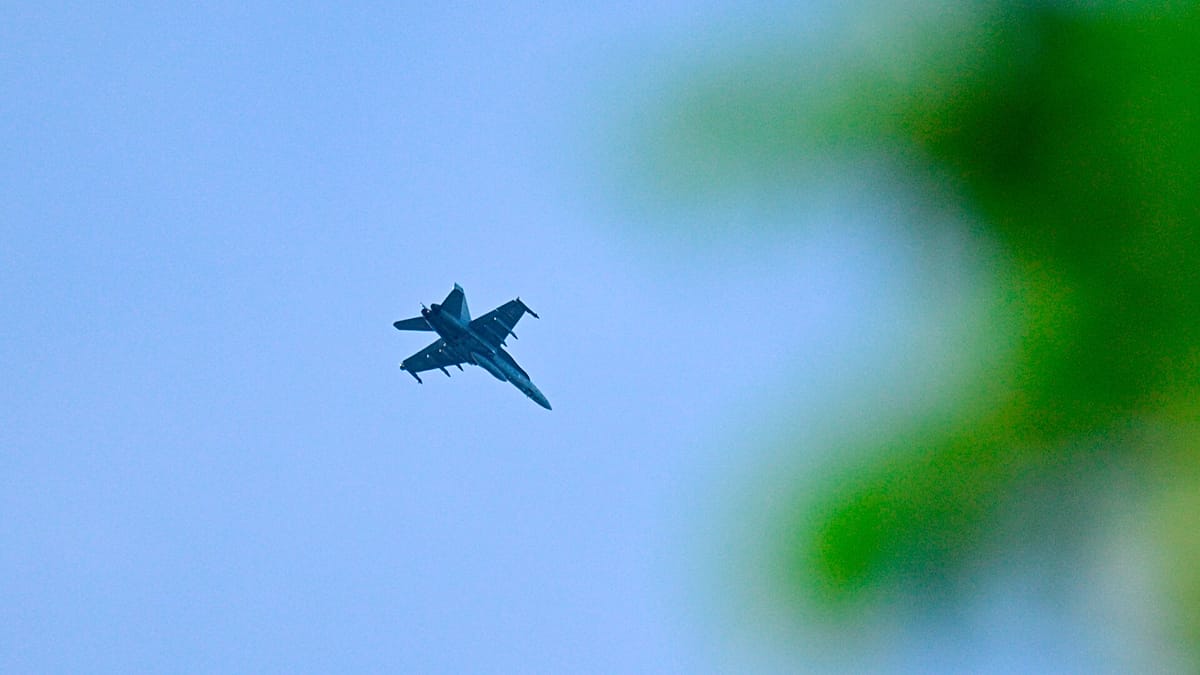
On Thursday, Finnish and Swedish fighter jets were scrambled to identify a group of Russian aircraft flying over the Gulf of Finland, in what Helsinki described as the first joint operational identification mission for the two Nordic air forces. The Finnish Air Force said the Russian formation included a Tu-134 transport plane, MiG-31 fighters, and Su-30 jets, all operating in international airspace above the gulf.
The interception underscores the heightened state of alert across the Baltic region, where NATO members have grown increasingly wary of Russian military activity. Sweden and Finland, both of which abandoned decades of military non-alignment and joined NATO after Russia's full-scale invasion of Ukraine in 2022, have been ramping up their air policing efforts.
Baltic vulnerability and protection
Swedish Prime Minister Ulf Kristersson commented on the operation on X, writing that "the Baltic Sea has never been as vulnerable as it is now - but it has also never been better protected than it is right now." His remarks reflect a broader sentiment among Baltic and Nordic states, which have seen a steady rise in Russian aircraft incursions and hybrid threats over recent years.
The incident came on the same day that the Danish Defence Intelligence Service (DDIS) released an updated threat assessment, warning that the risk of Russian military action against NATO countries is low but growing. Thomas Ahrenkiel, head of the DDIS, told a press conference that while an outright invasion of a NATO member is "highly unlikely," it cannot be ruled out. He noted that Russia might launch a limited military attack against one or several NATO countries bordering Russia.
The DDIS also highlighted an increase in so-called hybrid attacks, which have evolved from primarily sowing fear and weakening public support for Ukraine aid to actively disrupting Western support. These now include sabotage against defence companies and railway transports carrying military equipment, as well as potentially destructive cyber attacks targeting critical infrastructure.
European nations have been on high alert for Russian interference, with fears that Moscow could target Kyiv's Western backers as the war in Ukraine enters its fifth year. In November, NATO military officials announced the deployment of a new US anti-drone system to the alliance's eastern flank. Following a violation of Polish airspace, NATO Secretary General Mark Rutte launched the Eastern Sentry programme, aimed at deterring further Russian incursions.
Some European officials view these incidents as Moscow testing NATO's response, raising questions about the alliance's preparedness. The Kremlin has dismissed allegations that it is behind unidentified incursions in Europe as "unfounded."
For Finland and Sweden, the joint mission marks a practical step in their integration into NATO's collective defence framework. The two countries have historically maintained a policy of neutrality, but Russia's aggression has reshaped public opinion and security policy across the Nordic region. As the alliance continues to adapt to a more assertive Russia, such interceptions are likely to become more common.
Related coverage: Danish intelligence assessment and recent Polish airspace violation.