Russian President Vladimir Putin travelled to the Kuril islands on Thursday for the first time, a move that drew an immediate and forceful protest from Japan, which claims the same territory. The visit underscores the enduring friction between Moscow and Tokyo over the archipelago, known in Japan as the Northern Territories.
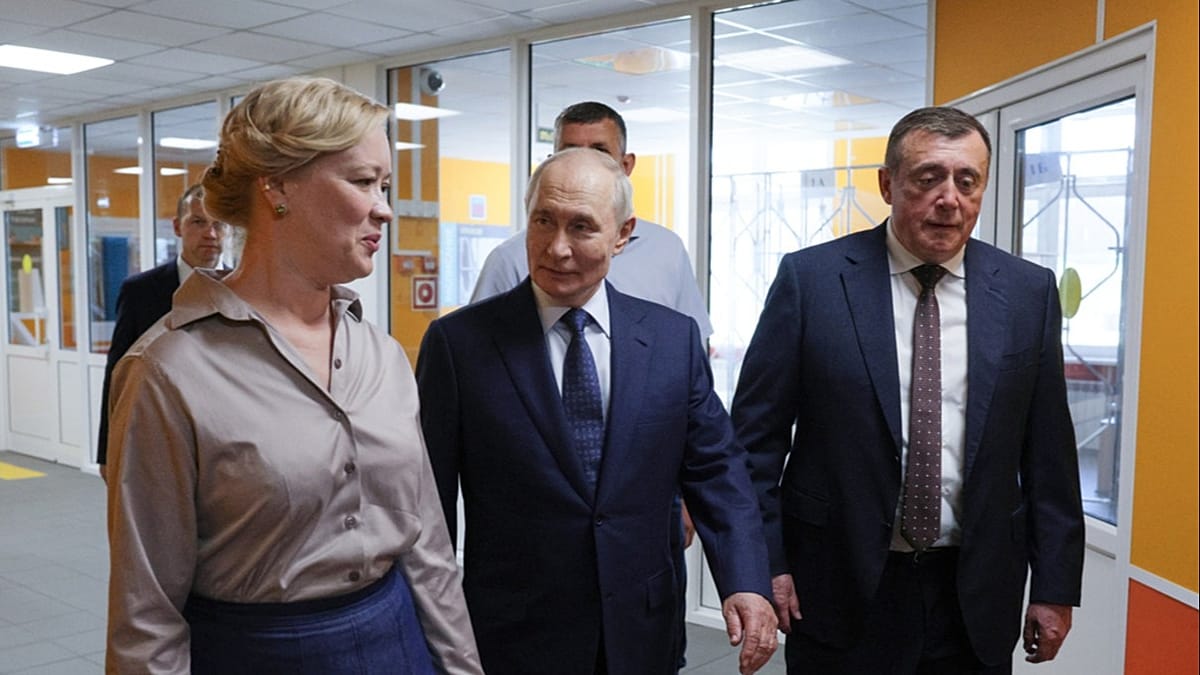
Kremlin footage showed Putin touring a fish-processing plant on Iturup, the largest of the four contested islands, where he was offered caviar. He arrived from the nearby island of Sakhalin, where Russia's navy had been conducting drills and where he held a meeting on securing the country's eastern borders, according to state media.
Strategic and economic stakes
The islands, which lie north of Japan's Hokkaido, were occupied by Soviet forces in the final days of World War II. Since then, they have served as a strategic military outpost for Moscow, hosting air and naval bases during the Cold War and continuing to hold significance today. Their waters are rich in fish, and the land contains deposits of gold and silver, making them valuable both economically and militarily.
Japan's Foreign Minister Toshimitsu Motegi issued a statement saying, "The Northern Territories are an inherent part of Japan's territory both historically and under international law, and the government of Japan strongly protests this visit." The protest reflects a broader deterioration in Tokyo-Moscow ties, which have worsened since Russia's full-scale invasion of Ukraine in 2022, even as Russia has deepened its partnerships with China and North Korea.
Putin's visit is not the first by a Russian leader. In 2010, then-president Dmitry Medvedev became the first to set foot on the disputed islands, and he returned several times as prime minister. Putin, however, had never made the trip until now, making the symbolism particularly pointed.
A long-standing dispute
The four islands—Kunashir, Habomai, Shikotan, and Iturup in Russian; Kunashiri, Habomai, Shikotan, and Etorofu in Japanese—have been a point of contention for decades. The Soviet Union declared war on Japan on August 8, 1945, just days before the conflict ended, and subsequently deported around 17,000 Japanese residents from the islands. Today, roughly 20,000 Russian citizens live there, enduring harsh climates.
Efforts to resolve the dispute have repeatedly stalled. In 1956, Soviet leader Nikita Khrushchev suggested that two of the islands might be returned under a peace treaty, but no agreement was ever reached. The issue remains a barrier to a formal peace treaty between the two countries, which technically remain at odds over the territorial question.
The visit comes at a time of heightened geopolitical tension in the region. Russia's military activities near Japan have increased, and Moscow's alignment with Beijing and Pyongyang has raised concerns in Tokyo and among its allies. The European Union, while not directly involved in the dispute, has watched the situation closely, given the broader implications for regional stability and the international order.
For now, Putin's symbolic step on the islands is unlikely to change the diplomatic calculus, but it reinforces the deep-seated mistrust between the two neighbours. As long as the territorial dispute remains unresolved, the Kuril islands will continue to be a flashpoint in the Asia-Pacific, with echoes that reach beyond the region.