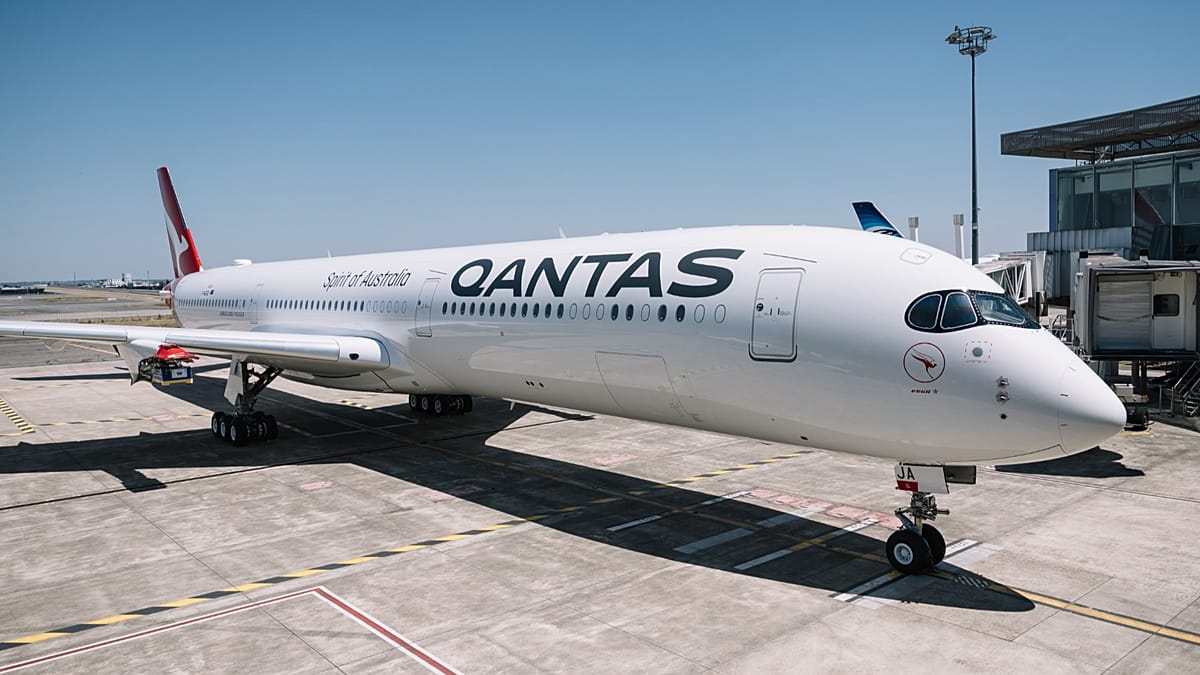
Qantas has confirmed that its long-awaited 'Project Sunrise' will begin with a direct Sydney-to-London service in October 2027, setting a new benchmark for ultra-long-haul aviation. The route, covering more than 16,000 kilometres, will be the world's longest non-stop passenger flight, with journey times expected to range between 19 and 22 hours.
The Australian carrier has also unveiled the first of its specially modified Airbus A350-1000ULR aircraft, developed in collaboration with Airbus to handle the extreme distances. The plane features an additional 20,000-litre fuel tank, enabling it to fly for up to 22 hours without refuelling. Qantas will take delivery of 12 such aircraft, each configured with 238 seats across four cabins—a significant reduction from the standard A350-1000's capacity of 480 passengers, reflecting a focus on passenger comfort.
A Historic Step for the Kangaroo Route
Qantas Group CEO Vanessa Hudson framed the announcement as a milestone in the airline's 105-year history. 'Since we first flew the Kangaroo Route in 1947, where we stopped seven times on the way to London, every generation of aircraft has taken a stop out of the journey. Today, we're taking out the last one,' she said. The airline had committed to the project in 2017, and Hudson noted that 'from October 2027, that promise becomes reality.'
The Sydney-London route will be followed by a Sydney-New York service, with launch timing to be announced next year. For now, the focus is on connecting Australia's east coast directly to the UK capital, a link that has never before been possible without a stopover.
For European travellers, this development offers a new direct gateway to Australia, bypassing traditional hubs in Asia or the Middle East. It also underscores the growing competition in ultra-long-haul aviation, where airlines are pushing the boundaries of aircraft technology and passenger endurance. The current record holder is Singapore Airlines' Singapore-New York service, covering 15,349 kilometres in just under 19 hours—though that flight does not offer economy class seats.
Qantas's approach is notably different: its A350-1000ULR will include 140 economy seats, making the world's longest flight accessible to a broader range of passengers. The farthest an economy passenger can currently fly non-stop is on Qantas's London-Perth route, which spans 14,499 kilometres and takes 16 to 18 hours.
For those concerned about the physical toll of such extended journeys, expert-backed strategies to beat jet lag are increasingly relevant, as airlines and passengers alike adapt to the demands of ultra-long-haul travel. The new route also highlights the evolving connectivity between Europe and the Asia-Pacific region, a trend that has implications for business, tourism, and cultural exchange.
While the project is still two years from launch, the confirmation of the route and aircraft marks a significant step forward. Qantas's investment in the A350-1000ULR signals confidence in the viability of non-stop flights between distant continents, a development that may reshape long-haul travel patterns for European and Australian passengers alike.