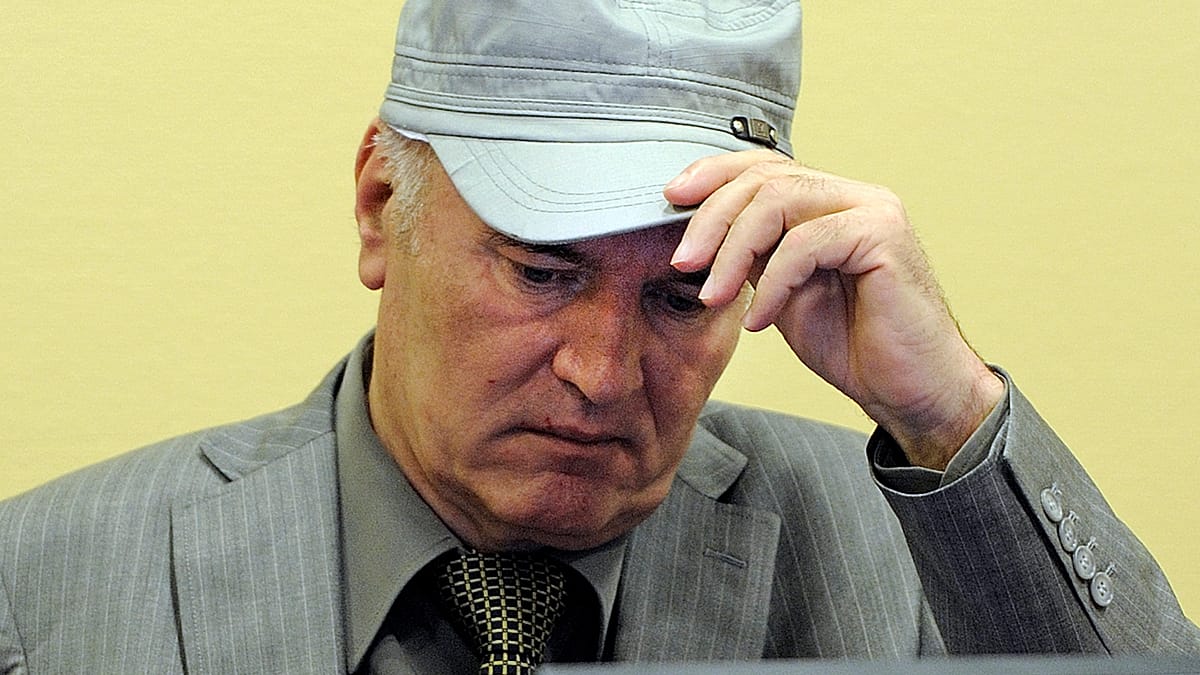
Ratko Mladić, the former Bosnian Serb military commander who became the face of the worst atrocities in Europe since the Second World War, has died in a prison hospital in The Hague. He was 84. The news was confirmed by Serbia's state broadcaster RTS, citing prison authorities.
Mladić was serving a life sentence handed down by the International Criminal Tribunal for the former Yugoslavia (ICTY) in 2017, after being found guilty of genocide, crimes against humanity, and war crimes. His conviction centred on the systematic murder of more than 8,000 Bosniak men and boys in Srebrenica in July 1995, an act the tribunal described as genocide, and on the brutal siege of Sarajevo that lasted nearly four years.
A military career turned to ethnic cleansing
Born in 1942 in the village of Božinovići, in what was then the Independent State of Croatia, Mladić rose through the ranks of the Yugoslav People's Army. When Bosnia and Herzegovina declared independence in 1992, following Slovenia and Croatia, Bosnian Serb leaders—backed by Belgrade under Slobodan Milošević—created their own para-state, the Republika Srpska. Mladić was appointed commander of its army.
Under his command, Bosnian Serb forces launched a campaign aimed at ethnically cleansing large parts of the country of its Bosniak and Croat populations. The offensive included mass executions, forced displacement, and the systematic destruction of cultural and religious sites. The Srebrenica massacre, in which over 8,000 men and boys were summarily executed after the town was declared a UN safe area, remains the darkest chapter.
Mladić also played a central role in the siege of Sarajevo, the longest siege of a capital city in modern warfare. From the hills surrounding the city, his troops subjected civilians to relentless shelling and sniper fire from early 1992 until the war's end in late 1995. The siege formally ended in February 1996, but by then more than 10,000 people, including many children, had been killed.
Fifteen years on the run
After the ICTY issued its first indictment against him in July 1995, Mladić remained in command until November 1996, when he was relieved of duty. He then went into hiding, protected for years by a network of sympathisers within the Serbian military and intelligence services. He evaded capture for fifteen years, living openly in Belgrade at times, until Serbian authorities arrested him at a relative's home in 2011.
His trial, which began in 2012, was one of the most significant war crimes proceedings in Europe since Nuremberg. In 2017, the tribunal found him guilty on all counts, including genocide, and sentenced him to life imprisonment. The verdict was upheld on appeal in 2021.
Mladić's death closes a chapter in the long pursuit of justice for the victims of the Bosnian War, but it also leaves many questions unanswered. The ICTY and its successor, the International Residual Mechanism for Criminal Tribunals, have convicted numerous other perpetrators, yet the region remains divided over the legacy of the 1990s conflicts.
His passing comes as Europe continues to grapple with the broader issues of accountability and reconciliation. The debates over justice and punishment are not confined to the Balkans, as countries across the continent reassess their own legal systems. Meanwhile, the challenges of prison security have become a pressing concern, even as the highest-profile war criminal of his generation dies in custody.
For the families of the victims, the news brings a mix of emotions. Many have expressed relief that Mladić will never walk free, while others lament that he died without ever showing remorse. The Srebrenica Memorial Center in Bosnia issued a statement saying that 'the death of Ratko Mladić does not erase the crimes, nor does it bring back the victims, but it does close a painful chapter.'
As Europe remembers the horrors of the Bosnian War, the legacy of Mladić serves as a stark reminder of the consequences of unchecked nationalism and ethnic hatred. The continent's commitment to human rights and the rule of law, embodied in the very existence of the ICTY, remains a fragile but essential safeguard.