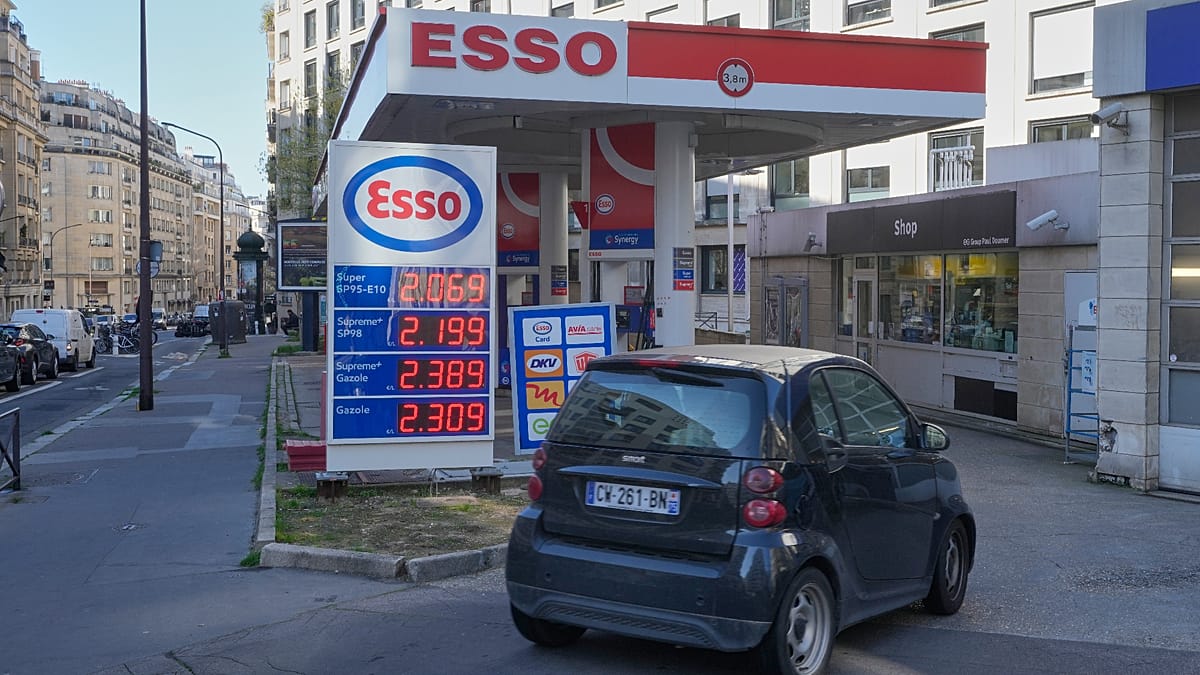
Inflation across the European Union accelerated to 3.2% in April 2026, its highest level since January 2024, and preliminary Eurostat data for May suggests further upward pressure. The renewed price surge, driven by energy costs following the joint US-Israeli attack on Iran in late February, is eroding the purchasing power of workers across the continent.
According to the Indeed Hiring Lab's wage tracker, posted wage growth in the eurozone averaged just 2.3% year-on-year in April, well below the 3.0% inflation rate recorded for the currency bloc. This marks a sharp reversal from the period between September 2023 and early 2026, when advertised salaries consistently outpaced consumer price increases.
“Inflationary pressures from the global energy price shock have started to show in the European data, eroding real wage gains,” said Aubrey Woessner, associate economist at the Indeed Hiring Lab.
Diverging fortunes across Europe
The gap between pay and prices varies significantly among the continent's largest economies. The United Kingdom stands out with posted wage growth of 4.0% year-on-year, comfortably above its 2.8% inflation rate. However, Pawel Adrjan, director of economic research at Indeed, cautioned that the cushion is thinning. “Growth in posted wages was 4.0% year on year in April, supported in part by a headline minimum wage rise of 4.1%, but this was the slowest rate in four years,” he told Euronews Business. “Since hiring remains weak, recent real wage gains will erode quickly if the Iran conflict keeps oil and gas prices high.”
Germany and Ireland still show posted wage growth slightly above inflation—3.2% versus 2.9% in Germany, and 3.7% versus 3.6% in Ireland—but the margins are narrow. In contrast, workers in France and Italy are losing ground most acutely. French posted wage growth has remained flat at 1.1% throughout 2026, while inflation climbed from 0.4% in January to 2.5% in April. In Italy, advertised pay has grown by less than 0.8% since mid-2025, while inflation reached 2.8% in April.
The erosion of real wages comes after a period of relative stability. Inflation had stayed below 3% from early 2024 until February 2026, allowing some recovery from the post-pandemic price shock that saw annual inflation peak above 11% in 2022. But the recent geopolitical turmoil has reignited cost-of-living pressures.
“Even in the UK, real wage growth is stalling. The slip in real purchasing power will weigh on demand in the coming months, adding to other headwinds facing the economy,” Woessner added.
The data underscores a broader challenge for European policymakers: balancing monetary tightening with the need to protect household incomes. As energy prices remain elevated and the conflict in the Middle East shows no sign of abating, the gap between advertised pay and the cost of living is likely to widen further, particularly in southern Europe.