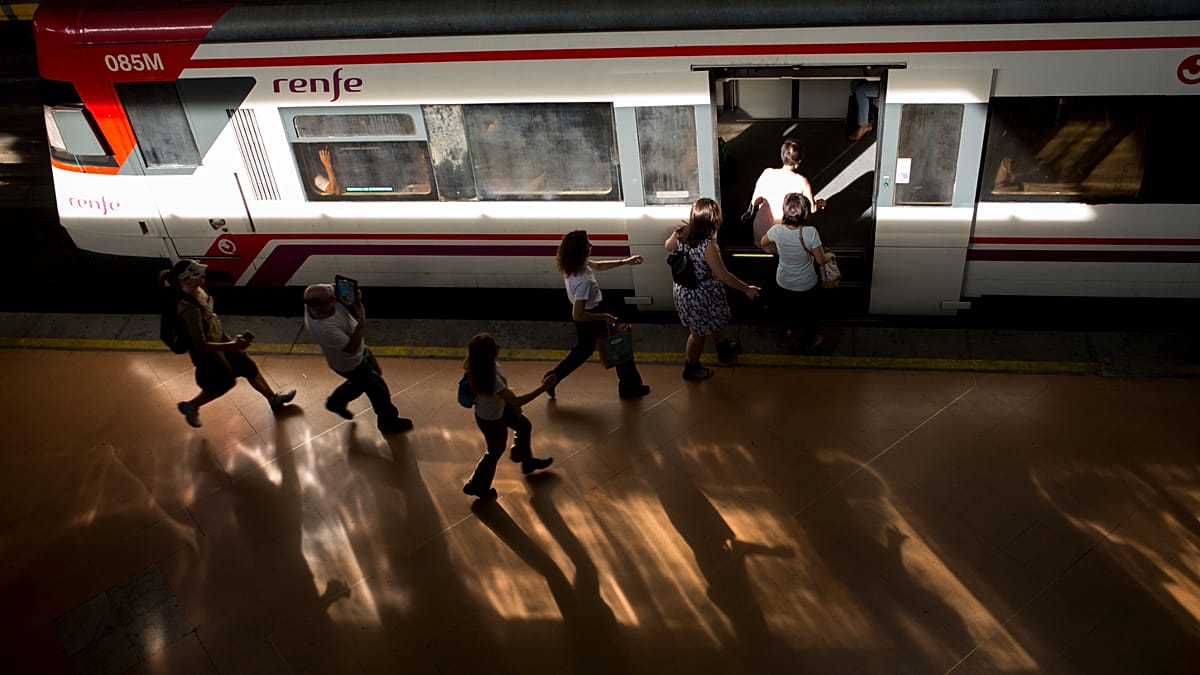
Spain's state-owned railway operator Renfe has been forced to cancel 320 services on Monday 29 June as the Railway Union (SF) begins a 24-hour strike, just as many workers start their summer holidays. The walkout affects high-speed, regional, and commuter trains across the country, though minimum services mandated by the Ministry of Transport will keep much of the network running.
On high-speed and long-distance routes, 262 trains will operate, representing 73% of normal capacity. Regional services will see 420 trains maintained, or 65% of the usual timetable. The hardest hit will be commuter services, where activity will be cut in half, with 75% of trains running only during peak hours: 6:00–9:00, 13:30–16:00, and 18:30–20:30.
Renfe is offering affected passengers the option to travel on the nearest available train to their original departure time, or to change or cancel their ticket free of charge through standard channels. A full list of cancelled trains is available on the operator's website.
Dispute Over Freight Division
This Monday's stoppage is the first of two 24-hour strikes; the second is scheduled for 15 July. The conflict centres on the future of Renfe Mercancías, the company's freight arm. The union alleges what it calls a “premeditated abandonment” of the subsidiary and opposes the creation of a joint venture with Medway, part of the MSC group. According to the SF, Renfe has broken agreements that halted previous strikes, signed in November 2023 with the ministry and extended in March 2025, by reducing the division's workload.
The union also points to the outsourcing of maintenance for 65 locomotives in the 333.3 series, a task previously handled by Renfe's own staff, and the announced closure of the Rolling Stock Workshop in Miranda de Ebro, a town in the province of Burgos. These moves, the SF argues, threaten jobs and undermine the company's long-term capacity.
The strike comes at a sensitive time for Spain's rail network, which has seen growing demand for both domestic and international services. The disruption also highlights broader tensions in European rail labour relations, as unions across the continent push back against restructuring and privatisation efforts. In Germany, for example, the GDL union has staged repeated walkouts at Deutsche Bahn over pay and working conditions, while in France, strikes have periodically paralysed SNCF services.
For travellers, the timing is particularly inconvenient. The summer holiday period traditionally sees a surge in rail bookings, and many families rely on Renfe's extensive network to reach coastal destinations or visit relatives. The company has urged passengers to check their train status before travelling and to allow extra time for their journeys.
The dispute over Renfe Mercancías is part of a wider debate about the future of freight rail in Europe. The European Union has set ambitious targets to shift freight from road to rail as part of its Green Deal, aiming to double rail freight traffic by 2050. However, state-owned operators like Renfe face pressure to cut costs and improve efficiency, often leading to conflicts with unions over outsourcing and job security.
As the strike unfolds, the Spanish government is likely to face calls for mediation. The Ministry of Transport has already set minimum service levels, but the union shows no sign of backing down. With a second strike already announced for mid-July, the standoff could escalate, potentially disrupting travel further during the peak summer season.