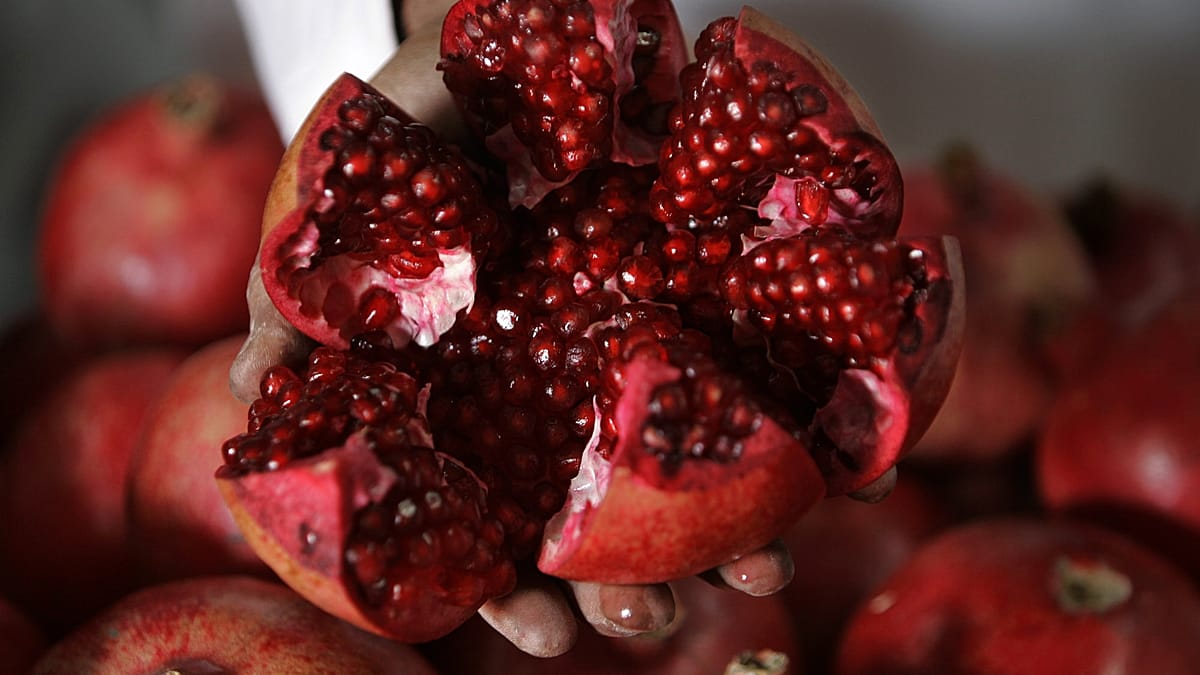
For centuries, the pomegranate has been woven into the cultural fabric of Azerbaijan, a symbol of abundance and prosperity. Now, the country is betting that this ancient fruit can become a modern export powerhouse, moving beyond its traditional role to compete on the global stage.
In 2025, Azerbaijan exported €48.2 million worth of pomegranates and derived products, a figure that underscores the fruit's emergence as one of the nation's fastest-growing non-oil exports. With around 23,000 hectares of orchards, the country now supplies fresh fruit, juice, concentrate, wine, and seed oil to 26 countries, from the Gulf states to markets across Asia. This puts Azerbaijan in direct competition with established pomegranate exporters like Iran, Turkey, and Spain.
"For Azerbaijan, the pomegranate is an integral part of our nation's cultural heritage, with a history spanning nearly 2,000 years, symbolising abundance, prosperity, and well-being," Farhad Garashov, chairman of the Pomegranate Producers and Exporters Association of Azerbaijan, told European Pulse.
A competitive edge in a crowded market
Azerbaijani producers point to a combination of indigenous varieties, EU-compatible phytosanitary standards, and proximity to European and Gulf markets as their main advantages. More than 200 varieties are cultivated, concentrated in the Kur-Araz lowland and the Goychay district, about 200 kilometres west of Baku.
The best-known internationally is Guloysha, prized for its thin skin, high juice content, and sweet-sour flavour. Other varieties, including Valas, Shah Nar, Nazik Gabig, and Bala Mursal, offer distinct colours and flavours that producers use to stand out on supermarket shelves abroad.
"This rich heritage is one of the defining characteristics that distinguishes Azerbaijani pomegranates in international markets," said Garashov, whose organisation represents more than 500 farmers and exporters.
Fresh fruit still dominates exports, but processed products—juice, concentrate, and oil—are giving producers a longer selling season. Cold storage, processing plants, and logistics infrastructure now allow them to supply buyers year-round rather than only during the autumn harvest.
Foreign buyers and large supermarket chains are demanding stricter phytosanitary standards, consistent fruit sizes, and international packaging. These requirements are pushing smallholders toward new financing instruments and partnerships.
"Agriculture in Azerbaijan has entered a new stage of development that focuses not only on increasing production volumes, but also on branding high value-added agricultural products," Anar Jafarov, director of the Agrarian Innovation Centre under the Ministry of Agriculture, told European Pulse.
Climate change threatens yields
Yet the industry faces a significant challenge: climate change. Yusif Lazgiyev, operations director at Az-Granata, a privately owned juice and beverage company that operates 332 hectares of its own orchards and supplies concentrate and bottled juice to export markets, said this year's harvest was significantly reduced after cold and rainy weather in late May and early June prevented the second of the pomegranate tree's three seasonal flowerings.
"Pomegranate trees normally blossom three times a season. This year, the pomegranates in our gardens blossomed only once due to climate change, and this has caused productivity and yield to drop," Lazgiyev said. "The rain washed the existing blossoms away."
He estimated yield losses from a single flowering cycle at 15% to 20%, and noted that temperature swings between night and day were also causing disease to spread more quickly in orchards. Wine production this year was down 30% to 40% compared with 2025.
Garashov said the industry had identified drip irrigation, digital water management, and improved water efficiency as priorities in response to higher temperatures and more frequent drought. "Climate change, rising temperatures, prolonged droughts, and increasing water scarcity have become major concerns for all producers," he said.
The Goychay Pomegranate Festival, held each October in the district of Goychay, draws tens of thousands of visitors annually and serves as both a cultural celebration and a trade event where producers meet buyers, showcase new varieties, and negotiate export contracts. In 2024, it was inscribed on UNESCO's Representative List of the Intangible Cultural Heritage of Humanity, following an initiative led by First Vice-President Mehriban Aliyeva.
As Azerbaijan seeks to diversify its economy beyond hydrocarbons, the pomegranate represents a tangible link between tradition and ambition. Whether it can sustain its momentum in the face of a changing climate will determine if this ancient fruit becomes a lasting pillar of the country's non-oil exports. For more on Azerbaijan's broader economic strategy, see the role of its pipelines in European energy security.