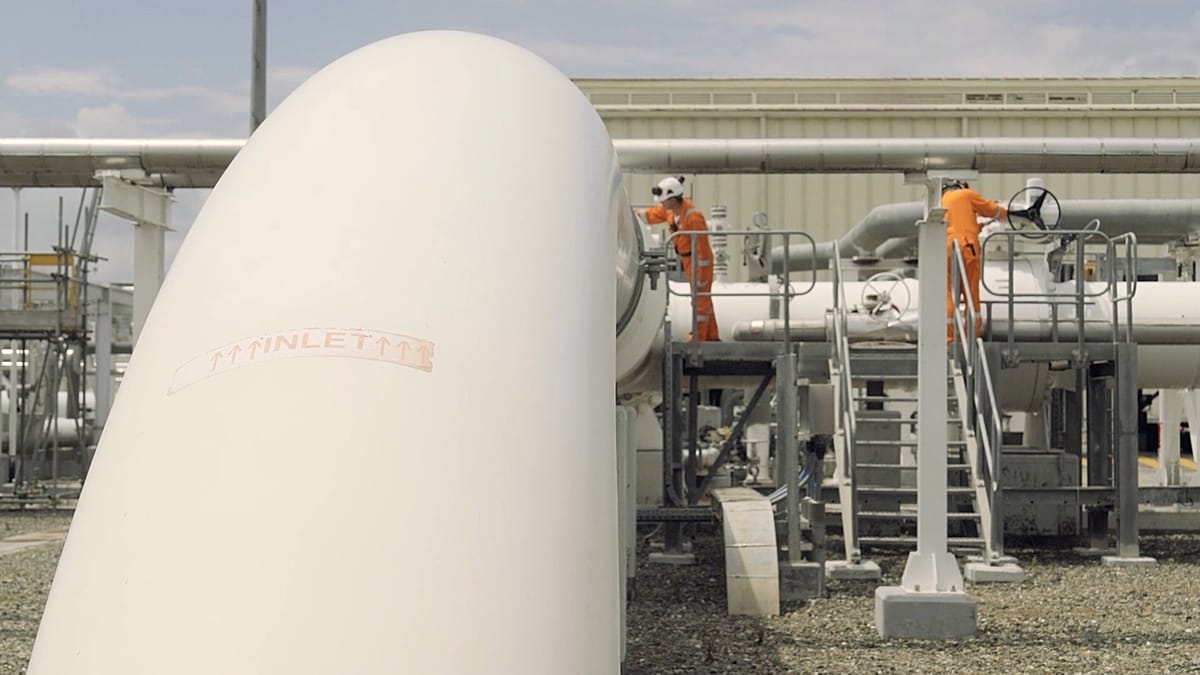
In an interview with Euronews, senior executives from Azerbaijan's state energy company SOCAR underscored the country's growing role in European energy security, describing its pipeline network as essential infrastructure for the continent. Vitaliy Baylarbayov, SOCAR's deputy vice president, told the programme Business Horizons that transit corridors such as the Baku-Tbilisi-Ceyhan and South Caucasus pipelines function as critical "arteries which are connecting us with the rest of the world."
The remarks come as Europe seeks to diversify its energy sources following Russia's full-scale invasion of Ukraine. Since 2021, Azerbaijan has increased natural gas exports to the European Union by 56 percent, a trend that positions Baku as an increasingly important partner for Brussels. The gas travels via the 3,500-kilometre Southern Gas Corridor, a network operated by SOCAR that links the Caspian Sea to European markets.
Italy remains the largest buyer
In 2025, Italy remained the single largest European consumer of Azerbaijani gas, importing 9.5 billion cubic metres — equivalent to 16 percent of Italy's total gas imports. Other EU member states, including Greece, Bulgaria, and Romania, also receive supplies through the corridor. The Southern Gas Corridor, which became fully operational in late 2020, has been a cornerstone of the EU's strategy to reduce reliance on Russian pipeline gas.
Operations Director Elkhan Sultanov emphasised the importance of constant monitoring along the entire route. "In our industry, precision is essential," he said, explaining that SOCAR maintains round-the-clock surveillance to guarantee safe, uninterrupted deliveries across Europe. The company has invested in digital monitoring systems to detect leaks and pressure changes, a practice that aligns with broader efforts to protect Europe's energy lifelines from ageing infrastructure, as explored in a recent analysis of AI and smart pipelines.
The expansion of Azerbaijani gas exports has not been without geopolitical complications. The Southern Gas Corridor passes through Georgia and Turkey, both of which have their own energy and security interests. Meanwhile, the European Commission has signalled that it wants to double imports from Azerbaijan to 20 billion cubic metres annually by 2027, a target that would require additional investment in both production and pipeline capacity.
For Azerbaijan, the energy relationship with Europe is also a matter of strategic positioning. The country has sought to balance its ties with Russia, Turkey, and the West, while also developing the so-called Middle Corridor — a trade route that connects Central Asia to Europe via the Caucasus. In that context, the Port of Bar in Montenegro has been identified as a potential link in the Trans-Caspian Middle Corridor, as Montenegro eyes the port for expanded trade.
The security of energy infrastructure has become a heightened concern across the continent. Baltic leaders have recently warned of Russian plans to strike critical infrastructure in Poland and the Baltics, a reminder that pipelines and power grids are potential targets in hybrid warfare. SOCAR's Sultanov acknowledged that the company works closely with national authorities to protect its assets, though he declined to discuss specific security measures.
For European consumers, the steady flow of Azerbaijani gas offers a measure of relief in a volatile market. Prices have stabilised somewhat since the 2022 energy crisis, but the long-term outlook remains uncertain as the EU pushes toward net-zero emissions by 2050. Natural gas is considered a transition fuel in that process, but its role is likely to diminish over time as renewables expand.
Baylarbayov struck an optimistic note about Azerbaijan's place in Europe's energy mix. "We are not just a supplier; we are a partner," he said. "The arteries we have built are not only for gas — they are for cooperation."