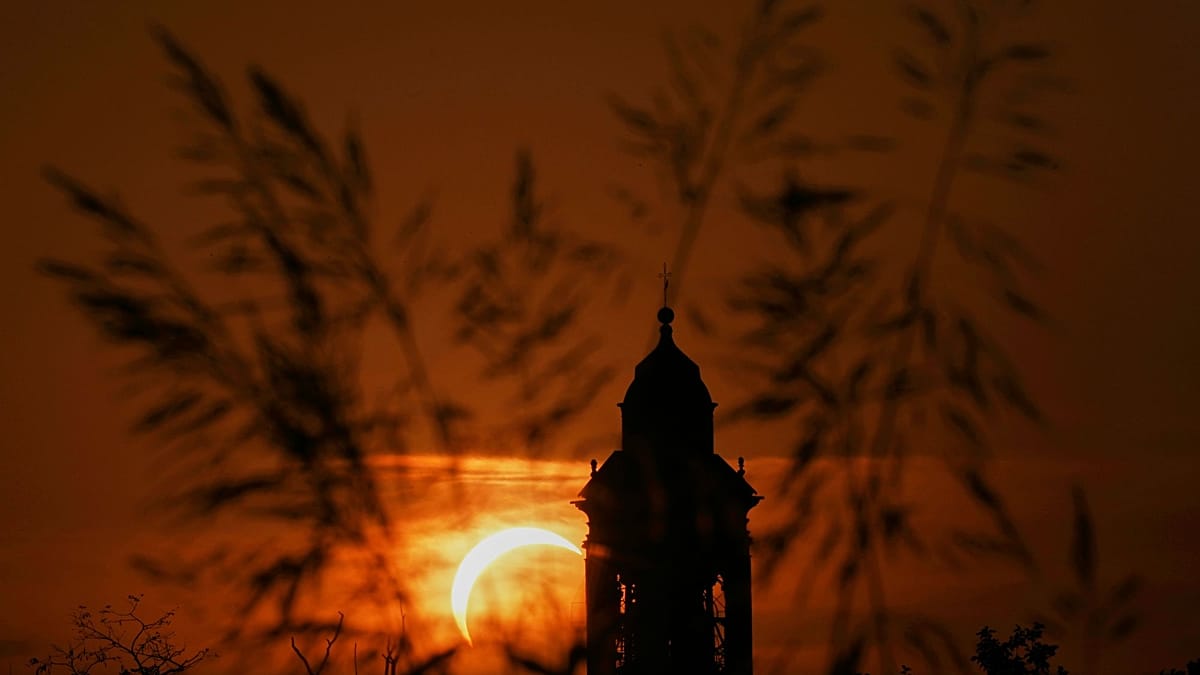
If you missed the recent total solar eclipse that darkened skies over parts of Europe, take heart: a far longer and more dramatic event is coming on 2 August 2027. Astronomers are already calling it the “eclipse of the century” because its maximum totality will last 6 minutes and 23 seconds—nearly three times longer than the 2 minutes 18 seconds seen this year. That record will stand until 2114.
The path of totality will cross the Strait of Gibraltar, then sweep through Morocco, Algeria, Tunisia, Libya, and Egypt before reaching Saudi Arabia. For Europeans, this means several accessible destinations lie directly in the shadow’s path, offering a rare chance to witness a prolonged darkness without travelling to the ends of the Earth.
European viewing spots
Spain again features prominently, though the cities in the path differ from those that saw the 2026 eclipse. In Marbella, totality will last 3 minutes 21 seconds; in Cádiz, 2 minutes 56 seconds. The Spanish exclaves of Ceuta and Melilla, on the North African coast, will experience 4 minutes 49 seconds and 4 minutes 34 seconds of darkness, respectively.
The British Overseas Territory of Gibraltar offers a unique vantage point, with totality lasting 4 minutes 28 seconds. Further east, the Italian island of Lampedusa—part of the Pelagian Islands—will see 2 minutes 56 seconds of totality, making it a convenient option for those based in southern Europe.
Across the Mediterranean, Tangier in Morocco will enjoy 4 minutes 51 seconds of totality, while the Tunisian port city of Sfax will experience 2 minutes 56 seconds. These locations combine the eclipse with rich cultural and historical attractions, making them appealing for a longer trip.
The longest views: Egypt and beyond
For serious eclipse chasers—often called umbraphiles—Egypt is the prime destination. The greatest eclipse occurs near the ancient city of Luxor, where totality will last 6 minutes 22 seconds. In Asyut, it will be 6 minutes 7 seconds, and in the Siwa Oasis, 5 minutes 33 seconds. These sites offer not only exceptional viewing conditions but also the chance to combine the event with visits to the pyramids, temples, and the Nile.
Saudi Arabia also lies in the path, with Jeddah seeing 5 minutes 53 seconds and Mecca 5 minutes 10 seconds of totality. However, travellers should consider the extreme heat of August, which can be intense across North Africa and the Middle East.
Dr. Kelly Korreck, a programme scientist for eclipses at NASA Headquarters, told Euronews Travel that temperatures can drop by as much as 10°C during totality—a noticeable relief, though the heat will return quickly once the Sun reappears.
Plan ahead: hotels are filling fast
Given the rarity and length of this eclipse, accommodation in the path of totality is already scarce. Many hotels in Marbella, Gibraltar, and Luxor are fully booked, and remaining rooms are commanding premium prices. If you are serious about witnessing this celestial spectacle, it is wise to secure your booking as soon as possible.
For those who cannot make it to the 2027 event, there are other opportunities on the horizon. An annular solar eclipse—where the Moon covers the Sun’s centre, leaving a “ring of fire”—will occur on 26 January 2028. It will pass through Portugal, including Madeira, and parts of Spain, such as Barcelona, Córdoba, Cádiz, and Seville, with maximum coverage of about 84%.
Australia and New Zealand will experience a total solar eclipse on 22 July 2028, with totality visible in Sydney, Queenstown, and Dunedin. But for those seeking the longest, most accessible totality of the century, 2 August 2027 is the date to mark.