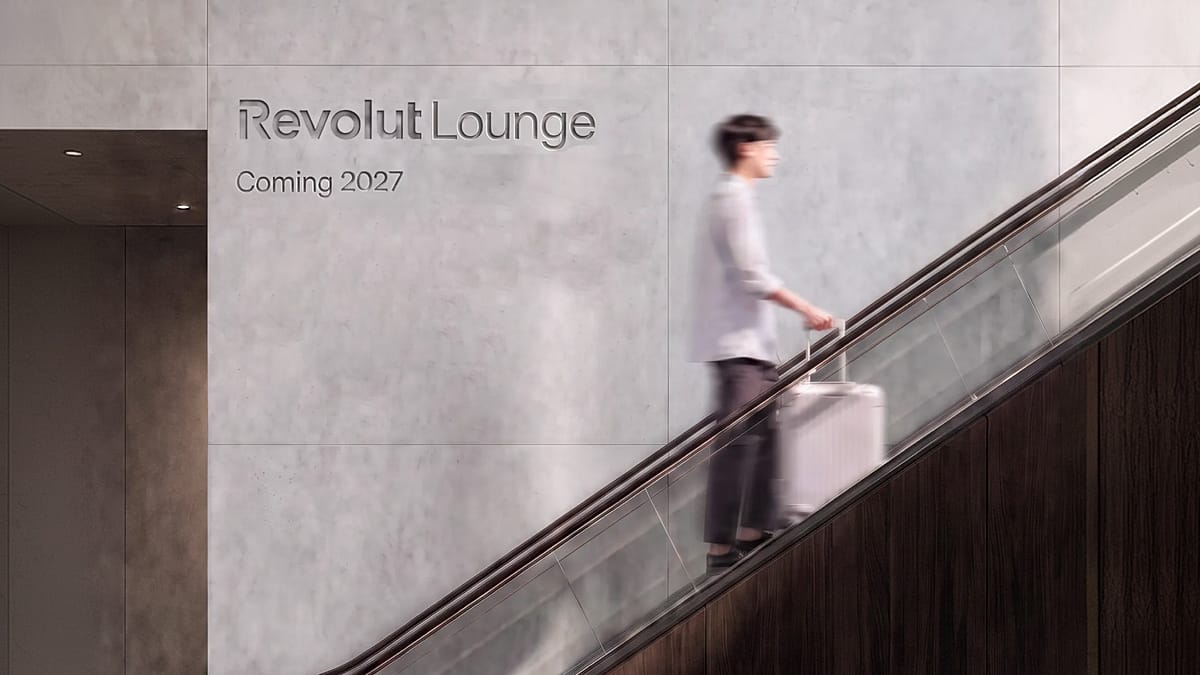
Revolut, the London-based fintech, is moving into airport hospitality with plans to open its first lounge at Copenhagen Airport in 2027. The company says the CPH Revolut Lounge will be the largest common-use lounge in the Schengen area, marking a bold entry into a market traditionally dominated by airlines and credit card providers.
The lounge is part of a broader strategy to build a network of premium lounges in what Revolut calls its “priority markets.” While the company has not yet disclosed how cardholders will gain access, it has confirmed that the facility will be operated by Plaza Premium Group, which runs the world’s largest network of airport lounges.
Design and ambition
Revolut’s director for product GP and new bets, Hadi Nasrallah, said the company wants to challenge the often underwhelming standard of airport lounges. “Everyone agrees airport lounges tend to underwhelm, we want to bring our design ethos into the real world, and will be creating something gutsy and beautiful,” he said.
Nasrallah added that Copenhagen was chosen for its fit with Revolut’s brand and its growth in the Nordic region. “Copenhagen is a perfect fit, the city can be similarly described and is in a key growth market for us, the Nordics. We’ll strive to set a new standard for airport hospitality across Europe and bring more unique benefits to Revolut customers when they travel.”
The move comes as European airports face increasing pressure from longer security and border queues, making lounge access more appealing to frequent travellers.
What Revolut offers travellers
Revolut’s standard account is free, but its premium tiers are aimed squarely at travellers. The Ultra plan, at €55 per month, includes unlimited airport lounge access, unlimited fee-free currency exchange, global medical insurance, car hire excess cover, and insurance for delayed flights and lost or damaged luggage. It also bundles perks like eSIM data (3GB globally), three WeWork credits per month, and 20 ClassPass credits.
All account holders can earn RevPoints, which can be transferred to various loyalty programmes. The new lounge is expected to integrate with these benefits, though specifics remain under wraps.
Revolut is not the only neobank targeting travellers. Dutch rival Bunq also offers multi-currency accounts with premium plans that include travel insurance and fee-free foreign payments. But Revolut’s move into physical lounges is a significant step, blurring the line between digital banking and traditional travel perks.
With the first lounge set to open in 2027, Revolut is betting that a well-designed, spacious lounge can become a differentiator in the crowded fintech market. Whether it will live up to its “gutsy and beautiful” promise remains to be seen, but the company is clearly aiming to set a new benchmark for airport hospitality in Europe.