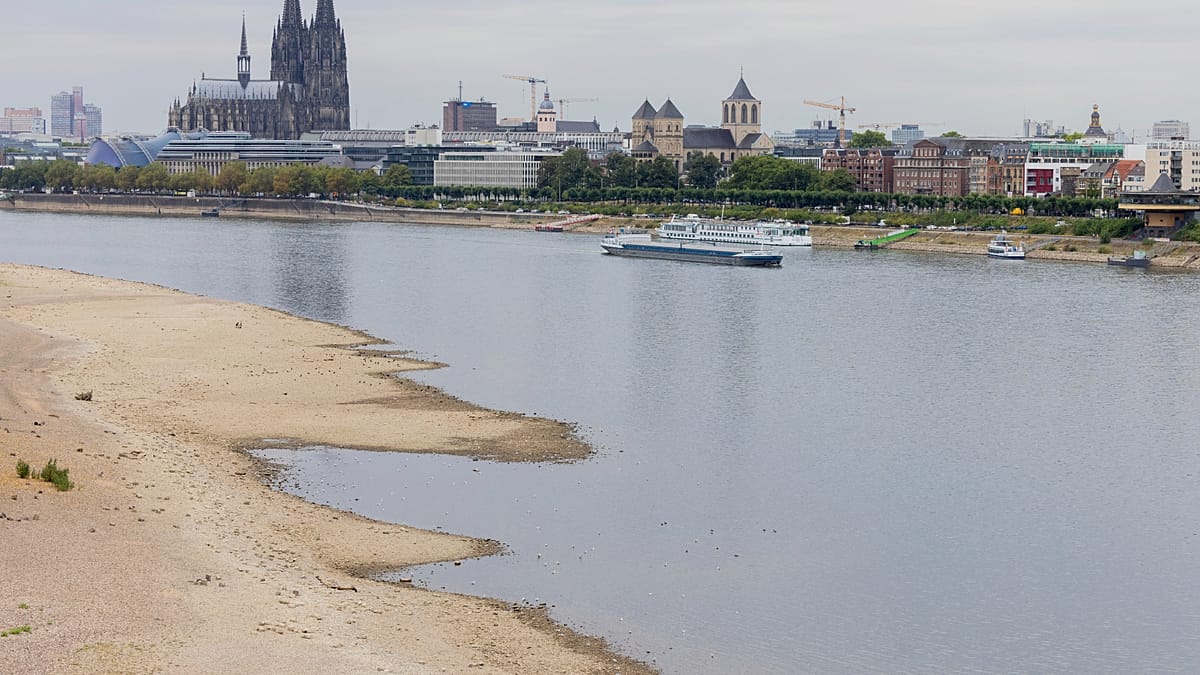
The Rhine River, one of Europe's most vital commercial arteries, has dropped to a record low in Germany as an extended drought continues to grip the continent. The waterway, which carries everything from coal to chemicals between the North Sea ports and the industrial heartlands of North Rhine-Westphalia and Baden-Württemberg, has become increasingly difficult to navigate, forcing barges to reduce their loads and, in some cases, halt operations entirely.
In Kaub, a key chokepoint near Koblenz where the river narrows, water levels have fallen below the previous record set in 2018, according to the German Federal Waterways and Shipping Administration. The measuring gauge there, which is critical for determining how much cargo vessels can carry, has dropped to levels that make passage risky even for specially designed low-draft ships.
Economic ripple effects
The low water is not just a logistical headache; it has direct economic consequences. Shipping companies are charging surcharges, and industrial giants like BASF, which operates a massive plant in Ludwigshafen along the Rhine, have warned that production may need to be adjusted. The company has said it is using alternative transport modes, but rail and road cannot fully compensate for the river's capacity.
Germany's economy, already grappling with energy costs and inflation, now faces another strain. The Rhine is a lifeline for the country's manufacturing sector, and disruptions here can quickly ripple across Europe. As one logistics expert put it, "When the Rhine coughs, Europe catches a cold."
The situation has also revived concerns about energy security. In Hungary, the Danube has similarly fallen to record lows, forcing the shutdown of the Paks nuclear power plant, which relies on river water for cooling. The European Union is now weighing emergency energy talks to coordinate a response, as the Danube drought shuts Hungary's Paks plant.
Climate change and infrastructure
Meteorologists attribute the current conditions to a combination of low winter snowfall in the Alps and a hot, dry summer that has left soils parched and reservoirs depleted. Climate models have long predicted that such extremes would become more frequent, and Europe is now seeing the consequences in real time.
Germany's federal government has pledged to invest in modernizing the country's water infrastructure, but critics argue that progress has been too slow. The smart meter lag is a separate issue, but it reflects a broader pattern of digital and infrastructural inertia that hampers adaptation to climate change.
Meanwhile, the low water has revealed unexpected sights. In the Danube, the receding river has exposed ancient catapult stones and WWII wrecks, drawing curious onlookers and historians. In Bulgaria, a mammoth skeleton was found in the riverbed, a stark reminder of how much the landscape has changed over millennia.
Adaptation and resilience
For the Rhine, the immediate outlook is not encouraging. Forecasts suggest little rain in the coming weeks, and the river may not recover until autumn. Shipping companies are already planning for a prolonged period of reduced capacity, and some have begun to invest in more efficient vessels that can operate in shallower waters.
But adaptation is not just about technology; it also requires political will. The European Union has proposed stricter water management rules, but implementation varies widely among member states. In the Netherlands, where the Rhine enters the sea, authorities are working on innovative solutions to store fresh water and prevent saltwater intrusion.
The current crisis is a wake-up call for Europe. As the continent warms, rivers like the Rhine will become less predictable, and the economic costs will only grow. The question is whether governments and businesses can move beyond short-term fixes and embrace a more resilient approach to water management.
For now, the Rhine's record low is a visible symbol of a changing climate, and a reminder that Europe's prosperity depends on the health of its natural systems.