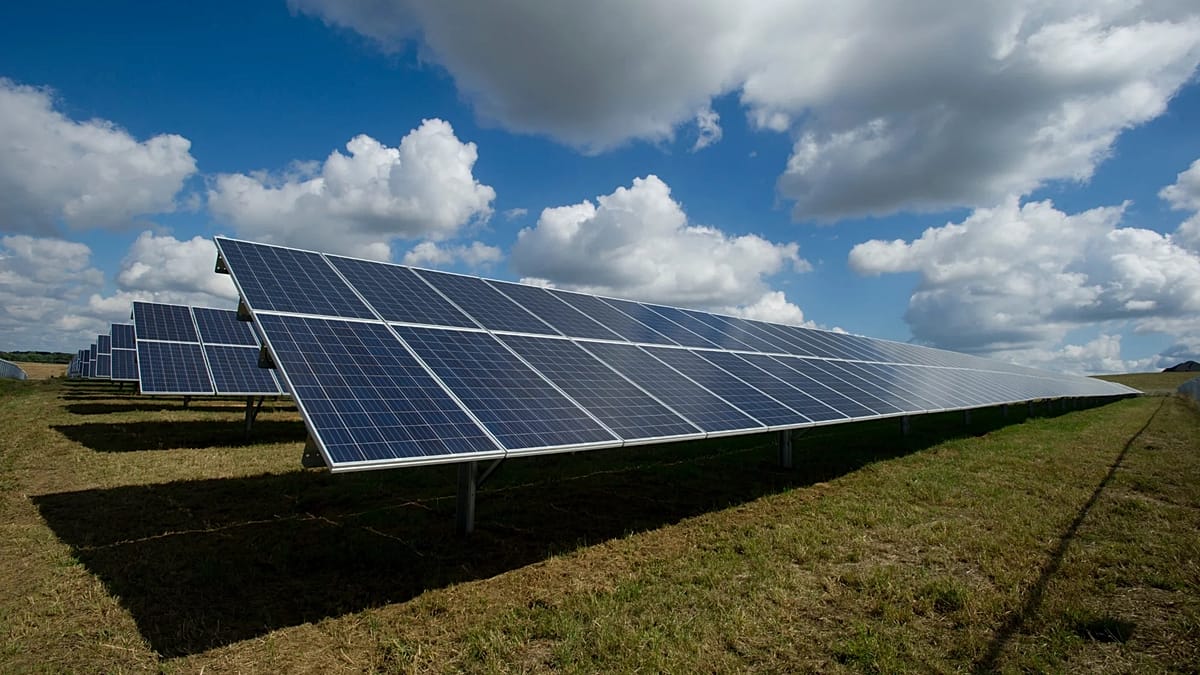
Romania is falling behind its European Union peers in the shift to renewable energy, but a massive solar project in the country's northwest could help change that trajectory. The Dama Solar farm, which would become the largest in the EU, has taken a significant step forward after receiving an establishment authorisation from the Romanian Energy Regulatory Authority (ANRE). This approval confirms that the developers have secured the necessary financing for the large-scale infrastructure project.
The solar farm, led by Rezolv Energy, will be located in Arad County, near the Hungarian border. With a planned installed capacity of 1.24 gigawatts (GW), it is set to surpass the Witznitz Solar Park near Leipzig, Germany, which currently holds the title of the EU's largest operational solar farm. The project is expected to enter commercial operation by 2030, and its developers say it could generate enough electricity to power more than 280,000 households—close to one million people.
Romania's energy mix: a reliance on fossil fuels
According to data from the energy think-tank Ember, Romania generated only 9.78% of its electricity from solar in 2025, compared to the EU average of 13.1%. The country also lags in wind power, with 12% of its electricity coming from wind versus the EU average of 17%. While hydropower is Romania's largest renewable source, contributing 24.3% of its electricity, the country still depends heavily on gas (16.9%) and coal (15.2%)—both above the EU averages of 16.8% and 9.18%, respectively.
This heavy reliance on fossil fuels, particularly coal, is a concern for Romania's climate commitments. The Dama Solar farm could help reduce that dependence. Rezolv Energy estimates that the plant could produce up to 10.86 terawatt-hours (TWh) of electricity per year at maximum capacity—more than double Romania's current total solar output. Even with a conservative capacity factor of 15%, the farm would still generate around 1.63 TWh annually, enough to cover the consumption of hundreds of thousands of households.
Beyond electricity: jobs and nature restoration
The project is not just about energy. Rezolv Energy says it will create more than 500 jobs over the next three years, providing a boost to the local economy in Arad County. The company also plans to return much of the low-quality agricultural land to pasture, where sheep will manage vegetation through grazing. In addition, the project will include an 82-hectare nature reserve, which the company describes as one of the largest private-led nature restoration initiatives associated with a solar project in Southeastern Europe.
Rezolv Energy says the solar farm will make a “remarkable contribution” to Romania's 2030 renewable energy targets. The company is also evaluating the addition of substantial energy storage, which would help minimise the waste of excess solar energy produced when electricity consumption is low.
Romania's push for renewables comes amid broader European efforts to decarbonise. The country's lagging solar and wind numbers highlight the challenges many EU member states face in transitioning away from fossil fuels. The Dama Solar farm, if completed as planned, could serve as a model for other countries in the region.
However, the project is not without its challenges. Solar farms depend on weather conditions, and the intermittent nature of solar power requires robust storage solutions. The planned energy storage would be a key component in ensuring the farm's output is used effectively.
Romania's energy transition is also set against a backdrop of regional security concerns. Recent incidents involving drones near the Romanian border have highlighted the need for vigilance, but the country's energy future is increasingly tied to its ability to harness its renewable potential.
As Europe moves towards a greener energy mix, Romania's progress will be closely watched. The Dama Solar farm represents a significant step, but it is only one part of a larger puzzle. With the right investments and policies, Romania could close the gap with its EU peers and become a leader in renewable energy in Southeastern Europe.