Along Costa Rica's Caribbean coast, behind a beachfront hotel in Puerto Viejo, conservationists are stringing rope bridges between trees. Their goal: to give sloths a safe way to cross the gaps created by roads, buildings, and tourist infrastructure that now fragment the forest canopy.
Sloths are not like monkeys; they cannot leap from branch to branch. Even a gap of two or three metres between tree canopies can force them to descend to the ground, where they face deadly risks from dogs, vehicles, and power lines. To address this, the Sloth Conservation Foundation, founded by British zoologist Rebecca Cliffe, has installed around 410 rope bridges across such obstacles.
“The wildlife bridges that we install are just made from single ropes, which don’t look very elaborate, but for arboreal species, they work,” Cliffe explains. “It is a lifeline to cross a gap that they otherwise couldn’t cross.”
Microfragmentation and the need for connectivity
Costa Rica has made remarkable progress in reforestation, with forest cover rising from an estimated 21% of its territory in 1987 to 59% by 2023, according to the OECD. Yet this recovery has not eliminated habitat fragmentation. Development and tourism continue to pressure coastal ecosystems, creating what Cliffe calls “microfragmentation” – small but dangerous breaks in the canopy.
Sloths are creatures of habit, following routes learned early in life even as their surroundings change. When those routes are interrupted, they often try to cross at ground level, with often fatal consequences. Cliffe began experimenting with rope bridges nearly two decades ago after working at the Sloth Sanctuary, where she saw countless animals injured by dogs, cars, and electrical cables.
“I thought, well, the sloths just need a safer way to get somewhere,” she recalls. With limited funding, she installed simple ropes between trees. Camera monitoring has since recorded more than 22,000 wildlife crossings, including many other arboreal species.
The project also involves planting trees and working with property owners to restore natural connections between neighbouring plots. However, the ropes are not permanent; they deteriorate after four or five years in tropical conditions and require regular replacement.
Carlos Morera Beita, a geographer at the National University of Costa Rica, notes that sloths have shown greater adaptability than once believed, using tree-lined pastures, living fences, and riverside vegetation to move between forest patches. But he stresses that these connections remain essential. Without them, even recovering forests can leave sloth populations isolated, limiting their access to food, mates, and shelter.
“Rope bridges can help animals cross specific obstacles,” Morera says, “but long-term conservation requires protecting existing forests, restoring biological corridors, and ensuring new development does not further fragment habitats.”
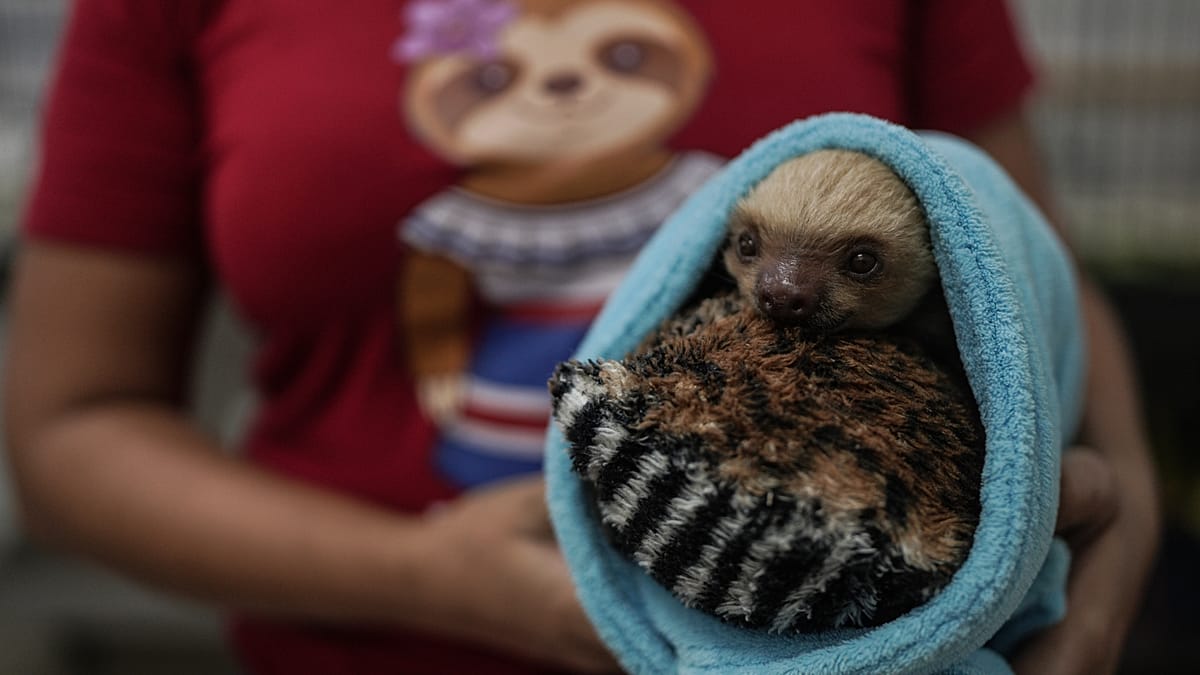
At the Sloth Sanctuary of Costa Rica, near the town of Penshurst, tourists observe sloths that cannot return to the wild due to severe injuries, disabilities, or the loss of their mothers before learning essential survival skills. Founder Judy Avey-Arroyo, who began her work after rescuing an orphaned sloth named Buttercup, says replacing a mother is nearly impossible. Young sloths spend about a year learning which leaves are safe, which plants to avoid, and how to navigate the forest along familiar routes. Mothers also teach them which leaves to seek out when suffering from parasites.
Without that knowledge, even apparently healthy orphaned sloths can struggle to survive in the wild. For Avey-Arroyo, knowing that some animals will never return to the forest is the hardest part of running the sanctuary.
As climate change brings new threats, the work of these conservationists becomes ever more vital. The rope bridges are a simple, low-tech solution that offers a lifeline to sloths and other wildlife navigating an increasingly human-dominated landscape. Similar efforts are being explored elsewhere, from solar kits in refugee camps to carbon-conscious choices in Europe, but in Costa Rica, the immediate priority is clear: keep the canopy connected.