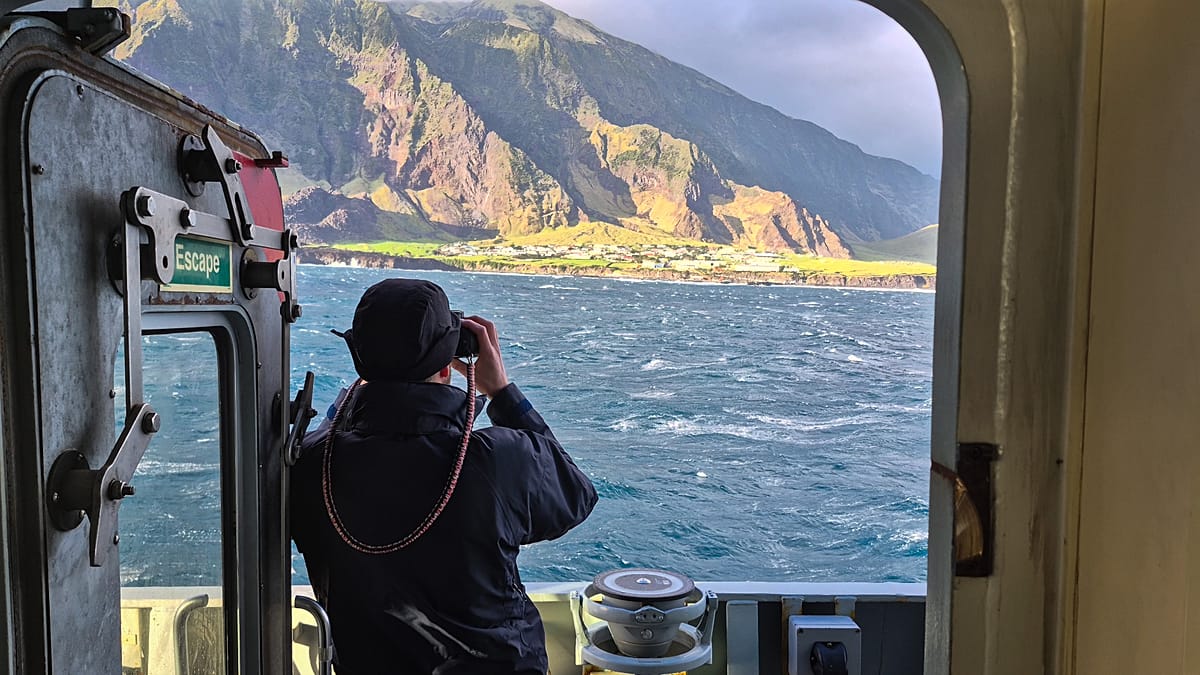
The Royal Navy patrol vessel HMS Medway has reached the waters off Tristan da Cunha, one of the most isolated inhabited places on Earth, to deliver critical supplies and relieve a team of army specialists who had parachuted onto the island earlier this month.
The UK Ministry of Defence confirmed on Sunday that the ship will remain in the area for several days. Its mission includes dropping off six civilian medics and retrieving the paratroopers from the army's 16 Air Assault Brigade Combat Team, who have been providing medical support to a British national suspected of contracting Hantavirus.
Tristan da Cunha, a British Overseas Territory in the South Atlantic Ocean, is home to roughly 220 people and is normally reachable only by sea. The island has no airstrip, making emergency medical evacuations exceptionally challenging.
A Daring Response to a Remote Health Emergency
The crisis began when a British resident who had been aboard the MV Hondius cruise ship—which had reported cases of Hantavirus—returned to Tristan da Cunha and developed symptoms. Given the island's limited medical infrastructure, UK authorities decided to deploy a specialist team from the 16 Air Assault Brigade, who executed a parachute drop onto the island in early May.
Minister for the Armed Forces Al Carns described the operation as an "extraordinary" effort and paid "huge tribute" to all personnel involved. The mission underscores the logistical complexities of maintaining healthcare in Europe's far-flung territories, a challenge that resonates with other remote communities across the continent, from the Scottish Hebrides to the Greek islands.
HMS Medway is the second of five River-class offshore patrol vessels operated by the Royal Navy. These ships are designed for maritime security and support of British overseas territories, as well as humanitarian aid delivery. Their deployment highlights the UK's continued naval presence in the South Atlantic, a region where European defense firms like Italy's Leonardo are also active in equipping patrol vessels for international partners.
The Hantavirus case on Tristan da Cunha is a rare but serious event. Hantavirus can cause severe respiratory illness and is transmitted through contact with rodent droppings. The virus is not typically associated with the South Atlantic, but global travel patterns mean that even the most isolated communities are not immune to infectious disease threats. This incident echoes other high-profile medical evacuations in Europe, such as when a US doctor infected with Ebola was flown to Berlin's Charité hospital for treatment.
The arrival of HMS Medway marks the end of a tense period for the island's residents. The paratroopers' presence provided reassurance, but the small community will now rely on the civilian medics to manage any ongoing health risks. The Royal Navy vessel will also deliver essential supplies before departing, leaving Tristan da Cunha to its usual quiet isolation.
This operation is a reminder of the UK's responsibilities to its overseas territories, which stretch from the Caribbean to the South Atlantic. For European readers, it also illustrates the broader challenges of delivering healthcare in remote regions—a topic that has gained urgency as climate change and geopolitical shifts affect supply chains and emergency response capabilities across the continent.