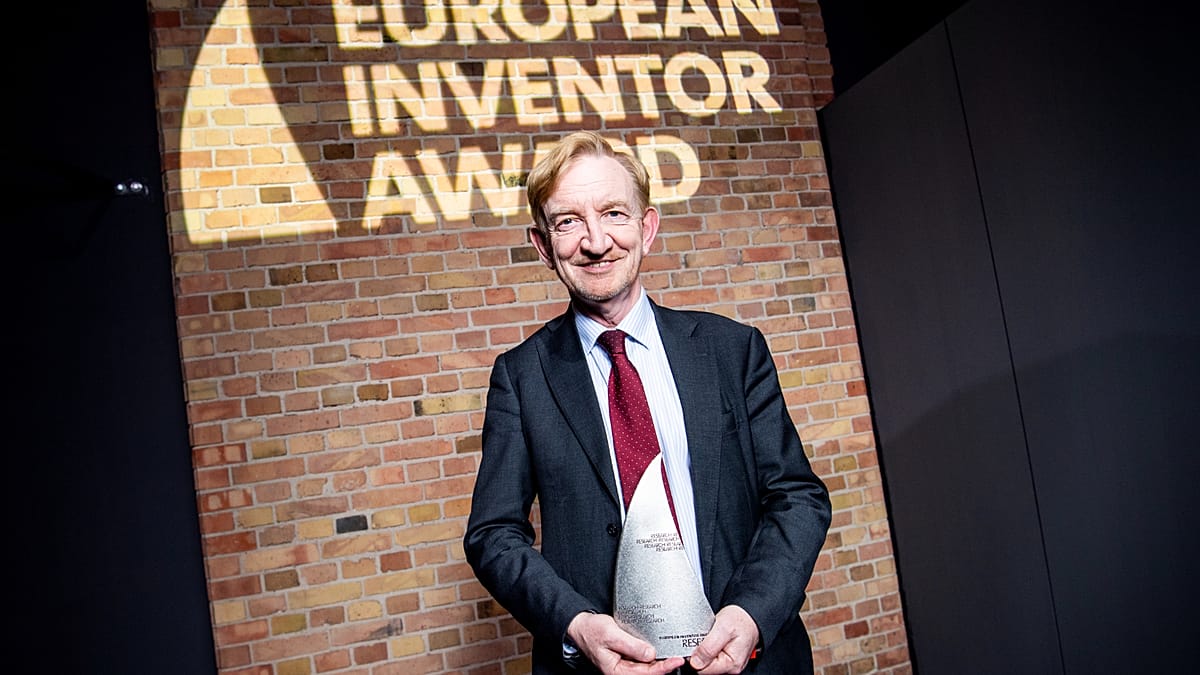
Professor Adrian Hill, the Oxford University vaccine scientist who led the development of the R21/Matrix-M malaria vaccine and won the 2026 European Inventor Award in the Research category, has issued a stark warning: the next pandemic is not a question of if, but when. Speaking to Euronews, Hill argued that while the world is better prepared than before Covid-19, significant challenges remain.
What Covid Taught Us
Hill, co-founder of the Jenner Institute at the University of Oxford — one of the world's leading vaccine research centres — highlighted the pandemic's most important legacy: proving that a new vaccine can be developed within a year. "Until then, we didn't know that. Even leading experts believed it would take several years," he said. This breakthrough has reshaped expectations for future health crises.
The infrastructure built since 2020 now allows faster detection of new pathogens, quicker vaccine development, and rapid organisation of clinical trials. However, Hill cautioned that Europe must not become complacent. The continent's preparedness is being tested by emerging threats, such as the recent hantavirus outbreak on a cruise ship, which underscores the need for robust surveillance systems.
Disinformation and the Role of Education
Despite the mistrust that grew around vaccines after the pandemic, Hill is cautiously optimistic that public confidence is being restored. "There was a lot of disinformation. The remedy for disinformation, in a single word, is education," he said. He believes most people now understand that vaccines "played a pivotal role in tackling the pandemic."
This view aligns with broader European debates about free speech and public health. The recent controversy at the Oxford Union highlights the tensions between open discourse and the spread of harmful misinformation. Hill's emphasis on education suggests that Europe must invest in science literacy as a core component of pandemic preparedness.
The Malaria Breakthrough
Hill's recognition at the European Inventor Award stems from his work on the R21/Matrix-M vaccine, the first highly effective malaria vaccine. This achievement came after more than three decades of research in a field where over a hundred previous attempts had failed. "When I started working on malaria vaccines, every attempt had failed," he recalled. "But we gradually learned to understand the parasite itself better and to choose the right target from about 5,000 genes. Through extensive trial, error and perseverance, we arrived at a vaccine that today has an efficacy of around 80%."
According to the World Health Organization, in 2024 there were approximately 282 million malaria cases and 610,000 deaths across 80 countries. Children under five account for roughly 75% of all malaria deaths in the WHO African Region. Traditional vaccines were ineffective due to the parasite's genetic diversity. Hill's team developed a vaccine containing more of the malaria-specific protein regions needed for an effective immune response, while omitting components that could divert the immune reaction.
After decades of research, the vaccine has evolved from a laboratory innovation into a scalable public-health intervention in a growing number of African countries. The WHO officially recommended it for broad use in October 2023.
Why Malaria Matters to Europe
Although malaria primarily affects African countries, Hill insists that Europeans cannot treat such diseases as "someone else's problem." Global health security is interconnected; pathogens do not respect borders. Climate change is expanding the range of disease-carrying mosquitoes, potentially bringing malaria and other vector-borne diseases closer to southern Europe. Moreover, Europe's role in funding and producing vaccines is critical for global equity.
Hill's warning comes at a time when European manufacturing capacity is under scrutiny. The Moderna CEO recently warned that Europe lacks sufficient mRNA manufacturing capacity for future pandemics, a gap that could leave the continent vulnerable. Hill echoed this concern, urging European governments to invest in public health infrastructure and vaccine production.
The next pandemic is inevitable, but with sustained investment in science, education, and international cooperation, Europe can mitigate its impact. As Hill put it, "We have the tools. We just need the will to use them."