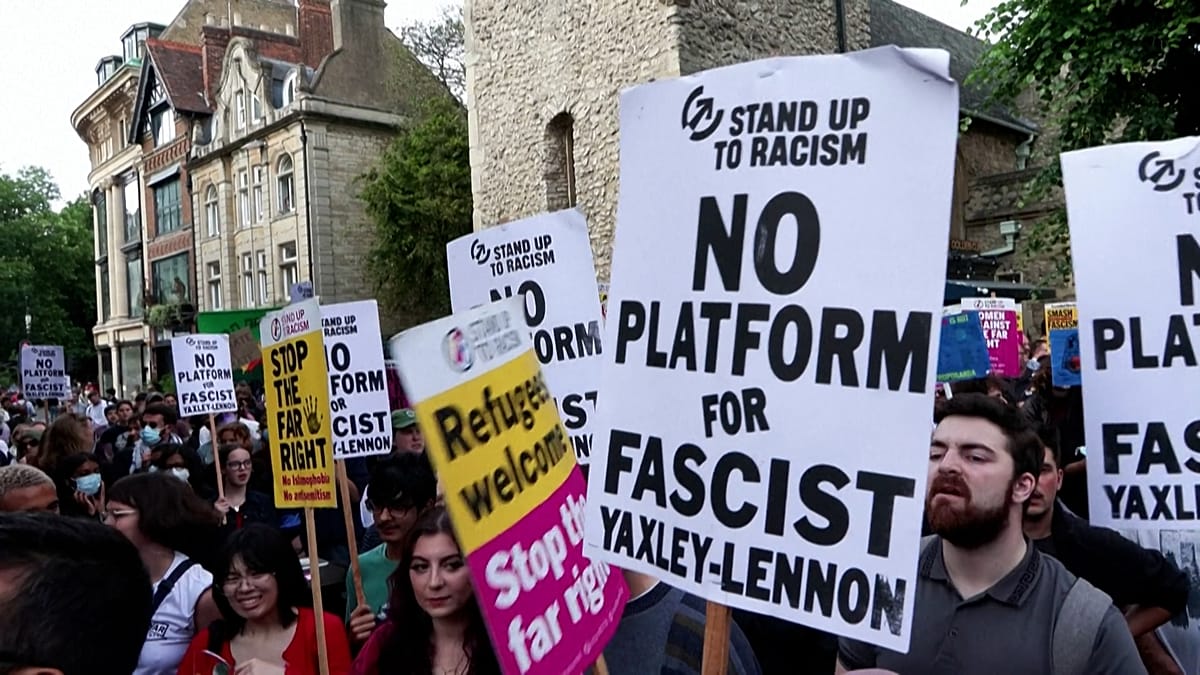
Protests erupted in Oxford on Tuesday as far-right activist Tommy Robinson (real name Stephen Yaxley-Lennon) addressed the Oxford Union, the university's prestigious debating society. The event drew hundreds of demonstrators, with counter-protests also taking place, highlighting the deep divisions over free expression and the limits of acceptable speech in the United Kingdom.
Robinson, a polarising figure known for his anti-Islam and anti-immigration activism, was invited by the Union's student committee. Critics argue that such platforms lend legitimacy to extremist views, while supporters insist on the principle of open debate, even for controversial figures. The Oxford Union has a long history of hosting contentious speakers, from far-right politicians to Holocaust deniers, often sparking similar backlash.
Protests and Counter-Protests
Outside the Union building, protesters from groups such as Stand Up to Racism and Oxford Students for Justice in Palestine gathered, chanting slogans and holding signs condemning Robinson's rhetoric. A smaller group of his supporters also appeared, leading to tense but largely peaceful confrontations. Thames Valley Police reported no major incidents but maintained a visible presence throughout the evening.
The protests are part of a broader wave of demonstrations across the UK and Europe. In recent months, Belfast saw anti-immigration protests that left homes burned and families displaced, while Paris witnessed surges in protests after the murder of 11-year-old Lyhanna. These events underscore the continent's struggle with rising nationalism and the politics of migration.
Free Speech vs. Platforming Extremism
The debate over Robinson's appearance at Oxford mirrors a wider European conversation. In Germany, authorities have banned certain far-right groups and restricted hate speech, while in France, the government has taken a tough stance on Islamist extremism. The UK, with its tradition of free speech, often finds itself at the centre of these tensions.
During his speech, Robinson defended his activism, claiming he was being silenced by the establishment. He criticised the media and political elites, echoing themes common among populist movements across Europe. His remarks were met with both applause and jeers from the audience.
Critics, including Oxford University academics and student groups, argue that giving Robinson a platform normalises his views. 'This is not about free speech; it's about giving a megaphone to hate,' said Dr. Sarah Jones, a lecturer in political theory. 'The Union should be a space for rigorous debate, not for spreading division.'
Supporters counter that universities must be places where all ideas, even offensive ones, can be challenged. 'If we silence voices we disagree with, we undermine the very foundation of academic freedom,' argued James Thompson, a student and Union member.
Broader European Context
The incident comes amid a wider European reckoning with free speech and extremism. In Brussels, mass protests over alleged police brutality and education cuts have also raised questions about the limits of protest and expression. Meanwhile, the EU's competitiveness debate touches on how member states balance integration with national sovereignty, a dynamic that influences domestic policies on speech and assembly.
Robinson's appearance also highlights the role of social media in amplifying extremist voices. He has been banned from platforms like Twitter (now X) and Facebook, but his message continues to spread through alternative channels. This has prompted calls for stricter regulation of online speech, a topic that divides European capitals.
As the UK prepares for a general election later this year, the free speech debate is likely to intensify. Parties on both the left and right are grappling with how to address the rise of populism without alienating voters. The Oxford Union event serves as a microcosm of these larger struggles, reminding Europeans that the boundaries of acceptable discourse remain contested.