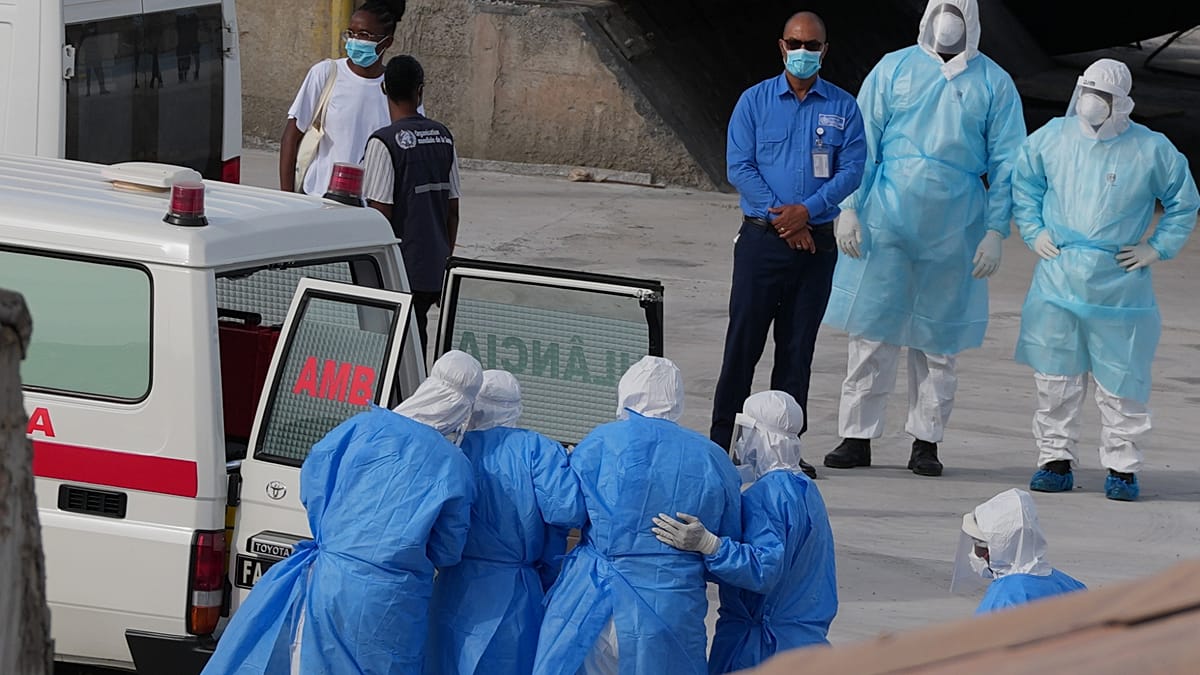
Experts have largely dismissed widespread panic over hantavirus, but the deaths linked to the aggressive Andes variant aboard the MV Hondius cruise ship have sharpened attention on Europe's readiness for emerging health threats. The vessel, which docked in Tenerife, Spain, after a voyage that included stops in Cape Verde, has become a focal point for concerns about how the continent handles novel infectious diseases.
The European Centre for Disease Prevention and Control (ECDC) currently classifies the risk as "very low," yet the Council of the European Union last week activated its crisis response mechanism in information-sharing mode to actively monitor the situation. This move signals that Brussels is taking the outbreak seriously, even if the immediate threat remains contained.
However, a critical gap persists: there is no single European playbook for quarantine and prevention measures. Each member state retains authority over its public health responses, which could lead to fragmentation. In practice, though, countries such as Germany, Italy, Spain, and the United Kingdom are following similar protocols based on World Health Organization (WHO) guidance. These include a six-week quarantine for high-risk contacts, PCR testing, strict monitoring, limited movement, and physical distancing of 1.5 to 2 metres.
Divergent Quarantine Approaches
Despite broad alignment, national differences remain. The UK requires hospital quarantine for at least 72 hours, while France mandates the entire isolation period in a hospital setting—though French authorities note that it could be shortened after 14 days depending on symptoms. In contrast, the United States recommends a 42-day monitoring period that can be observed at home, with decisions based on access to healthcare, home environment, and comorbidities. Australia and Canada have opted for a shorter three-week quarantine.
These variations highlight the challenge of coordinating a multinational response. As Tenerife residents remained calm during the ship's docking, the incident underscores the need for clearer protocols.
Post-COVID Regulatory Framework
After the COVID-19 pandemic, the European Union enacted two key regulations to improve speed and coordination for cross-border health threats. Regulation 2022/2371 requires member states to alert each other within 24 hours through the Early Warning and Response System if a threat is unusual, causes significant mortality, grows rapidly, or exceeds national capacity. Its twin, Regulation 2022/2372, focuses on joint approval and stockpiling of vaccines and medicines—a contentious issue during the last pandemic.
The first regulation can be activated by the European Commission based on ECDC or European Medicines Agency recommendations, while the Council of the European Union triggers the second. Additionally, member states can invoke the European Civil Protection Mechanism for support with response teams and equipment.
These tools represent a significant step forward, but questions remain about their effectiveness in a real-world crisis. The hantavirus outbreak, while contained, serves as a test case for Europe's ability to respond swiftly and cohesively. As three people were evacuated from the MV Hondius in Cape Verde, the incident highlights the importance of robust surveillance and rapid information sharing.
Ultimately, Europe's preparedness hinges not just on regulations but on the willingness of member states to cooperate and adapt. The continent has learned hard lessons from COVID-19, but whether those lessons translate into effective action for future threats remains to be seen.