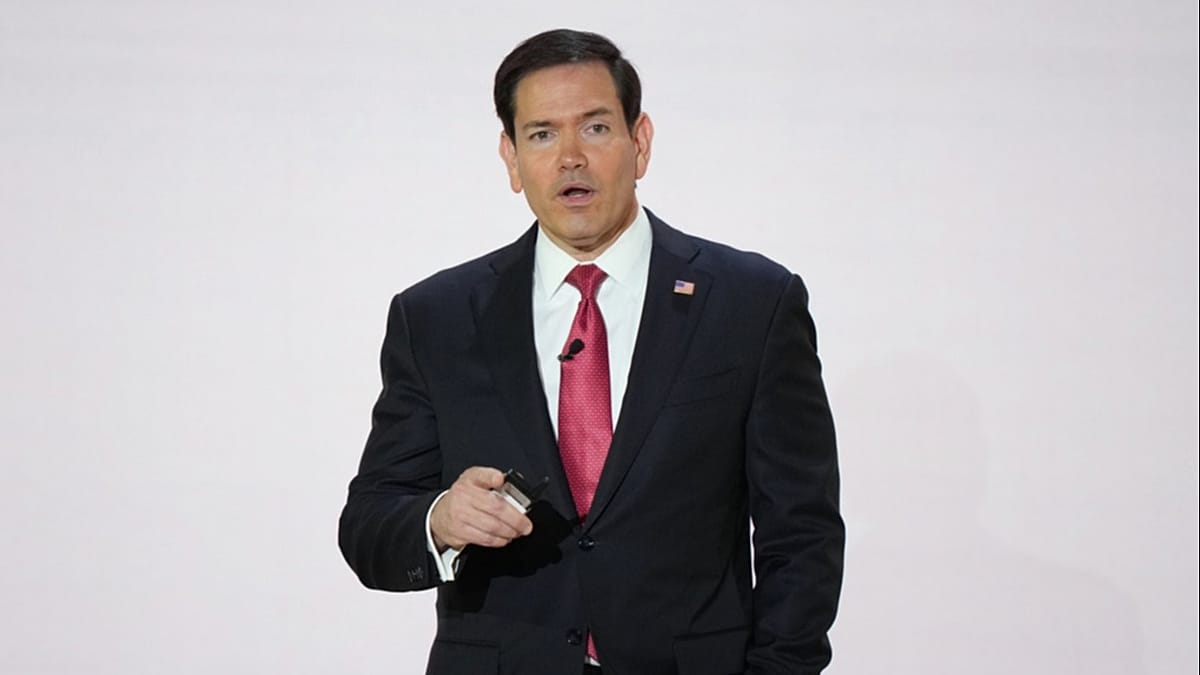
Washington has unlocked $320 million (€284.4 million) in military aid for Egypt, setting aside a human rights condition that had held up the funds. Secretary of State Marco Rubio signed the waiver on Thursday, arguing that releasing the money serves US national security interests, particularly given Cairo's cooperation in the ongoing confrontation with Iran.
The State Department confirmed the decision, saying it "reflects the importance of Egypt to US national security interests, and the concrete security cooperation Egypt provides to the United States." In a letter to lawmakers, Rubio pointed to Egypt's "helpful role" in the war with Iran, where Cairo has acted as a key intermediary between Washington and Tehran in efforts to end the more than seven-month-old conflict.
The $320 million is part of the annual $1.3 billion (€1.16 billion) in economic and military assistance that the US provides to Egypt. The funds come under the foreign military financing programme, which allows recipient nations to buy American-made weaponry. Congress had attached a human rights condition to this tranche, reflecting long-standing concerns about Egypt's record—including credible reports of torture, arbitrary detention, child labour, and severe restrictions on freedom of expression.
Yet the waiver has become a routine exercise for both Republican and Democratic administrations. The Biden administration issued a similar waiver in September 2024, citing Egypt's assistance in US efforts to end the Israel-Hamas war in Gaza. This time, the rationale is tied to the broader regional security landscape, with the State Department noting that the decision "recognises the importance of maintaining security cooperation with Egypt at a time of significant regional security challenges."
The move comes as the Trump administration continues to navigate a volatile Middle East, where Iran's influence and the fallout from the Gaza conflict remain central concerns. Egypt, a long-standing US ally and the first Arab state to sign a peace treaty with Israel, has positioned itself as an indispensable mediator in regional crises—a role that Washington appears unwilling to jeopardise over human rights objections.
Critics, however, argue that the waiver undermines the very conditions Congress sought to impose. Human rights organisations have repeatedly called on the US to condition military aid on tangible improvements in Egypt's treatment of dissidents, journalists, and minorities. The State Department's own reports have documented abuses, yet the strategic calculus has consistently outweighed those concerns.
The decision also resonates beyond the Middle East. European allies, particularly in Brussels and national capitals, have watched the US-Egypt relationship closely, as Cairo plays a pivotal role in migration control and counter-terrorism efforts that directly affect the EU's southern neighbourhood. The release of funds may ease pressure on European governments to take a harder line on Egypt's human rights record, even as the EU debates asylum policy and its approach to external border management.
For now, the State Department insists that human rights will remain part of the bilateral dialogue. "The waiver determination recognises the importance of maintaining security cooperation with Egypt at a time of significant regional security challenges," the department said, adding that the administration would continue to raise rights issues "on the full range of issues in our bilateral relationship."
Whether that assurance will satisfy lawmakers and rights advocates remains uncertain. But the pattern is clear: when security interests collide with human rights conditions, the latter tend to give way. As the US deepens its engagement in the Middle East, Egypt's strategic value is likely to keep trumping its domestic record.