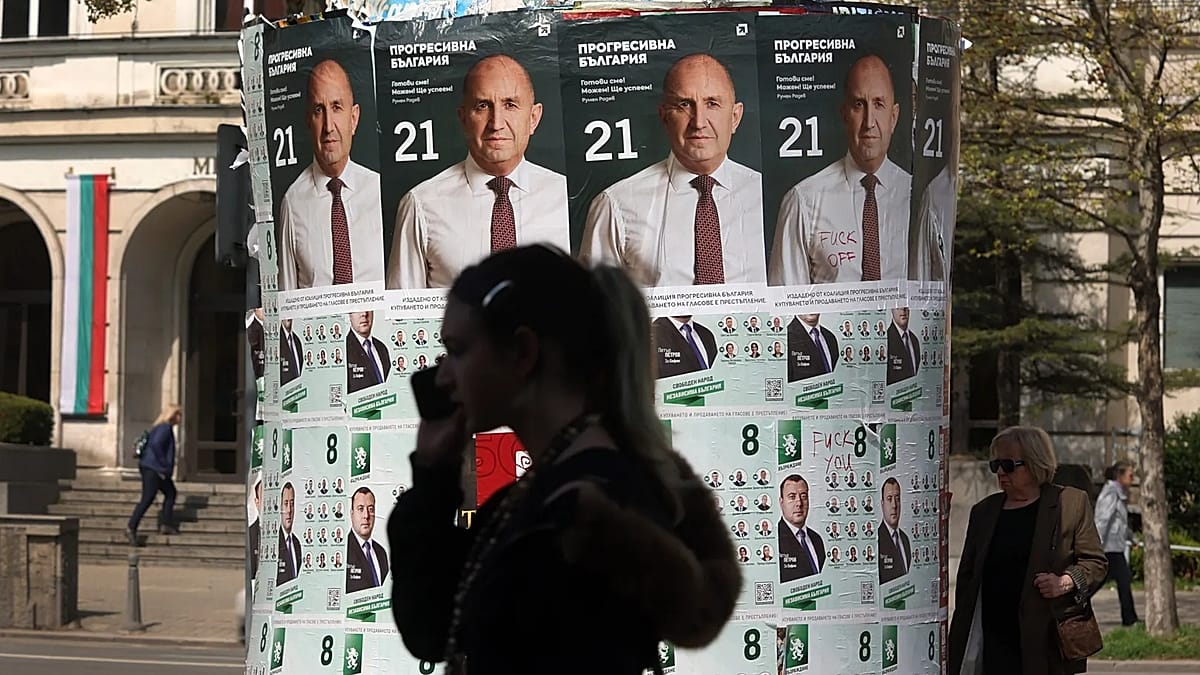
Bulgaria's eighth parliamentary election in five years has delivered a decisive victory for former President Rumen Radev and his Progressive Bulgaria (PB) coalition. With nearly 99% of ballots counted, the Central Electoral Commission in Sofia placed PB at roughly 45% of the vote, securing at least 132 seats in the 240-seat parliament—an outright majority.
Radev, 62, resigned the presidency earlier this year after serving two terms. He campaigned on an anti-corruption platform and a promise to restore stability in the European Union's poorest member state, which has been mired in political turmoil since anti-graft protests toppled the conservative government of Boyko Borissov in 2021.
A Victory of Hope, but with Controversy
“PB has won unequivocally, a victory of hope over distrust, a victory of freedom over fear,” Radev told reporters outside his party’s office in Sofia. He added that Bulgaria would “make every effort to continue on its European path,” but struck a critical note: “But believe me, a strong Bulgaria and a strong Europe need critical thinking and pragmatism. Europe has fallen victim to its own ambition to be a moral leader in a world with new rules.”
The former air force general’s stance on Ukraine has drawn international attention. During his presidency, he repeatedly opposed sending military aid to Kyiv and criticized European Union policies in that regard, arguing that supporting Ukraine risks drawing Bulgaria into the conflict. He has also called for dialogue with Russian President Vladimir Putin, a position that has earned him a reputation as sympathetic to Moscow.
His campaign was not without controversy. In the final stretch, opposition parties criticized him after a video clip shown at a rally included footage of his meeting with Putin. The incident underscored the deep divisions in Bulgarian society over the war in Ukraine.
The liberal PP-DB coalition came a distant second with roughly 14.3% of the vote, while Borissov’s GERB party managed only 13%. The result marks a clear rejection of the pro-European mainstream and a shift toward a more skeptical stance on EU policy, particularly regarding defense and foreign affairs.
Radev’s victory comes at a time when several EU member states are grappling with rising populism and skepticism toward Brussels. In Hungary, Prime Minister Viktor Orbán has long pursued a similar line, while in Slovakia, Robert Fico’s government has also questioned EU support for Ukraine. The Bulgarian election result adds another voice to this chorus, potentially complicating EU efforts to maintain a unified front on Russia.
For Bulgaria, the immediate challenge will be forming a stable government. The country has seen six caretaker cabinets in five years, and Radev’s absolute majority offers a chance to break the cycle. However, his foreign policy orientation may strain relations with NATO and EU partners, particularly as the alliance grapples with the war in Ukraine and the broader security landscape in Eastern Europe.
The election also highlighted the role of disinformation. Bulgaria activated the EU’s Digital Shield ahead of the vote amid concerns about Russian influence campaigns. The outcome suggests that such efforts may have resonated with a electorate weary of political instability and skeptical of Western institutions.
As Radev prepares to take office, the question remains whether his “critical thinking and pragmatism” will translate into a coherent policy that balances Bulgaria’s EU membership with his calls for renewed ties with Russia. For now, the former president has the mandate to try.



