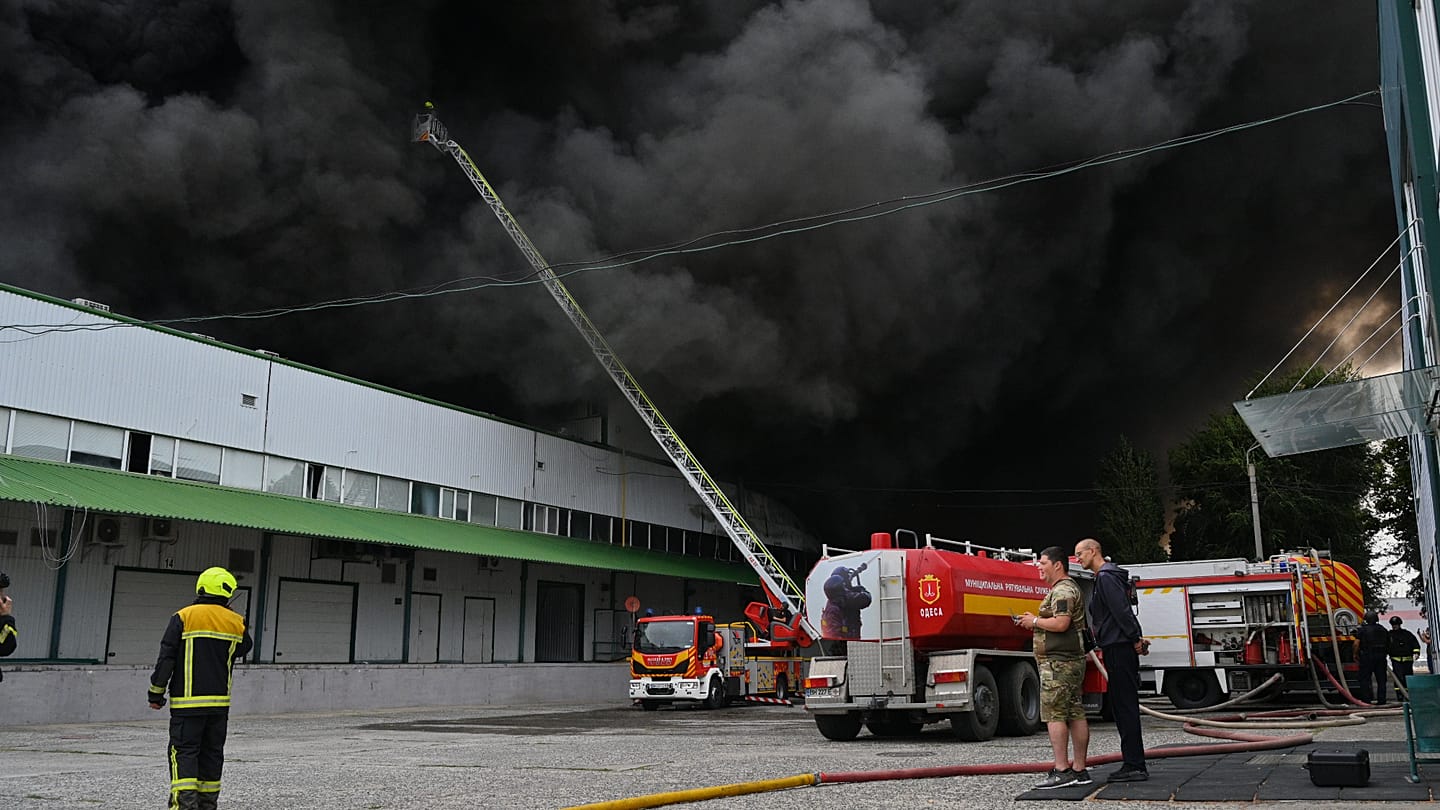
In one of the most intense aerial assaults of the conflict, Russia sent more than 450 drones over Ukrainian territory overnight, according to Kyiv's air force. The barrage, which targeted critical infrastructure and residential areas, was largely intercepted, but debris and strikes caused damage in several regions, including Kyiv, Odesa, and Dnipro.
Ukrainian President Volodymyr Zelenskyy condemned the attack, calling it a deliberate attempt to break civilian morale as winter approaches. In an interview on Saturday, he reiterated Ukraine's need for more air defence systems and long-range capabilities, warning that the current level of Western support is insufficient to counter Russia's relentless aerial campaign.
Ukraine strikes back at oil revenue
In a parallel escalation, Ukrainian forces launched drone strikes on Russian oil refineries, targeting facilities in the Rostov and Volgograd regions. The strikes are part of Kyiv's broader strategy to undermine Russia's fossil fuel exports, which finance its war effort. Local Russian officials reported fires at two refineries, though they claimed production was not significantly disrupted.
The overnight exchange underscores a dangerous new phase in the war, with both sides relying heavily on long-range drones. Russia has increasingly used cheap, domestically produced drones to overwhelm Ukrainian defences, while Ukraine has developed its own deep-strike capabilities to hit targets inside Russian territory.
According to military analysts, the scale of the Russian drone barrage—exceeding 450 units in a single night—marks a significant increase from previous attacks. Ukraine's air force said it shot down most of the drones, but the sheer volume stretched its resources, highlighting the urgent need for more interceptor missiles and electronic warfare systems.
Zelenskyy's willingness to meet Putin on the sidelines of the G20 summit in Miami, as he stated in the interview, signals a possible shift in diplomatic posture. However, he conditioned any talks on Russia's withdrawal from occupied territories and the return of Ukrainian prisoners. The Kremlin has not responded to the offer, and previous attempts at negotiation have collapsed over mutual distrust.
The European Union has pledged €6.1 billion in new aid for Patriot interceptors and drones, but officials in Brussels acknowledge that delivery timelines remain a bottleneck. Meanwhile, discussions about using frozen Russian assets have cooled, as legal and financial concerns persist.
NATO allies are closely monitoring the situation, with sanctioned Russian ships returning to the Mediterranean under NATO watch, raising fears of further hybrid attacks. The Riga Conference this week underscored Baltic resolve against such threats, with leaders calling for a unified European response.
The human cost of the overnight attacks was significant. At least three civilians were killed and dozens wounded, according to Ukrainian officials. In the southern city of Kherson, a drone strike hit a residential building, trapping residents under rubble. Emergency services worked through the night to rescue survivors.
As the war enters its third winter, both sides are racing to secure advantages before any potential negotiations. Russia appears to be banking on attrition, hoping to exhaust Ukrainian defences and Western patience. Ukraine, for its part, is betting that sustained strikes on Russian energy infrastructure will force Moscow to reconsider its military objectives.
For Europe, the escalation is a stark reminder that the conflict remains volatile and unpredictable. The EU's foreign policy chief, Josep Borrell, called for a renewed diplomatic push, but also stressed the need to bolster Ukraine's defensive capabilities. "We must prepare for a long war, but also work tirelessly for peace," he said in a statement.
The coming weeks will be critical, as both sides assess the impact of the latest exchanges. With winter approaching, the humanitarian situation in Ukraine is likely to worsen, and the pressure on European leaders to act—both militarily and diplomatically—will only intensify.